

Navigating the landscape of digital marketing in 2026 means understanding the tangible benefits of artificial intelligence, especially for business owners. While AI offers exciting possibilities, the real question for any proprietor is: what’s the return on investment? This isn’t just about adopting new technology; it’s about strategically applying it to drive measurable business growth and profitability.
This guide cuts through the jargon to focus on how AI can directly impact your bottom line, providing clear decision criteria, potential pitfalls, and actionable steps to ensure your AI investments yield significant returns. We’ll explore how to identify the most impactful AI use cases and how to accurately calculate the costs versus the benefits.
Beyond the Hype: Measuring Actual AI Impact on Your Business Books
The rapid integration of AI into digital marketing tools has created a buzz, but for business owners, the focus must shift from novelty to numerical value. Understanding the true return on investment (ROI) from AI in your marketing efforts requires a clear framework for measurement and a realistic appraisal of what AI can and cannot achieve. It’s about moving past generic claims of efficiency and identifying specific, quantifiable improvements that directly affect your business’s financial health. You’re not looking to simply adopt AI; you’re looking to make it a profitable component of your overall strategy.
At KPIDM, we’ve seen firsthand how businesses can struggle to connect AI implementation with concrete financial outcomes. The key lies in defining what constitutes a “win” in your specific context. Is it reduced customer acquisition cost, increased lead conversion rates, or enhanced customer lifetime value? Without these defined metrics, any AI investment remains speculative. This section focuses on providing the business owner with the necessary perspective to critically evaluate AI’s contribution to their business’s financial statements, ensuring that every AI tool or strategy deployed serves a clear, measurable business purpose.

Why Owners Are Asking About AI ROI Now (2026)
The urgency around AI ROI in 2026 stems from a confluence of factors. Firstly, the initial wave of AI tools has matured, moving from experimental novelties to more integrated platforms. Businesses that adopted early are now assessing their long-term value, and those looking to adopt are seeking proof of concept before committing significant resources. Secondly, competitive pressures are intensifying; if competitors are achieving greater efficiency or better customer engagement through AI, the pressure to do the same becomes paramount. Owners are also more informed, having moved past the initial hype and are now looking for practical applications that demonstrably boost revenue or cut costs.
Furthermore, economic considerations in the current climate necessitate a pragmatic approach to all business spending. Any new technology, including AI, must justify its existence through clear financial benefits. The increasing accessibility of sophisticated AI analytics platforms also empowers owners to track performance with greater precision. This heightened awareness and the availability of better tracking tools mean that the question of AI ROI is no longer a secondary concern but a primary driver for adoption and optimization. It’s about ensuring that the investment in AI aligns with broader business objectives, particularly profitability and sustainable growth, as discussed in resources like digital marketing AI profitability hacks.
What ‘AI ROI’ Really Means for a Business Owner
For a business owner, AI ROI isn’t just about the technology itself; it’s about the quantifiable improvements in core business functions. This means looking beyond vanity metrics and focusing on impacts that directly affect the profit and loss statement. Examples include a reduction in the cost of acquiring new customers, an increase in the conversion rate of leads into paying clients, or a measurable uplift in customer retention and lifetime value. It also encompasses the optimization of internal processes, such as automating repetitive tasks to free up employee time for higher-value activities, thereby increasing overall team productivity. You’re effectively measuring how AI contributes to generating more revenue or saving more money.
The calculation involves a straightforward comparison: (Financial Gain from AI – Cost of AI Investment) / Cost of AI Investment. The “financial gain” can be intricate to define, often requiring careful tracking of key performance indicators (KPIs) before and after AI implementation. For instance, if an AI-powered content generation tool allows your marketing team to produce 50% more blog posts per month, and each post directly contributes to a 5% increase in organic leads, you can begin to quantify that gain. Conversely, the “cost” includes not only the software subscription fees but also the time invested in training, integration, and ongoing management, a point we will explore further. It’s crucial to avoid simply adopting AI for the sake of it; the focus must remain on tangible business outcomes, as explored in our blueprint for business owners.
Identifying AI Use Cases That Drive Measurable Business Growth
To achieve a meaningful ROI from AI in digital marketing, the focus must be on identifying use cases that directly translate into measurable business growth. This isn’t about implementing AI for its own sake, but for its ability to solve specific business challenges or unlock new opportunities. Think about areas where you’re currently facing bottlenecks, experiencing high costs, or missing out on potential revenue. For example, if your customer service team is overwhelmed with repetitive queries, an AI-powered chatbot can significantly reduce response times and free up human agents for more complex issues, directly impacting customer satisfaction and retention. Similarly, if you struggle to personalize marketing messages at scale, AI can analyze customer data to deliver tailored content and offers, boosting engagement and conversion rates.
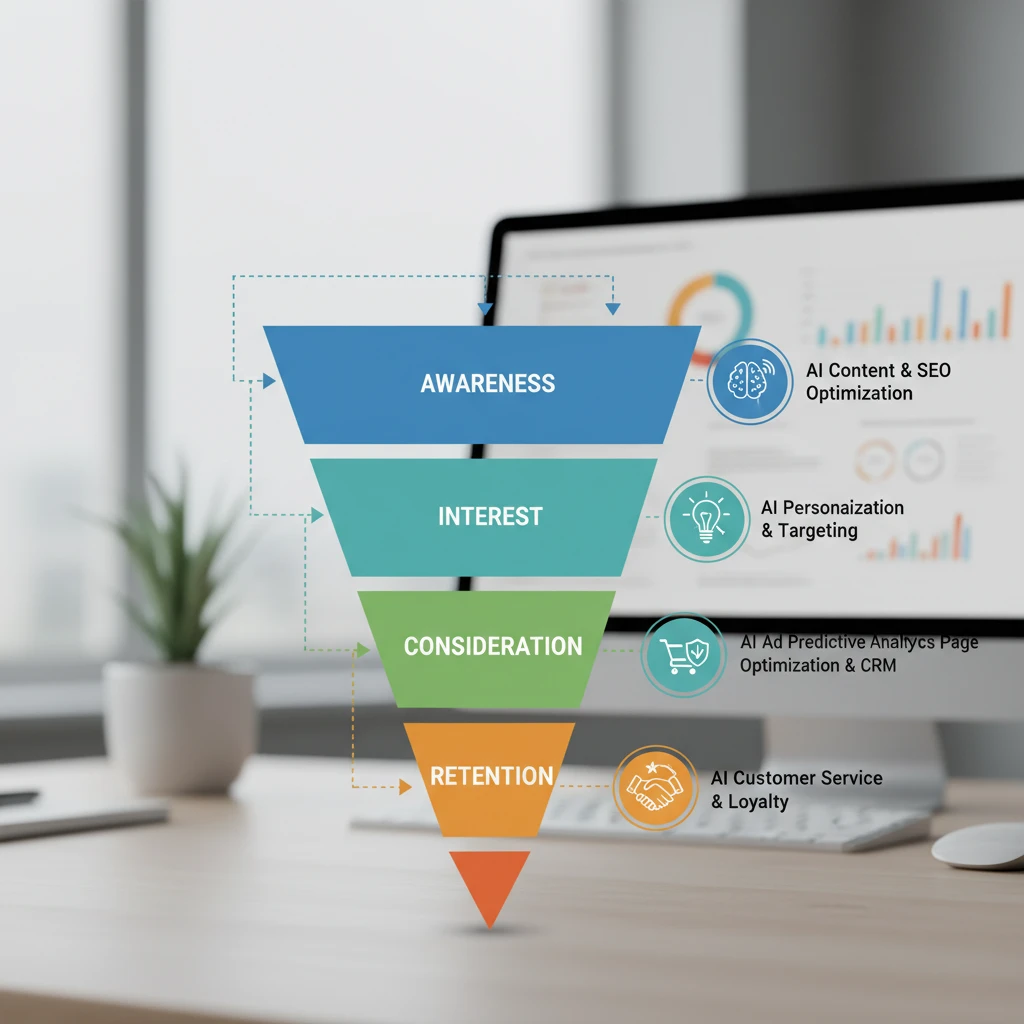
The key to identifying these high-impact use cases lies in a thorough analysis of your existing marketing funnel and operational processes. Where are your biggest pain points? Where do you see the most significant drop-offs in the customer journey? AI can often provide solutions by automating tasks, providing deeper insights, or enhancing personalization. For instance, AI-driven tools can assist in optimizing ad spend by identifying the most effective targeting parameters and creative elements, leading to a lower cost per acquisition and a higher return on ad spend. The goal is to pinpoint AI applications that promise a clear and quantifiable improvement in key business metrics, rather than superficial enhancements. This strategic selection is foundational to achieving true AI wins.
Cost vs. Benefit: Calculating AI Investment in Digital Marketing
When considering an investment in AI for digital marketing, a rigorous cost-benefit analysis is essential. This involves meticulously detailing all associated expenses against the projected financial gains. The costs can be categorized into several key areas, each requiring careful consideration. Simply looking at the sticker price of a software subscription is only the tip of the iceberg; a comprehensive financial model is necessary to accurately gauge the true investment. Understanding these cost components allows for more informed decision-making and budget allocation, ensuring that the AI tools selected offer the most advantageous return.
The benefits, on the other hand, are what drive the ROI. These are the quantifiable improvements in revenue, efficiency, or cost savings that the AI implementation is expected to deliver. It’s crucial to set realistic expectations for these benefits, often based on pilot programs or industry benchmarks. The challenge lies in isolating the impact of AI from other marketing activities and external market factors. A robust tracking system is vital to attribute gains accurately to the AI investment. Ultimately, the goal is to demonstrate that the financial advantages derived from AI significantly outweigh the total expenditure, leading to a positive net return for the business.
Initial Software and Tool Expenses
The most immediate cost associated with AI in digital marketing is the expense of acquiring the necessary software and tools. This can range from subscription fees for AI-powered content generation platforms, ad optimization tools, or customer relationship management (CRM) systems with integrated AI features, to one-time purchases of specialized AI analytics software. Prices vary dramatically based on the sophistication of the AI, the features offered, and the vendor. For startups or small businesses, exploring platforms that offer tiered pricing or freemium models can be a strategic way to begin. It’s also worth noting that some tools might bundle AI capabilities with other services, making the direct cost of the AI component harder to isolate.
Beyond the software itself, consider the integration costs. If the AI tool needs to be connected to your existing marketing technology stack, there might be fees for API access, custom development, or third-party integration services. Data preparation and cleanup to ensure the AI can effectively process your information also represent an often-overlooked expense. For example, ensuring your customer data is clean and properly formatted for an AI-driven personalization engine can require significant upfront effort. Therefore, when evaluating AI tools, it’s vital to look at the total cost of ownership, not just the monthly subscription fee, and to consider this within the broader context of your entire AI tool stack.
Training and Skill Development Costs (Your Team, or You!)
A significant, and often underestimated, cost of AI integration is the investment in training and skill development. Your team, or perhaps even you as the owner, will need to learn how to effectively use these new AI tools. This training can take various forms: online courses, workshops, certification programs, or even on-the-job learning. The time spent in training directly detracts from other productive tasks, representing an indirect cost. Furthermore, specialized AI skills might command higher salaries if you need to hire new personnel, adding to your payroll expenses. It’s about upskilling existing talent or bringing in new expertise.
The depth of training required depends heavily on the complexity of the AI tools. A simple AI content assistant might require minimal onboarding, while a sophisticated AI-driven predictive analytics platform could necessitate extensive training for your team. You might need to invest in understanding prompt engineering for generative AI tools, or in developing skills to interpret and act upon AI-generated insights. The return on this investment comes from your team’s ability to fully utilize the AI’s capabilities, thereby maximizing the benefits and avoiding underutilization. Failing to adequately train your team can render even the most advanced AI tools ineffective, negating their potential ROI. Understanding how to work with AI is as critical as selecting the right tools for entrepreneurs.
Time Savings vs. Direct Cost Reduction
Quantifying the benefits derived from AI in digital marketing often boils down to two primary avenues: time savings and direct cost reduction. Time savings occur when AI automates repetitive or time-consuming tasks, freeing up human resources for more strategic activities. For example, AI can automate social media scheduling, draft initial email copy, or perform preliminary data analysis, tasks that would otherwise consume many hours of an employee’s workweek. The value of this time saving can be calculated by multiplying the hours saved by the average hourly wage of the employee or team members involved. This increased efficiency can lead to higher output without a proportional increase in labor costs.
Direct cost reduction, on the other hand, refers to AI’s ability to lower expenses outright. This might involve optimizing ad spend through AI-powered bidding strategies, reducing waste by identifying underperforming campaigns, or improving lead quality to decrease the cost per acquisition. AI can also help in forecasting demand more accurately, leading to better inventory management and reduced waste in physical product businesses. For instance, an AI tool that predicts customer churn can enable targeted retention efforts, costing less than acquiring new customers. When calculating ROI, it’s crucial to differentiate between time savings (which can be converted to cost savings) and direct cost reductions, as both contribute differently to the overall financial benefit. These efficiency gains are a hallmark of AI for startups.
AI for Content Creation: Quality, Volume, and Conversion Rates
The application of AI in content creation is one of the most rapidly evolving areas within digital marketing, offering substantial benefits for businesses of all sizes. For owners, the appeal lies in AI’s potential to dramatically increase content volume, maintain or even improve quality, and ultimately drive higher conversion rates. AI-powered tools can generate blog post outlines, draft entire articles, suggest creative headlines, and even produce social media copy in a fraction of the time it would take a human. This surge in content output can significantly enhance a brand’s online presence, improve search engine rankings through consistent publishing, and engage a wider audience across various platforms. The ability to produce more content also means more opportunities to test different messaging and approaches.
However, achieving genuine ROI from AI content creation requires a nuanced approach. Simply churning out vast quantities of text is insufficient; the content must resonate with the target audience and align with the brand’s voice. While AI can generate grammatically correct and coherent text, it often requires human oversight for fact-checking, strategic messaging, and adding that unique creative spark that truly connects with readers. The goal is to use AI as a powerful co-pilot, augmenting human creativity rather than replacing it entirely. When used effectively, AI can help brainstorm ideas, overcome writer’s block, and streamline the editing process, leading to content that is not only voluminous but also high-quality and persuasive, directly impacting conversion metrics. This balanced approach is key to successful content marketing.
Optimizing Ad Spend with AI-Powered Targeting and Automation
For business owners, understanding how to maximize advertising budgets is paramount. AI is fundamentally reshaping this landscape, moving beyond basic demographic targeting to sophisticated, predictive modeling. Instead of relying on broad assumptions, AI can analyze vast datasets to identify micro-segments of users most likely to convert. This means reduced wasted ad spend and a higher return on investment. Automation handles repetitive tasks like bid adjustments and ad creative rotation, freeing up valuable owner time. You’re not just reaching more people; you’re reaching the right people at the right time with the right message. This level of granular control was previously only accessible to large corporations with extensive data science teams.
The decision to implement AI in ad spend optimization should be driven by clear objectives. Key criteria include the complexity of your target audience, the volume of your ad data, and your current team’s capacity. If you’re struggling to pinpoint your ideal customer or seeing diminishing returns from your campaigns, AI-driven solutions can offer a significant uplift. Pitfalls to watch for include relying too heavily on AI without human oversight, which can lead to unexpected biases or campaign drift. It’s also crucial to ensure your data is clean and well-organized; AI can only be as effective as the data it processes. A common mistake is not adequately defining conversion events, which blinds the AI to what truly matters for your business goals.
Consider this: A local e-commerce store selling artisanal candles was spending heavily on broad Facebook ads. By implementing an AI tool that analyzed website visitor behavior, purchase history, and even social media interactions, they shifted their budget to target users who had previously browsed specific candle scents or abandoned their carts. Within three months, their customer acquisition cost dropped by 35%, and their overall return on ad spend (ROAS) increased by 50%. This wasn’t magic; it was data-driven precision. Another example involves a B2B service provider who used AI to identify companies exhibiting buying intent signals, drastically improving their lead generation efficiency.
Ad Performance Metrics to Watch
While AI automates many processes, business owners must remain attuned to key performance indicators (KPIs) to gauge success. Beyond the obvious metrics like click-through rate (CTR) and conversion rate, focus on metrics that directly impact your bottom line. These include return on ad spend (ROAS), customer acquisition cost (CAC), and lifetime value (LTV) of acquired customers. Understanding the interplay between these figures is vital. For instance, a high CTR might be meaningless if the resulting conversions are low-quality and have a low LTV. AI can help uncover these nuances by segmenting performance based on audience segments identified by the AI itself.
It’s also important to monitor AI-specific metrics, such as the accuracy of predicted conversions and the efficiency of automated bidding strategies. Are the AI’s recommendations leading to cost savings or just shifting spend around? Look at how quickly the AI adapts to changes in market conditions or campaign performance. Another area to observe is the performance of different ad creatives and targeting parameters as identified and optimized by the AI. This can highlight patterns you might have missed manually. When evaluating AI, don’t just look at the aggregated results; drill down into how specific AI-driven adjustments impacted performance.
Case Study Snippets: Real Businesses, Real Results
A small online retailer specializing in custom pet accessories saw their ad spend plateau. After integrating an AI tool to analyze customer purchase patterns and browsing behavior, they discovered a previously overlooked segment of customers interested in subscription boxes for pet treats. By reallocating 20% of their ad budget to target this niche with tailored promotions, they saw a 40% increase in subscription sign-ups within two months and a 25% improvement in overall customer LTV. This demonstrates the power of AI in uncovering hidden market opportunities.
A service-based business, offering local IT support, used AI-driven predictive analytics to identify businesses showing early signs of needing IT upgrades. By focusing their outreach efforts on these pre-qualified leads, they experienced a 60% increase in qualified sales appointments and a 30% reduction in the sales cycle duration. The AI analyzed firmographics, online activity, and industry trends to forecast potential demand, allowing the business to proactively engage with prospects rather than reacting to inbound requests. This proactive approach, powered by AI insights, directly translated into revenue growth.
Prompt Engineering: The New Skill for Extracting Value from AI
As AI tools become more integrated into marketing workflows, the ability to communicate effectively with them – known as prompt engineering – emerges as a critical skill for business owners. It’s not enough to simply use an AI tool; you need to guide it precisely to achieve your desired outcomes. Think of it like giving instructions to a highly intelligent, but very literal, assistant. A well-crafted prompt can unlock the full potential of AI for tasks like content generation, campaign ideation, and data analysis, whereas a vague prompt might result in generic or unhelpful outputs.
The core of effective prompt engineering lies in clarity, specificity, and context. When asking an AI to write ad copy, for example, providing details about your target audience’s pain points, the unique selling proposition of your product, and the desired tone of voice will yield far better results than a simple request for “ad copy.” You might need to iterate, refining your prompts based on the AI’s initial responses. For instance, if an AI generates a list of blog post ideas that are too generic, you might refine the prompt to include specific industry keywords and target audience demographics. This iterative process is key to achieving highly relevant and actionable AI outputs. It’s a blend of art and science, requiring both creativity and a logical approach.
Consider the difference between asking an AI to “write a social media post about our new product” versus “Write three engaging Instagram captions for our new eco-friendly water bottle, targeting young professionals aged 25-35 who are environmentally conscious. Highlight its durability and leak-proof design. Include a call to action to visit our website and offer a 10% discount code ‘ECO10’.” The latter prompt provides the AI with specific constraints and objectives, leading to much more targeted and effective content. This skill is becoming indispensable for anyone looking to harness AI’s capabilities for business growth, as explored in guides on building an AI tool stack.
AI’s Role in SEO: From Keyword Research to Technical Audits
For business owners, understanding and implementing Search Engine Optimization (SEO) is crucial for online visibility. AI is rapidly transforming this field, moving beyond simple keyword stuffing to sophisticated analysis and predictive strategies. AI tools can sift through vast amounts of search data to identify emerging trends, understand user intent more deeply, and predict keyword performance with remarkable accuracy. This allows for more strategic content creation and optimization efforts, ensuring your business ranks higher for relevant searches. AI can also automate many of the tedious aspects of SEO, such as monitoring competitor rankings and identifying technical SEO issues.
One of the most significant contributions of AI in SEO is in advanced keyword research. Instead of relying on manual analysis or basic tools, AI can uncover long-tail keywords, semantic variations, and question-based queries that indicate high user intent. It can also predict the difficulty and potential ROI of targeting specific keywords, allowing businesses to prioritize their efforts. Furthermore, AI assists in content gap analysis, identifying topics your competitors are ranking for that you aren’t. This provides a clear roadmap for content creation, ensuring you’re addressing what your audience is actively searching for. For example, an AI might identify that while you rank for “best running shoes,” there’s a significant search volume for “lightweight trail running shoes for women with wide feet,” presenting a clear content opportunity.
Beyond content, AI is revolutionizing technical SEO audits. Tools powered by AI can crawl websites much faster and more comprehensively than traditional methods, identifying issues such as broken links, duplicate content, slow page load times, and mobile-friendliness problems. They can also analyze site architecture and internal linking structures to suggest improvements for better crawlability and user experience. This is particularly valuable for small businesses that may not have dedicated technical SEO teams. By automating these complex audits, AI allows business owners to address critical technical SEO factors efficiently, ensuring search engines can properly index their sites and users have a positive browsing experience. This proactive approach is essential for sustained organic growth.
Social Media Management with AI: Engagement, Scheduling, and Insights
For business owners, maintaining an active and engaging presence on social media is essential but time-consuming. AI is stepping in to streamline this process, offering tools that can automate scheduling, suggest content, analyze audience sentiment, and even generate responses. This allows for a more consistent and strategic social media strategy without demanding an overwhelming amount of daily effort. AI can help identify the optimal times to post for maximum reach and engagement, ensuring your content is seen by the right people.
AI’s capabilities extend to content ideation and creation. By analyzing trending topics, competitor content, and audience engagement patterns, AI can suggest relevant post ideas, headlines, and even draft captions. This can overcome writer’s block and ensure a steady stream of engaging material. Sentiment analysis tools, powered by AI, can monitor mentions of your brand and provide insights into how your audience perceives your products or services. This real-time feedback loop is invaluable for making quick adjustments to your marketing or customer service strategies. For instance, if sentiment analysis reveals widespread confusion about a new product feature, you can promptly address it with a dedicated post or FAQ.
The integration of AI in social media management also means more sophisticated analytics. Beyond vanity metrics like likes and follower counts, AI can help decipher the true impact of your social media efforts on business goals. It can identify which content types drive the most traffic to your website, which campaigns lead to conversions, and what audience segments are most responsive. This data-driven approach ensures that your social media activities are not just for show but are contributing directly to your business objectives. By understanding these deeper connections, owners can allocate resources more effectively and refine their strategies for tangible results.
Measuring Social ROI Beyond Likes and Shares
Moving past superficial engagement metrics is vital for understanding the true business impact of social media. AI can help by connecting social activity to tangible business outcomes. Instead of just tracking likes, focus on metrics like website traffic driven from social channels, lead generation rates tied to social campaigns, and conversion rates of users who first engaged with your brand on social media. AI can attribute these conversions back to specific social posts or campaigns, providing a clear picture of what’s working.
Tools that analyze social listening data can provide insights into brand perception and customer sentiment, which indirectly impacts sales and customer retention. A positive brand image cultivated through thoughtful social engagement can lead to increased trust and a higher propensity for customers to purchase. Furthermore, AI can help track the return on ad spend (ROAS) for social media advertising by accurately attributing sales to specific ad creatives and targeting segments. This allows for a more precise allocation of marketing budgets towards the most effective social media strategies.
Automated Response Strategies: Pros and Cons
Automated responses, often powered by AI chatbots or predefined reply templates, can significantly improve efficiency in social media customer service. The primary benefit is the ability to provide instantaneous replies to common inquiries 24/7, ensuring no customer feels ignored. This can handle frequently asked questions, provide basic information, and direct users to relevant resources, freeing up human staff for more complex issues. For instance, an AI can instantly answer queries about business hours or shipping policies.
However, there are notable drawbacks. Over-reliance on automation can lead to a depersonalized customer experience. Customers often prefer human interaction for complex or emotionally charged issues, and generic automated responses can feel dismissive, potentially harming brand perception. It’s a delicate balance; while AI can manage simple interactions, it lacks the empathy and nuanced understanding of a human agent. Therefore, businesses must implement AI response systems strategically, ensuring a seamless handover to a human representative when necessary and using AI primarily for initial contact or information delivery.
Customer Service Automation: AI Chatbots and Their Business Impact
For business owners, the prospect of automating customer service might bring images of clunky, frustrating IVR systems. However, today’s AI-powered chatbots offer a vastly different experience. These intelligent agents can handle a significant volume of customer inquiries, from answering frequently asked questions to guiding users through troubleshooting steps and even processing simple transactions. The impact on your business can be profound. Imagine reducing customer wait times from minutes to seconds, freeing up your human support staff to tackle more complex or sensitive issues. This not only improves customer satisfaction but also leads to operational efficiencies, allowing your team to be more productive. Think about the cost savings associated with handling a higher query volume without needing to proportionally increase headcount. A well-implemented AI chatbot can operate 24/7, providing instant support regardless of time zones or staff availability. This continuous availability is a key differentiator in today’s always-on market, ensuring that potential and existing customers always have a point of contact. For businesses looking to scale their operations without a linear increase in support costs, this automation is a critical strategic advantage. Consider a small e-commerce store that can now handle hundreds of order status inquiries per day automatically, a task that would have previously required a dedicated support agent.
The key to successful customer service automation lies in choosing the right AI chatbot and integrating it thoughtfully into your existing workflows. It’s not about replacing human interaction entirely, but augmenting it. Chatbots excel at repetitive, information-based queries, allowing human agents to focus on tasks requiring empathy, complex problem-solving, or personalized recommendations. For instance, a chatbot can gather initial customer information, diagnose a basic technical issue, and then seamlessly hand off the conversation to a human agent with all the relevant context already provided. This streamlined process prevents customers from having to repeat themselves, a common source of frustration. The initial investment in an AI chatbot can yield significant returns through increased customer retention, improved agent productivity, and reduced operational overhead. Businesses are finding that by deploying AI for routine tasks, they can offer a more responsive and satisfying customer journey. This isn’t just about efficiency; it’s about delivering a superior customer experience that builds loyalty and drives repeat business. Many platforms now offer intuitive interfaces that allow business owners to train and customize their chatbots with relative ease, making advanced automation accessible even without extensive technical expertise. Exploring tools that specialize in digital marketing: AI automation for efficiency can provide a strong starting point for integrating this technology.
Data Analysis with AI: Uncovering Opportunities You’re Missing
As a business owner, you’re likely drowning in data – website traffic, customer purchase history, social media engagement, campaign performance metrics, and more. Manually sifting through this vast ocean of information to find actionable insights can feel like searching for a needle in a haystack. This is where AI-powered data analysis tools become invaluable. These systems can process and interpret massive datasets at speeds and scales far beyond human capability, identifying patterns, trends, and anomalies that might otherwise go unnoticed. For instance, AI can analyze customer segmentation data to reveal previously undiscovered high-value customer groups, or it can dissect campaign performance metrics to pinpoint exactly which ad creatives and targeting parameters are yielding the best ROI. You might be surprised to learn that a subtle shift in user behavior on your website, which an AI can detect, could indicate a new market opportunity or a potential product flaw. The ability to make data-driven decisions is paramount in today’s competitive landscape, and AI democratizes this capability. It allows you to move beyond guesswork and intuition, basing your strategic choices on concrete evidence. This leads to more effective marketing spend, optimized product development, and a deeper understanding of your customer base. The insights gained can be used to personalize customer journeys, anticipate market shifts, and stay ahead of competitors. By understanding what your data truly tells you, you can unlock significant competitive advantages and drive sustainable growth.
The power of AI in data analysis extends beyond just reporting what happened; it can also help predict what might happen next. Predictive analytics, powered by AI, can forecast customer churn, identify potential sales leads, or estimate future demand for your products. This proactive approach allows you to implement preventative measures or capitalize on emerging opportunities before your competitors do. For example, if an AI model predicts a segment of your customer base is likely to churn, you can proactively offer them a special discount or personalized outreach to retain them. Similarly, AI can identify which leads are most likely to convert, allowing your sales team to focus their efforts more effectively. This isn’t about simply crunching numbers; it’s about translating raw data into actionable intelligence that fuels smarter strategies. You might find that AI identifies a correlation between a specific blog post topic and an increase in high-value customer sign-ups, prompting you to create more content around that theme. The process of training these AI models often involves providing them with historical data, enabling them to learn from past successes and failures. The outcomes are often startlingly accurate, leading to more efficient resource allocation and improved overall business performance. Consider exploring resources on digital marketing AI: profitability hacks to see how data insights can directly boost your bottom line. The ability to gain such granular insights means you can tailor your offerings and communications with unprecedented precision, fostering stronger customer relationships and maximizing your marketing impact. This is where AI truly transforms data from a passive record into an active driver of business success.
The Pitfalls of AI Implementation: What Owners Get Wrong
While the potential of AI in digital marketing is undeniable, its implementation isn’t always a smooth ride. Many business owners, eager to adopt cutting-edge technology, fall into common traps that prevent them from realizing the full ROI. One significant pitfall is viewing AI as a magic bullet rather than a tool that requires careful strategy and integration. It’s easy to get swept up in the hype, imagining instant, effortless results. However, AI is most effective when it’s aligned with clear business objectives and supported by robust data infrastructure. Without this foundational alignment, even the most advanced AI tools can underperform or, worse, lead to wasted resources and missed opportunities. You might implement a sophisticated AI writing assistant, expecting it to generate perfect blog posts, only to find it produces generic content that doesn’t resonate with your brand voice because you haven’t provided adequate context or training data. This is where understanding the nuances of AI integration becomes crucial for any business owner aiming to harness its power effectively. You’re not just buying software; you’re implementing a strategic component that needs to interact with your existing processes and people. The focus must be on how AI can solve specific business problems or enhance existing capabilities, rather than adopting it for the sake of being modern.
Over-reliance on ‘Black Box’ AI
One of the most common pitfalls is the tendency to treat AI systems as infallible ‘black boxes’—systems whose inner workings are opaque, and whose outputs are accepted without question. While many AI algorithms are complex, a complete lack of understanding about how they arrive at their conclusions can be detrimental. When an AI suggests a particular marketing strategy or flags a customer as high-risk, it’s essential to have some level of insight into the reasoning behind that output. If you blindly follow AI recommendations without critical evaluation, you risk making suboptimal or even damaging decisions. Imagine an AI recommending a drastic shift in ad spend to a new, unproven channel. Without understanding *why* the AI is making this recommendation—is it based on weak correlations or robust data?—you could be throwing money away. This is not to say you need to be an AI engineer, but rather to develop a healthy skepticism and a process for validating AI-driven insights. For example, if an AI tool provides customer segmentation insights, you should cross-reference these with your own market knowledge and other available data points before making significant strategic changes. Understanding the limitations and potential biases of AI is also key. Tools that offer some degree of explainability or transparency are often preferable, allowing you to build trust and make more informed decisions. This approach fosters a collaborative relationship between human expertise and AI capabilities, rather than a passive acceptance of machine judgment. Remember, AI is a tool to augment human intelligence, not replace it entirely, and this means actively engaging with its outputs.
Ignoring the Human Element in AI Strategy
Another frequent misstep is the failure to consider the human element when integrating AI. Business owners sometimes overlook the fact that AI doesn’t operate in a vacuum; it needs to be adopted and managed by people. This means involving your team in the implementation process, providing adequate training, and addressing potential concerns about job security or changing roles. If your marketing team isn’t trained on how to use new AI tools effectively, or if they feel threatened by automation, adoption rates will plummet, and the intended benefits will never materialize. For example, an AI content generation tool is only as good as the prompts and edits provided by a human marketer. If the team isn’t trained in prompt engineering or content editing, the output will be subpar. Moreover, AI often excels at analytical tasks but struggles with nuanced human interaction, creativity, and empathy. Strategies that completely eliminate human oversight or customer interaction can lead to a dehumanized customer experience, damaging brand loyalty. It’s crucial to remember that AI should enhance, not replace, the critical thinking and emotional intelligence that your human team brings to the table. A balanced approach, where AI handles routine tasks and humans focus on strategy, creativity, and complex customer relationships, is often the most effective. This collaborative model ensures that technology serves the business and its people, rather than the other way around. You’re not just implementing technology; you’re orchestrating a change that involves your entire workforce, and fostering buy-in is essential.
Setting Unrealistic Expectations
Finally, many owners set unrealistic expectations for AI implementation. They might expect immediate, transformative results from a new AI tool without accounting for the time it takes to integrate, train, and optimize. AI systems, especially those involving machine learning, often require a period of learning and adaptation. Initial results might be imperfect, and significant gains usually emerge over time as the AI models refine their performance based on ongoing data. For instance, expecting a chatbot to perfectly handle every customer query from day one is unrealistic. It will likely make mistakes initially, requiring human intervention and further training. Similarly, expecting an AI-powered ad campaign to immediately generate a massive uplift in sales without proper setup, audience refinement, and budget allocation is setting yourself up for disappointment. It’s important to approach AI implementation with a phased strategy, setting achievable short-term goals and understanding that long-term benefits accrue through continuous improvement. Look at case studies and benchmarks, but always temper them with the reality of your specific business context and resources. Acknowledging that there will be a learning curve and dedicating resources to ongoing monitoring and optimization is vital. This pragmatic approach, focusing on incremental improvements and learning, is far more sustainable and ultimately more profitable than expecting overnight miracles. For a clearer picture of how AI drives efficiency, consider the insights in AI digital marketing: efficiency gains for startups.
Building Your AI Marketing Stack: A Practical Checklist
As a business owner, the idea of building an “AI marketing stack” might sound daunting, conjuring images of complex enterprise software. However, it’s entirely achievable for businesses of all sizes. Think of it not as a single, monolithic system, but as a curated collection of AI-powered tools that work together to enhance your marketing efforts. The goal is to identify areas in your marketing workflow where AI can provide the most significant impact, whether that’s content creation, customer engagement, data analysis, or campaign optimization. Start by assessing your current marketing processes and pinpointing bottlenecks or areas where you’re spending excessive time or resources. Are you struggling with content ideation? Is customer support overwhelming your team? Are your ad campaigns underperforming? Once you’ve identified these pain points, you can begin to select AI tools that offer solutions. For example, if content ideation is a challenge, you might look for AI tools that suggest blog topics or generate outlines. If customer support is strained, an AI chatbot could be your first step. It’s also crucial to consider how these tools will integrate with your existing marketing technology. Ideally, your AI tools should be able to communicate with each other or with your CRM and other platforms to create a more cohesive data flow. This interoperability ensures that insights from one tool can inform decisions in another, maximizing your overall marketing intelligence. The key is to start small, focus on tangible problems, and gradually expand your AI capabilities as you gain experience and see results. This iterative approach ensures that your AI marketing stack evolves with your business needs.
Here’s a practical checklist to guide you in building your AI marketing stack:
- Define Your Goals: Clearly articulate what you want to achieve with AI. Are you aiming to increase lead generation, improve customer retention, boost website traffic, or optimize ad spend? Specific, measurable goals will guide your tool selection and evaluation process. Without clear objectives, it’s easy to get lost in the myriad of available AI solutions.
- Identify Pain Points: Map out your current marketing processes and identify specific areas where efficiency is lacking, costs are high, or performance is suboptimal. These are prime candidates for AI automation or augmentation. For instance, if manual report generation consumes significant time, an AI analytics tool could be a game-changer.
- Research and Select Tools: Based on your goals and pain points, research AI tools that address those specific needs. Consider factors like ease of use, integration capabilities, pricing, customer support, and reviews. Don’t feel pressured to adopt every new AI tool; focus on those that offer the most value for your business. Exploring a digital marketing: AI tool stack blueprint can offer valuable frameworks.
- Prioritize Integration: Ensure that the tools you select can integrate with your existing marketing technology stack, such as your CRM, email marketing platform, or website CMS. Seamless data flow between systems is critical for comprehensive insights and automated workflows.
- Start Small and Iterate: Begin with one or two AI tools that address your most pressing needs. Implement them, train your team, and monitor their performance closely. Gather data on their impact, and use these insights to refine your strategy and identify opportunities for further AI adoption.
- Invest in Training: AI tools are only effective if your team knows how to use them. Provide adequate training on new tools, focusing on both technical operation and strategic application. Encourage experimentation and learning within your team.
- Monitor and Optimize: AI is not a set-it-and-forget-it technology. Continuously monitor the performance of your AI tools, analyze the data they provide, and make adjustments as needed. AI models often require ongoing optimization to maintain peak performance.
- Stay Informed: The field of AI is rapidly evolving. Dedicate time to staying updated on new developments, tools, and best practices in AI marketing. This continuous learning will ensure your AI stack remains relevant and effective.
By following this checklist, you can systematically build an AI marketing stack that drives tangible results, enhances efficiency, and gives your business a competitive edge in the digital landscape.