

For startups, every second spent on manual marketing tasks is a second not spent on product development, customer acquisition, or strategic growth. The digital marketing landscape is evolving rapidly, demanding agility and efficiency. AI is no longer a futuristic concept; it’s a present-day reality offering tangible solutions to these time constraints.
This section explores how AI digital marketing tools are actively helping startups slash marketing time by up to 40%. We’ll move beyond the buzzwords to examine the practical, actionable ways AI can streamline your efforts, from content creation to campaign optimization, allowing your business to punch above its weight.
Startup Growth Hacking: How AI Tools Cut Your Marketing Time by 40%
The startup journey is often characterized by a relentless pursuit of growth against a backdrop of limited resources and even more limited time. Founders and their lean teams wear multiple hats, juggling product development, sales, customer support, and, of course, marketing. In this high-stakes environment, efficiency isn’t just a nice-to-have; it’s a critical differentiator. AI-powered digital marketing tools offer a powerful solution by automating repetitive tasks, generating insights at scale, and freeing up valuable human capital. By intelligently applying AI, startups can achieve marketing outcomes that were previously only possible for larger, more established organizations, significantly accelerating their growth trajectory.
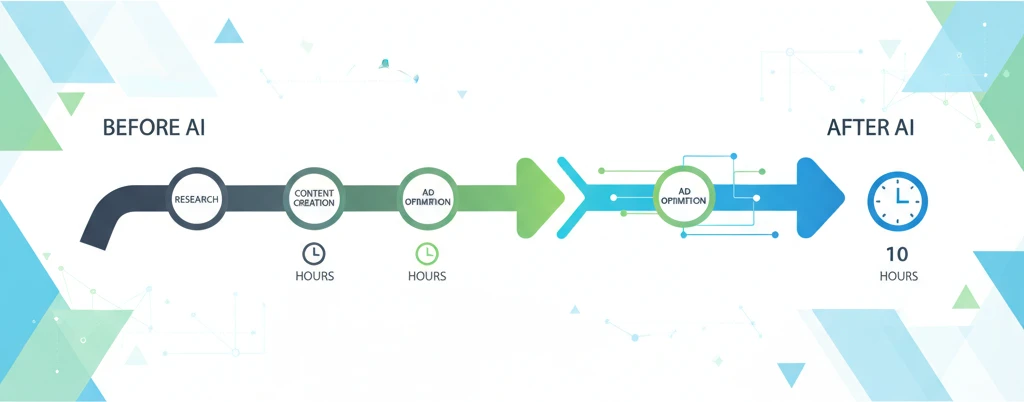
You might think a 40% reduction in marketing time sounds ambitious, even a bit like hype. But consider the sheer volume of tasks involved: brainstorming content ideas, writing multiple drafts of ad copy, performing keyword research, analyzing campaign data, and scheduling social media posts. Each of these can consume hours. AI tools, when properly implemented, can perform many of these tasks in minutes. This isn’t about replacing human creativity entirely; it’s about augmenting it, removing the tedious elements so that your team can focus on strategy, refinement, and higher-level thinking. For a startup, this reclaimed time translates directly into a competitive advantage, allowing for quicker iteration and a more responsive market presence.
The Startup Scramble: Why Time is Your Most Expensive Asset
In the chaotic early days of a startup, time is an exceptionally precious commodity. Unlike established companies with dedicated departments and substantial budgets, startups operate with lean teams where individuals often perform roles outside their core expertise. Every hour spent on manual, repetitive marketing tasks is an hour that could have been dedicated to product innovation, strategic partnerships, or direct customer engagement. This scarcity of time means that even small inefficiencies can have a disproportionately large impact on a startup’s ability to scale and survive. The pressure to perform, to acquire users, and to demonstrate traction means that time-saving solutions are not just beneficial—they are essential for competitive viability.
Think about it: a founder spending two hours manually crafting social media posts is two hours not spent refining a pitch deck or speaking with potential investors. A marketing intern dedicating a full day to keyword research when an AI tool could deliver comprehensive insights in under an hour is a significant drain on limited resources. This is where the true cost of time becomes apparent. The opportunity cost of inefficient processes means missed product development cycles, slower market entry, and a diminished ability to adapt to market shifts. Therefore, any technology or strategy that can demonstrably cut down on time spent on marketing activities offers a direct return on investment by preserving this critical, finite resource.
Beyond the Hype: Real AI Gains for Small Businesses in 2026
While the promise of AI in marketing can sometimes sound like science fiction, the reality in 2026 is that these tools are providing concrete, measurable benefits for small businesses and startups. The initial hype has settled, revealing practical applications that streamline workflows and enhance campaign performance. You might be wondering if AI is truly accessible and beneficial for a small operation, not a tech giant. The answer is a resounding yes. Many AI tools are designed with user-friendliness and affordability in mind, specifically catering to businesses with limited budgets and technical expertise.
For instance, AI-powered content generators can produce first drafts of blog posts, social media updates, and email newsletters in mere minutes, significantly reducing the time content marketers or even overloaded founders would spend staring at a blank page. Similarly, AI analytics tools can sift through vast amounts of data to identify customer segments, predict trends, and flag underperforming campaigns far faster than manual analysis. These aren’t just incremental improvements; they represent a fundamental shift in how marketing can be executed. Companies are seeing tangible results, such as improved click-through rates on ads, higher engagement on social media, and more efficient allocation of advertising spend. This practical application of AI is a key reason why digital”>https://kpidm.com/uncategorized/digital-marketing-ai-for-entrepreneurs/”>digital marketing AI for entrepreneurs is such a hot topic.
Content Creation on Autopilot: From Blank Page to Published Post
Content marketing remains a cornerstone of digital strategy for businesses of all sizes, but the demands of consistent, high-quality content creation can be overwhelming, especially for lean startups. AI is stepping in to automate and augment various stages of the content lifecycle, transforming a labor-intensive process into a significantly more efficient one. From ideation to drafting and repurposing, AI tools are enabling businesses to produce more content, faster, without sacrificing quality. This allows marketing teams to focus on strategy and promotion, rather than getting bogged down in the repetitive mechanics of creation.
You’re probably familiar with the dread of a blank document staring back at you, waiting for a brilliant blog post or compelling ad copy. AI has emerged as a powerful ally in overcoming this common hurdle. Tools powered by sophisticated natural language processing can not only suggest topics but also generate outlines and even complete first drafts. This is a game-changer for startups that need to maintain a consistent online presence but lack dedicated copywriting staff. The ability to generate content rapidly means businesses can test more ideas, respond more quickly to market trends, and publish at a higher frequency. This capability is central to many digital”>https://kpidm.com/uncategorized/digital-marketing-ai-automation-for-efficiency/”>digital marketing AI automation for efficiency strategies.
Generating Blog Post Ideas That Actually Convert
The ideation phase of content creation can often feel like searching for a needle in a haystack. What topics will resonate with your target audience? Which keywords will drive organic traffic? And, most importantly, which ideas have the potential to convert readers into leads or customers? AI excels at sifting through vast datasets to identify patterns and opportunities that human analysts might miss. By analyzing search trends, competitor content, and audience engagement data, AI tools can pinpoint emerging topics and overlooked keyword niches that align with your business goals.
You can feed an AI tool information about your industry, target customers, and existing content, and it can suggest a list of potential blog post titles and topics. These suggestions aren’t just random; they are often informed by data on what people are actively searching for and engaging with. For example, an AI might identify a long-tail keyword with low competition and high search intent that your business is perfectly positioned to address. This allows for a much more strategic approach to content planning, moving beyond guesswork to data-driven decisions. This is the essence of prompt”>https://kpidm.com/uncategorized/prompt-engineering-solve-business-marketing-puzzles/”>prompt engineering: solve business marketing puzzles, where thoughtful questions yield insightful answers.
Drafting Ad Copy in Minutes, Not Hours
Crafting compelling ad copy that captures attention, communicates value, and drives clicks is an art form. However, for startups with limited marketing staff, the process of writing and testing multiple ad variations can be incredibly time-consuming. AI-powered copywriting tools can significantly accelerate this process, generating persuasive ad headlines, body text, and calls-to-action in a fraction of the time it would take manually. These tools can also be trained to adhere to specific brand voices and marketing objectives.
Imagine needing to create ad campaigns for several different platforms simultaneously. Instead of each ad requiring hours of thought and refinement, an AI can generate several high-quality options within minutes. You can then use these AI-generated drafts as a starting point, tweaking them to add your unique brand personality and strategic nuances. This allows your team to focus on analyzing the performance of different ad variations and optimizing them for better results, rather than being stuck in the initial creation bottleneck. It’s a way to achieve more granular testing and faster iteration, which is critical for maximizing ad spend efficiency.
Repurposing Content Across Channels with AI Assistance
Maximizing the reach and impact of your content is crucial for any business, especially startups that need to make every piece of content work harder. The concept of content repurposing—transforming existing content into new formats for different platforms—is well-established, but it can be a manual and time-intensive undertaking. AI is revolutionizing this process, making it easier and faster to adapt content for various channels, from social media snippets to email newsletters and even video scripts.
You might have a detailed blog post that you want to turn into a series of tweets, an infographic, or even a short explainer video script. AI tools can analyze the core message of your original content and help you extract key points, summarize information, and even suggest new angles suitable for different audiences. For instance, an AI might help break down a lengthy article into bite-sized social media posts, identify the most visually engaging elements for an infographic, or even generate a script outline for a video. This intelligent repurposing ensures your valuable content reaches a wider audience across multiple touchpoints, amplifying your marketing efforts without requiring a proportional increase in creation time.
Smarter SEO: AI’s Role in Climbing Search Rankings
Search Engine Optimization (SEO) is a dynamic field, constantly influenced by algorithm updates and evolving user search behaviors. For startups, achieving visibility in crowded search engine results pages (SERPs) is paramount for driving organic traffic and acquiring customers. AI is transforming SEO from a complex, often intuition-driven practice into a more data-driven, efficient, and predictive discipline. By leveraging AI, businesses can gain deeper insights into what search engines and users are looking for, enabling them to refine their strategies for better rankings and increased organic visibility.
You might have spent countless hours wrestling with keyword research tools, trying to decipher search intent, and manually auditing your website for on-page issues. AI-powered SEO tools are now capable of automating many of these laborious tasks, providing more accurate and actionable recommendations. These technologies can analyze search queries at a scale unimaginable to human teams, identifying subtle trends and opportunities. This allows startups to be more agile and responsive, quickly adapting their SEO strategies to capitalize on emerging search patterns and user needs. This strategic advantage is why many consider AI central to their digital”>https://kpidm.com/uncategorized/digital-marketing-ai-for-small-business/”>digital marketing AI for small business initiatives.
Keyword Research That Uncovers Untapped Opportunities
Effective keyword research is the foundation of any successful SEO strategy. It involves identifying the terms and phrases your target audience uses when searching for products or services like yours. However, traditional keyword research can be time-consuming and often yields a predictable set of high-volume, highly competitive keywords. AI-powered tools are changing this by going beyond simple volume metrics to uncover deeper insights, including search intent, question-based queries, and latent semantic indexing (LSI) keywords that relate semantically to core topics.
An AI tool can analyze massive amounts of search data to identify long-tail keywords (specific, longer phrases) that have lower competition but higher conversion rates because they indicate a user is further along in the buying journey. It can also detect emerging trends and conversational search queries that might be missed by conventional methods. For instance, instead of just targeting “digital marketing course,” an AI might suggest targeting “how to learn AI digital marketing for small business in 2026” based on current search patterns. This data-driven approach ensures that your content strategy is aligned with what people are actually searching for, leading to more qualified traffic and better SEO performance.
On-Page Optimization With AI-Driven Suggestions
On-page SEO involves optimizing elements within your website pages to improve their ranking in search results. This includes title tags, meta descriptions, header tags, content structure, and internal linking. Manually auditing and optimizing each of these elements for every page can be a monumental task, especially for websites with hundreds or thousands of pages. AI-powered SEO platforms can automate much of this process, offering intelligent suggestions for improvement based on real-time data and best practices.
These tools can scan your website and flag areas for improvement, such as missing title tags, unoptimized meta descriptions, keyword density issues, or opportunities for better internal linking. Some AI tools even go a step further, suggesting specific content revisions or recommending new content clusters based on your existing site structure and target keywords. For example, an AI might suggest adding a relevant internal link from a new blog post to a pillar page that would benefit from more authority. This systematic and data-informed approach to on-page optimization ensures that your website is technically sound and strategically aligned with search engine requirements.
Understanding Search Intent with AI-Powered Analytics
Search engines aim to provide users with the most relevant and helpful results possible, which means understanding the underlying intent behind a search query is critical for SEO success. Is a user looking to buy something (transactional intent), learn about a topic (informational intent), or navigate to a specific website (navigational intent)? AI analytics tools are becoming increasingly adept at deciphering this search intent, offering deeper insights than traditional analytics platforms.
By analyzing a vast array of search signals, including user behavior on search results pages, click-through rates, and dwell time on landing pages, AI can provide a nuanced understanding of what users truly want when they type a query. This allows you to tailor your content and website experience to match that intent more precisely. For instance, if an AI identifies that searches for a particular keyword consistently show high engagement with video content, it signals an opportunity to create a video rather than just a text-based article. This alignment with user intent is a key factor in improving rankings and providing a superior user experience, contributing to overall better AI”>https://kpidm.com/uncategorized/ai-marketing-smarter-campaigns-real-results/”>AI marketing: smarter campaigns, real results.
Ad Campaign Optimization: Maximizing Your Ad Spend with AI
For startups, every dollar spent on advertising needs to work as efficiently as possible. Achieving a strong return on investment (ROI) from ad campaigns is crucial for sustainable growth. AI is revolutionizing the way ad campaigns are managed and optimized, moving beyond manual adjustments to sophisticated, data-driven strategies that adapt in real-time. This allows businesses to reach the right audiences with the right message at the right time, minimizing wasted ad spend and maximizing conversion rates.
You might be familiar with the complexity of managing ad platforms like Google Ads or Facebook Ads, with their myriad of settings and constant need for monitoring. AI-powered ad optimization tools automate many of these complex processes, from audience segmentation and bid management to creative testing and performance analysis. They can process vast amounts of data faster than any human team, identifying trends, predicting outcomes, and making micro-adjustments to campaigns that lead to significant improvements in performance. This level of precision and responsiveness is what gives AI a distinct edge in today’s competitive advertising landscape.
Audience Targeting Refinements for Better ROI
One of the most significant impacts of AI on ad campaigns is its ability to refine audience targeting with unprecedented accuracy. Instead of relying on broad demographic or interest-based targeting, AI can analyze user behavior across multiple platforms and data points to identify highly specific audience segments that are most likely to convert. This granular approach ensures that your ad budget is directed towards individuals who have a genuine interest in your product or service, leading to a better ROI.
AI algorithms can identify patterns and correlations that human marketers might overlook, such as the combination of online behaviors, device usage, and past interactions that signal a high propensity to purchase. This allows for the creation of custom audiences that are far more precise than traditional methods. For example, an AI might identify a segment of users who have visited specific product pages, added items to their cart but not purchased, and have recently searched for related solutions. Targeting this highly qualified audience with tailored ads is significantly more effective than a general outreach, driving higher conversion rates and improving the overall efficiency of your ad spend.
Automated Bidding Strategies That Adapt in Real Time
Bid management is a critical, yet often time-consuming, aspect of running paid advertising campaigns. Manually adjusting bids to stay competitive while also staying within budget requires constant monitoring and expertise. AI-powered bidding strategies automate this process by using machine learning algorithms to predict the likelihood of a conversion for each auction and adjust bids accordingly in real-time. This ensures that you’re bidding optimally for every impression, maximizing your chances of achieving your campaign goals.
These AI systems can analyze thousands of variables—including user demographics, time of day, device, location, and historical performance data—to make split-second bidding decisions. This adaptability is crucial in fast-moving auction environments where winning valuable ad placements requires precision. For instance, an AI might automatically increase bids during peak shopping hours for high-intent keywords while lowering bids for less valuable opportunities, all without manual intervention. This dynamic bidding ensures that your ad budget is spent where it’s most effective, driving better performance and a stronger ROI for your campaigns. This is a key component of strategies outlined in Digital”>https://kpidm.com/uncategorized/digital-marketing-3-ai-wins-for-business/”>Digital Marketing: 3 AI Wins for Business.
Performance Analysis and Predictive Insights
Understanding the performance of your ad campaigns is essential for ongoing optimization. AI tools go beyond simple reporting by providing in-depth performance analysis and, crucially, predictive insights. These systems can identify complex trends, diagnose campaign underperformance, and forecast future results based on current data, allowing you to make proactive adjustments rather than reactive ones.
An AI can analyze campaign data to uncover which ad creatives, landing pages, or audience segments are driving the best results, and just as importantly, why. It can also identify potential issues before they significantly impact performance, such as a sudden drop in conversion rates for a specific audience. More advanced AI can even predict how changes to your campaign—such as a shift in budget allocation or a new ad creative—might impact future outcomes. This predictive capability empowers marketers to make more informed strategic decisions, optimize campaigns proactively, and ultimately achieve better overall results from their advertising efforts.
Social Media Management: Consistent Engagement Without Burnout
For startups, maintaining a robust social media presence often feels like a relentless juggling act. The demand for fresh content, timely responses, and consistent engagement can quickly lead to team burnout. AI-powered tools are stepping in to transform this landscape, offering intelligent solutions that automate repetitive tasks and provide strategic insights. These systems can analyze performance metrics, suggest optimal posting times, and even draft initial content variations, freeing up valuable human resources. The core benefit here isn’t just about saving time; it’s about achieving a higher quality of engagement with a more sustainable workflow. Instead of reacting to comments and messages in a frantic scramble, teams can adopt a proactive, data-driven approach. This shift allows for more thoughtful community building and a stronger brand voice across all platforms. For instance, an AI can monitor keywords related to your industry and flag relevant conversations for your team to join, ensuring you’re always part of the important discussions. This strategic involvement is key to building a loyal following without the constant pressure of manually sifting through endless notifications. The goal is to move from constant “doing” to more strategic “being” present online.
One of the most significant efficiency gains comes from AI’s ability to optimize content scheduling and posting. Understanding when your target audience is most active and receptive is crucial for maximizing reach and engagement. AI algorithms can analyze historical data, identify peak engagement windows for different demographics and platforms, and then automatically schedule posts accordingly. This takes the guesswork out of timing and ensures your content lands when it’s most likely to be seen and interacted with. Furthermore, AI can learn from the performance of past posts, suggesting adjustments to content types, messaging, and even visual elements for future campaigns. This iterative learning process means your social media strategy becomes increasingly effective over time, a stark contrast to manual methods where insights might be slow to surface or based on incomplete analysis. This automated optimization is particularly valuable for startups operating with lean marketing teams, where every hour saved is a direct contribution to productivity and growth.
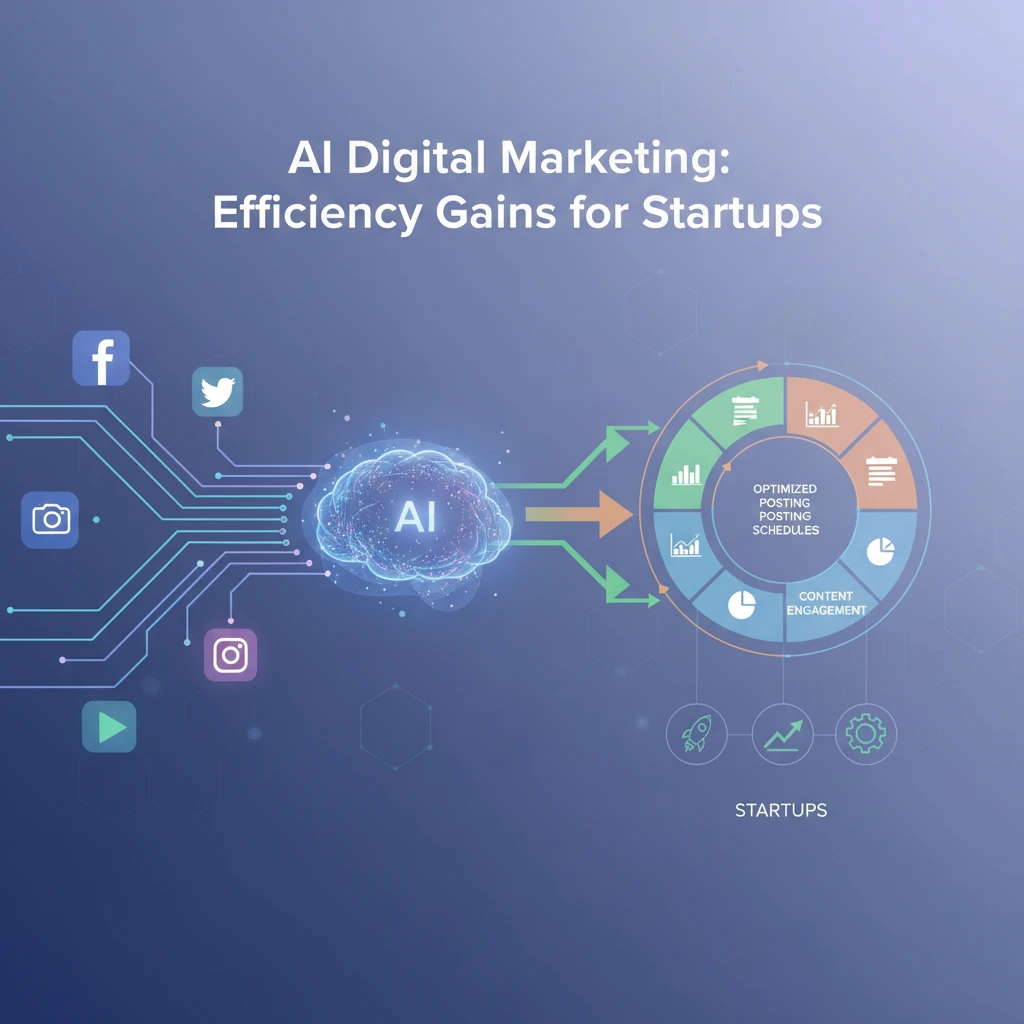
Beyond scheduling, AI excels at sentiment analysis, which directly impacts customer service responsiveness. By processing large volumes of customer feedback, social media mentions, and reviews, AI can quickly gauge the overall sentiment—positive, negative, or neutral—towards your brand or specific campaigns. This capability allows startups to identify and address customer concerns in near real-time. Negative feedback can be flagged for immediate human intervention, preventing small issues from escalating into major PR crises. Conversely, positive sentiment can be amplified through targeted engagement, reinforcing customer loyalty. This proactive customer care, powered by AI’s analytical speed, is a critical differentiator for new businesses competing for market attention. It ensures that customer voices are heard and acted upon efficiently, fostering trust and a positive brand perception even when resources are stretched thin. The ability to understand the emotional tone behind customer interactions provides a deeper layer of insight than simple keyword monitoring.
Identifying emerging trends and key influencers is another area where AI offers substantial advantages for startups. AI tools can continuously scan social media, news sites, and industry forums to detect patterns and predict trending topics before they become mainstream. This foresight allows businesses to create timely and relevant content, positioning themselves as thought leaders and capitalizing on growing interest. Simultaneously, AI can identify influencers whose audiences align with a startup’s target market. Instead of laboriously searching and vetting potential partners, AI can provide a data-backed list of influencers, complete with metrics on their reach, engagement rates, and audience demographics. This data-informed influencer outreach significantly improves the efficiency and effectiveness of partnership campaigns, ensuring that marketing efforts are directed towards individuals who can genuinely drive impact. For startups looking to quickly build brand awareness and credibility, these AI-driven insights are invaluable.
Personalization at Scale: Speaking Directly to Your Customers
In today’s crowded digital marketplace, generic marketing messages often fall flat. Customers expect brands to understand their individual needs and preferences, making personalization a key driver of engagement and conversion. For startups, achieving this level of tailored communication can seem daunting due to limited resources. However, AI is democratizing personalization, enabling even small businesses to deliver highly individualized experiences at scale. By analyzing vast amounts of customer data—from browsing history and purchase patterns to demographic information and past interactions—AI algorithms can segment audiences with remarkable precision. This allows for the creation of dynamic content and offers that resonate deeply with each customer, fostering a sense of recognition and value. The goal is to move beyond broad demographic targeting towards truly individualized customer journeys, making each interaction feel unique and relevant, which significantly boosts conversion rates and customer loyalty.
Crafting personalized email campaigns is a prime example of AI’s impact on scalable personalization. Traditional email marketing often involves sending the same message to large lists, resulting in low open and click-through rates. AI changes this by enabling hyper-segmentation and dynamic content generation. Tools can analyze individual recipient data to determine the most compelling subject lines, the optimal sending times, and the most relevant product recommendations or content within the email itself. For instance, an AI might notice a customer has repeatedly viewed a specific product category; it can then trigger an email featuring new arrivals or special offers within that category, complete with personalized product images and copy. This level of tailored messaging, powered by AI’s analytical prowess, moves beyond simply addressing the customer by name; it speaks directly to their interests and intent, dramatically increasing the effectiveness of email outreach. This approach ensures that every email sent feels like a one-to-one conversation, boosting customer connection and conversions.
Website content tailoring based on user behavior is another powerful application of AI-driven personalization. When a user visits a website, AI can track their actions in real-time. If a user spends time on a specific blog post about a certain service, AI can then dynamically adjust the homepage or recommend related content and products tailored to that interest. This might include displaying a banner ad for a related service, pop-ups offering a discount on that particular product, or prioritizing blog posts on similar topics in the user’s session. This adaptive website experience makes the user feel understood and guides them more effectively through the sales funnel. For a startup, this means their website can act as a personalized sales assistant for every visitor, improving user experience and driving higher conversion rates without requiring manual intervention for each visitor. The ability to customize the on-site journey based on inferred intent is a significant competitive advantage.
While the benefits of AI-driven personalization are clear, it’s crucial to consider the ethics and efficacy involved. Ensuring transparency about data collection and usage is paramount for building customer trust. Startups must be mindful of not crossing the line into intrusive or overly aggressive marketing, which can backfire and damage brand reputation. Efficacy comes into play by continually testing and refining AI models. Personalization is not a “set it and forget it” strategy; it requires ongoing monitoring and adjustment to ensure it remains effective and aligned with customer expectations. For example, an AI might learn to personalize offers based on past purchases, but it’s important to also ensure it doesn’t exclude potential new customers or inadvertently create filter bubbles. The challenge lies in balancing the power of AI with a human-centric approach that respects user privacy and preferences, leading to genuine improvements in customer experience rather than just optimized sales tactics. The ethical considerations are just as critical as the technical implementation for long-term success.
Prompt Engineering for Marketers: Commanding Your AI Tools
As AI tools become integral to digital marketing, the skill of prompt engineering has emerged as a critical differentiator for startups. Simply put, prompt engineering is the art and science of crafting effective instructions—prompts—to guide AI models in generating desired outputs. For marketers, this means learning to communicate precisely with AI to generate compelling copy, creative ideas, code snippets, or analytical summaries. A well-crafted prompt can unlock the full potential of AI, delivering targeted and high-quality results, whereas a poorly constructed one can lead to generic, irrelevant, or even nonsensical outputs. This skill is becoming as fundamental as understanding SEO or social media metrics, as it directly influences the efficiency and effectiveness of AI-assisted marketing tasks. The goal is to move from basic requests to strategic AI direction, ensuring your AI partners are working with optimal clarity and purpose.
The art of the specific prompt is what truly makes AI tools shine. Instead of vague commands like “write a blog post about marketing,” a more effective prompt would include detailed context, target audience, desired tone, key talking points, keywords, and even negative constraints (e.g., “do not mention X”). For example, a marketer wanting an AI to generate social media captions for a new product launch might prompt: “Write three engaging Instagram captions for our eco-friendly reusable coffee cup. Target audience: environmentally conscious millennials. Tone: optimistic and action-oriented. Include a call to action to visit our website. Use hashtags #SustainableLiving and #EcoFriendly. Keep captions under 150 characters.” This level of detail allows the AI to produce much more relevant and tailored content. Understanding how to provide this contextual richness in prompts is key to producing outputs that require minimal editing, saving significant time and effort for startup marketing teams. It transforms AI from a helpful assistant into a precise collaborator.
Iterative prompting is the practice of refining prompts based on the AI’s output. It’s rare to get the perfect result on the first try. Marketers often need to engage in a dialogue with the AI, providing feedback and making adjustments to the prompt to steer the output closer to the desired outcome. For instance, if an AI generates a blog post introduction that is too formal, the prompt can be updated to specify a “more casual and conversational tone.” If a generated ad copy lacks a strong emotional appeal, the prompt can be modified to “emphasize the feeling of relief and convenience.” This dialogue-driven refinement process is essential for maximizing the utility of AI. It teaches marketers to think critically about the AI’s response and how to guide it towards perfection, rather than accepting the first draft. It’s a cycle of hypothesis, generation, evaluation, and adjustment that leads to increasingly sophisticated results.
Several common prompting pitfalls can hinder marketers from achieving optimal results. One is vagueness, as discussed; the AI simply doesn’t have enough information. Another is over-specification, where a prompt might be too complex or contradictory, confusing the AI. For example, asking for a “short, detailed, yet highly engaging” piece of content might be challenging for the AI to balance. Marketers can also fall into the trap of assuming the AI understands nuances or industry jargon without explicit definition. Finally, failing to iterate and refine prompts is a missed opportunity; accepting the first output without seeking improvement limits the AI’s potential. Awareness of these common mistakes allows startups to approach prompt engineering with a more strategic mindset, leading to more accurate, creative, and useful AI-generated content. Overcoming these hurdles is essential for any startup looking to fully integrate AI into their marketing workflow.
Choosing the Right AI Tools: A Startup’s Practical Checklist
For startups, selecting the right AI tools from the rapidly expanding market is a critical decision that can significantly impact marketing efficiency and effectiveness. It’s easy to get overwhelmed by the sheer volume of options, each promising revolutionary capabilities. The key is to approach this selection process with a clear strategy, focusing on needs rather than just buzzwords. Startups should begin by identifying their most pressing marketing challenges and then research AI tools that specifically address those pain points. For instance, if content creation is a bottleneck, tools focused on AI writing assistants or content generation platforms would be a priority. Conversely, if customer engagement is the focus, AI-powered chatbots or social media management tools with AI features might be more appropriate. This needs-based selection ensures that investments are made in technology that provides tangible benefits, rather than acquiring tools that sit unused. Understanding core functionalities is paramount before evaluating advanced features.
Evaluating functionality versus cost is a crucial step in making smart AI investments for startups. Many powerful AI tools come with a premium price tag, which can be prohibitive for businesses with limited budgets. However, the cheapest option isn’t always the most cost-effective in the long run. Startups need to perform a careful cost-benefit analysis, weighing the expected ROI against the subscription fees or licensing costs. Consider the potential time savings, increased lead generation, or improved conversion rates that a tool can deliver. A more expensive tool that automates tasks saving a full-time employee’s salary might be a far better investment than a cheaper one that only offers marginal improvements. Many AI tools offer tiered pricing or freemium models, allowing startups to start small and scale up as their needs and budget grow. This flexible investment strategy allows for experimentation without breaking the bank. Always look for case studies or testimonials that demonstrate real-world profitability gains.
Integration capabilities are another vital consideration when choosing AI tools for a startup. In today’s interconnected digital ecosystem, marketing tools need to work seamlessly together to create a cohesive workflow. An AI tool that cannot easily integrate with your existing CRM, project management software, or analytics platforms will create data silos and manual workarounds, negating much of the efficiency it promises. Before committing to a tool, verify its integration options. Does it offer native integrations with your current stack? Are there robust APIs available for custom connections? For example, an AI content generation tool that automatically pushes drafted content into your CMS or social media scheduler saves significant time compared to one that requires manual copy-pasting. Ensuring these interoperability standards are met prevents the creation of fragmented systems and allows for a more unified and efficient marketing operation, crucial for agile startup environments.
Finally, user-friendliness for your team is paramount. Even the most powerful AI tool is useless if your team cannot easily learn and operate it. Startups often have lean teams where individuals wear multiple hats, meaning extensive training periods are not feasible. Look for AI tools with intuitive interfaces, clear documentation, and responsive customer support. Consider a trial period to let your team test the usability of the tool in real-world scenarios. Gather feedback from the end-users who will be interacting with the AI daily. A tool that is complex or frustrating to use will lead to low adoption rates and underutilization, regardless of its advanced features. Prioritizing accessible AI technology ensures that your team can quickly harness its benefits, fostering a culture of innovation and efficiency rather than one of technical frustration. This practical aspect is often overlooked but is fundamental to successful AI adoption.
Measuring Success: KPIs That Matter with AI Marketing
Adopting AI in digital marketing isn’t just about embracing new tools; it’s about achieving tangible business outcomes. For startups, this means a laser focus on key performance indicators (KPIs) that directly reflect efficiency and growth. You’ll need to shift from simply tracking activity to measuring impact. Think about how AI can influence not just campaign performance but the very operational backbone of your marketing efforts. This requires a strategic approach to data, ensuring you’re capturing the right metrics to validate your AI investments. Without clear benchmarks, it’s easy to get lost in the novelty of AI, rather than realizing its true potential for business acceleration.
Tracking Efficiency Gains: Time Saved, Tasks Automated
One of the most immediate benefits startups see from AI in digital marketing is the significant reduction in time spent on repetitive tasks. This is where the automation potential of AI truly shines. Consider tasks like data entry, basic report generation, social media post scheduling, or even initial customer service chatbot responses. AI tools can handle these with remarkable speed and accuracy, freeing up valuable human hours. For a startup with a lean team, even a few hours saved per person per week can be reallocated to higher-value activities like strategy development or customer engagement. For example, an AI content generation tool might draft initial blog post outlines or social media captions in minutes, tasks that could take a human writer much longer. This efficiency is not just about speed; it’s about increasing the output capacity of your existing team. You might start by identifying the most time-consuming, low-complexity tasks and then exploring AI solutions that can automate them. A common pitfall here is over-automating to the point where the human element is lost, so finding that balance is key.
ROI on AI Tool Investments
For any startup, justifying expenditure is paramount. When investing in AI marketing tools, calculating the return on investment (ROI) is crucial. This goes beyond simply looking at the cost of the software. You need to quantify the value derived from AI-driven efficiencies and improvements. One way to approach this is by comparing the cost of AI tools against the cost of performing those same tasks manually or hiring additional staff. For instance, if an AI tool costs $100 per month and saves your team 20 hours of work, and your team’s hourly rate is $50, you’re already seeing a $900 monthly saving. You also need to factor in the incremental revenue generated by AI-enhanced campaigns, such as improved ad targeting or more personalized customer journeys. A pitfall to avoid is focusing solely on cost savings and neglecting revenue generation. It’s also important to note that not all AI tools offer immediate, easily quantifiable ROI. Some, like advanced analytics platforms, provide long-term strategic advantages that are harder to measure in the short term. For a more in-depth look at making your marketing profitable with AI, explore these profitability hacks.
Customer Acquisition Cost (CAC) and Lifetime Value (LTV) Adjustments
AI marketing tools can have a profound impact on two fundamental business metrics: Customer Acquisition Cost (CAC) and Customer Lifetime Value (LTV). By enabling more precise audience targeting and personalized messaging, AI can reduce ad spend wastage, thereby lowering CAC. Imagine an AI analyzing user behavior to identify high-intent prospects for your services, ensuring your marketing budget is spent on the most likely converters. Conversely, AI can enhance customer retention and encourage repeat purchases by facilitating personalized recommendations, proactive customer support, and tailored loyalty programs, thus increasing LTV. For example, an AI-powered CRM can predict which customers are at risk of churning and trigger retention campaigns. A key decision criterion for adopting AI tools should be their demonstrable ability to positively influence these metrics. The challenge lies in accurately attributing changes in CAC and LTV directly to AI initiatives, especially in the early stages. You might find yourself needing to refine your tracking mechanisms to isolate the AI’s impact from other marketing efforts. Focusing on the real results of smarter campaigns is the ultimate goal.
The Human Touch in an AI World: Where You Still Shine
While the efficiency gains from AI in digital marketing are undeniable, it’s crucial for startups to recognize where human ingenuity and empathy remain indispensable. AI excels at data processing, pattern recognition, and automation, but it doesn’t possess genuine creativity, nuanced emotional intelligence, or the ability to build authentic relationships. The human element is what differentiates a functional marketing strategy from one that truly resonates with customers and builds lasting brand loyalty. For startups, this distinction is even more critical as they aim to carve out a unique identity and foster a dedicated customer base in a crowded marketplace. Understanding these nuances will help you integrate AI effectively without sacrificing the core values that make your brand human and relatable. This involves a thoughtful approach to how AI complements, rather than replaces, your team’s core competencies.
Strategic Oversight: AI as a Co-Pilot, Not a Replacement
Viewing AI as a co-pilot rather than a full autopilot is essential for strategic success. AI can generate insights from vast datasets, identify trends, and even suggest optimized campaign parameters, but it lacks the foresight, ethical judgment, and holistic business understanding that humans possess. Your role as a business owner or marketer is to provide the strategic direction, interpret AI’s findings within the broader business context, and make critical decisions. For instance, an AI might recommend a particular ad targeting strategy based on performance data, but a human strategist needs to consider the brand’s long-term positioning and ethical implications before implementation. Decision criteria for using AI should include its ability to augment human decision-making, not bypass it entirely. A pitfall to avoid is blindly following AI recommendations without critical evaluation, which can lead to off-brand messaging or missed strategic opportunities. Effective prompt engineering, for example, requires human creativity and understanding of the desired outcome, making it a prime area where human input is vital. Learning to solve marketing puzzles often involves this human-AI collaboration.
Creative Direction and Brand Voice Consistency
AI can be an incredible tool for generating content ideas, drafting initial copy, and even creating visual assets. However, it struggles to imbue content with genuine personality, emotional depth, and the unique narrative that defines a brand. Maintaining a consistent brand voice—whether it’s witty, authoritative, empathetic, or playful—requires human understanding of tone, nuance, and cultural context. For a startup, a distinctive brand voice is a powerful differentiator. While AI can help with the volume of content production, human oversight is indispensable for ensuring that every piece of communication aligns with the brand’s identity and resonates emotionally with the target audience. Examples include AI drafting social media posts, which then require a human editor to inject personality and ensure they sound authentically like the brand. A pitfall is allowing AI-generated content to become generic, diluting the brand’s unique appeal. Consider AI tools as creative partners that handle the heavy lifting, leaving you to refine the nuances and ensure a compelling narrative, as explored in content AI storytelling.
Building Genuine Customer Relationships
While AI-powered chatbots can handle basic inquiries and provide instant responses, they cannot replicate the empathy, trust, and rapport that human interaction fosters. Building genuine customer relationships is about understanding individual needs, offering personalized support that goes beyond algorithmic suggestions, and creating memorable experiences. For startups, strong customer relationships are often the bedrock of growth through word-of-mouth marketing and customer loyalty. AI can support these efforts by providing customer service agents with relevant data and insights, enabling them to offer more personalized and effective assistance. However, the crucial moments of connection—resolving complex issues, offering a sympathetic ear, or celebrating customer successes—remain firmly in the human domain. A key decision criterion for integrating AI in customer service should be its ability to enhance, not replace, human interaction. A common pitfall is expecting AI to fully manage customer relationships, leading to impersonal and ultimately damaging interactions. Focus on how AI can empower your team to build stronger connections.