

The digital marketing landscape is no longer just about strategy and execution; it’s about intelligence. In 2026, artificial intelligence isn’t a futuristic concept but a foundational element for businesses looking to not only survive but thrive. The key to unlocking significant profit lies in understanding how to strategically deploy AI to streamline operations, enhance customer engagement, and ultimately, drive revenue growth.
This isn’t about replacing human creativity or expertise, but augmenting it. AI tools, when wielded correctly, can automate tedious tasks, provide deep analytical insights, and personalize customer journeys in ways previously unimaginable. For business owners and marketing professionals, mastering these AI-driven profitability hacks is no longer optional—it’s the path to staying ahead.
AI in Digital Marketing: Turning Bytes into Bucks (2026 Edition)
As we navigate deeper into 2026, the integration of AI into digital marketing is moving beyond experimental phases into core operational strategies. The primary objective for businesses remains consistent: maximizing profitability. AI offers a powerful toolkit to achieve this by enhancing efficiency, improving customer targeting, and enabling more sophisticated campaign management. You might think of AI as a complex, impenetrable technology, but at its heart, it’s about sophisticated pattern recognition and automation. For instance, AI can analyze vast datasets to identify subtle trends in consumer behavior that human analysts might miss, directly informing where and how to invest marketing budgets for the greatest return. It’s about making smarter, data-driven decisions faster than ever before. The notion that AI is only for large corporations is outdated; small businesses are increasingly finding value through accessible AI solutions, leveling the playing field. This shift means that AI adoption isn’t just about staying current; it’s about actively creating a competitive advantage. You’re still figuring out the exact impact across every niche, but the trend is undeniably towards AI as a profit accelerator.
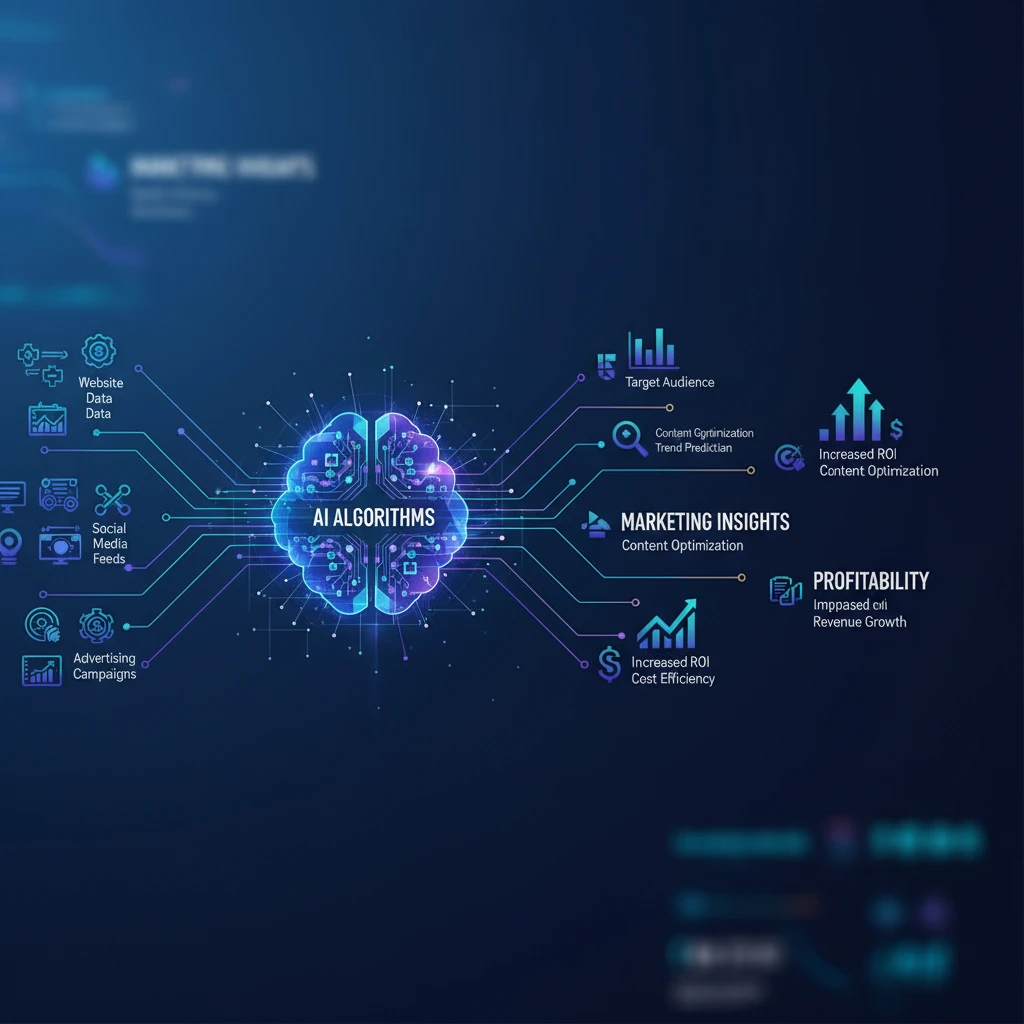
The decision criteria for adopting AI tools should center on tangible business outcomes. Does the tool promise to reduce customer acquisition costs, increase customer lifetime value, or improve conversion rates? For example, platforms that offer predictive analytics can help forecast demand, allowing businesses to optimize inventory and marketing efforts proactively, thereby reducing waste and increasing sales. Consider the potential for AI to identify underserved market segments. By analyzing demographic, psychographic, and behavioral data, AI can pinpoint groups of potential customers that competitors have overlooked. This allows for highly targeted campaigns that are more cost-effective and yield higher conversion rates. The key is to select AI solutions that directly address specific pain points within your marketing workflow and align with your overarching business goals. You could say it’s about smart tool selection, not just tool acquisition. For a deeper dive into selecting the right AI stack, resources like a Digital Marketing: AI Tool Stack Blueprint are invaluable.
Automating Your Way to Higher Margins with AI Content Creation
Content remains king, but the kingdom of content creation is being reshaped by AI. The ability to generate high-quality, relevant content at speed and scale is a direct pathway to increased profitability. AI content tools are no longer producing robotic, uninspired text; they are becoming sophisticated co-creators that can draft articles, social media updates, and email copy, freeing up human marketers to focus on strategy, refinement, and creative ideation. The pitfall here is assuming AI can do it all without human oversight. While AI can draft a blog post in minutes, it still requires a human touch for nuance, brand voice consistency, and factual accuracy. Think of it as an incredibly efficient junior writer; they can lay the groundwork, but the editor’s final polish is crucial for a truly impactful piece. The decision to use AI for content creation should be guided by the need for volume, speed, and cost-efficiency, without sacrificing quality. If you’re struggling to keep up with a content calendar, or if your budget for freelance writers is strained, AI can be a game-changer. You’re still learning the nuances of prompt engineering to get truly bespoke output, but the potential is massive.
Generating Blog Post Drafts in Minutes
The days of staring at a blank page for hours are fading. AI-powered tools can now take a few keywords or a brief outline and generate a coherent, well-structured blog post draft in a matter of minutes. This significantly speeds up the content production cycle, allowing businesses to publish more frequently and consistently. The decision criteria for using AI to draft blog posts should include the complexity of the topic and the desired depth. For factual, informative pieces or listicles, AI excels. For deeply nuanced opinion pieces or investigative journalism, human expertise remains paramount. The pitfall to avoid is publishing AI-generated content without thorough editing. AI might generate grammatically correct sentences, but it can miss contextual subtleties, brand tone, or factual inaccuracies. Always fact-check and refine the output to ensure it aligns with your brand’s voice and authority. An example: a small e-commerce business selling artisanal candles could use AI to draft blog posts about “candle care tips” or “the history of aromatherapy,” topics that have a well-defined information base. The AI generates a 500-word draft, which the business owner then edits for brand-specific details and personal anecdotes, saving hours of initial writing time. This aligns with the principles of Content Marketing: AI for Small Business Growth.
Crafting Social Media Updates That Convert
Social media requires a constant stream of engaging content. AI can help craft compelling updates, captions, and even suggest relevant hashtags. The decision point for leveraging AI here is often driven by the need for high-frequency posting across multiple platforms. AI tools can analyze trending topics and audience engagement patterns to suggest content ideas or adapt existing content for different social channels. For example, an AI can take a key message from a blog post and reformat it into a series of tweet-sized updates, a LinkedIn post, or an Instagram caption, each tailored to the platform’s best practices. The pitfall is relying solely on AI for creativity; while it can generate variations, it may not capture the unique personality or humor that resonates most with a specific audience. Human input is vital for injecting brand personality and ensuring that the tone feels authentic. Think about a local restaurant using AI to suggest daily specials or to draft posts about upcoming events, ensuring each post includes a call to action like “Book your table now!” to drive immediate bookings. This is a practical application of AI Marketing: Smarter Campaigns, Real Results.
Personalizing Email Campaigns at Scale
Email marketing remains a powerful tool, but its effectiveness hinges on personalization. AI can analyze customer data—purchase history, browsing behavior, demographics—to segment audiences and tailor email content, subject lines, and send times with remarkable precision. The decision to implement AI for email personalization is driven by the desire to increase open rates, click-through rates, and conversions. AI can go beyond basic segmentation; it can predict which products a customer is most likely to be interested in next or identify those at risk of churning, allowing for proactive, personalized outreach. The pitfall lies in over-personalization that feels intrusive or inaccurate. It’s crucial to ensure the data being used is clean and that the AI’s inferences are reasonable. For instance, an online clothing retailer could use AI to send personalized emails featuring new arrivals based on a customer’s past purchases and viewed items. If a customer frequently buys athletic wear, the AI would prioritize emails featuring new running shoes or workout gear, rather than evening gowns. This level of tailored communication significantly boosts engagement and sales, aligning perfectly with the goals of Digital Marketing: AI Automation for Efficiency.
AI-Powered SEO: Outranking Competitors While You Sleep
Search Engine Optimization is a dynamic field, and AI is revolutionizing how businesses approach it. By automating complex analysis and providing data-driven recommendations, AI empowers marketers to improve their search engine rankings more effectively and efficiently. You might think SEO is all about stuffing keywords, but modern SEO is far more nuanced, focusing on user intent, content quality, and technical soundness. AI tools can process massive amounts of search data to uncover opportunities and identify potential issues faster than manual methods. The key decision criteria for adopting AI in SEO should be the desire to gain a competitive edge through deeper insights and more targeted optimization strategies. For example, AI can analyze competitor backlink profiles to identify high-authority linking opportunities that you might have otherwise missed. While AI can provide powerful suggestions, remember that human expertise is still vital for interpreting these insights within the broader business context and for executing creative link-building strategies. Your understanding of SEO might evolve as these tools become more sophisticated, but their role in driving organic traffic is undeniable. For an overview of how AI can empower entrepreneurs in this space, consider insights from Digital Marketing: AI for Entrepreneurs.
Keyword Research with Predictive Insights
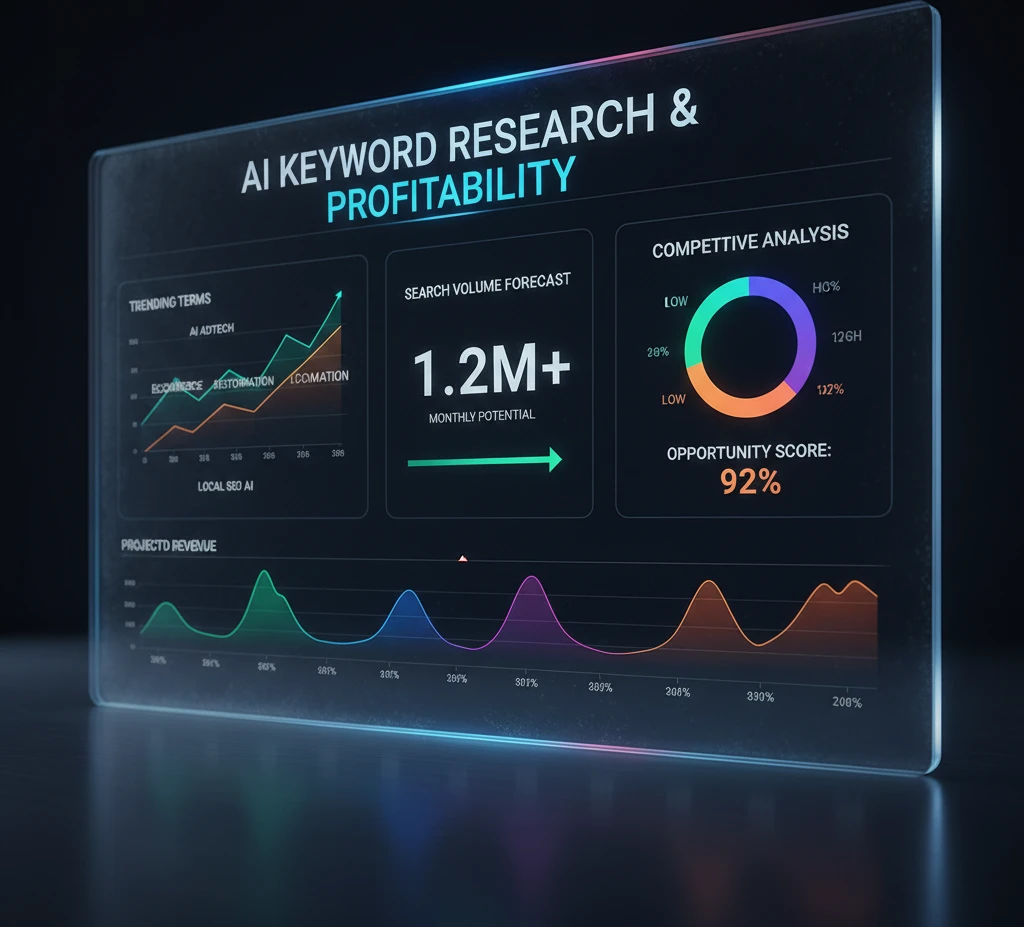
Traditional keyword research often relies on historical data. AI takes this a step further by incorporating predictive analytics to identify emerging trends and search terms that are likely to gain traction. The decision to use AI for keyword research is driven by the need to be proactive rather than reactive, capturing search volume before it becomes oversaturated. AI algorithms can analyze search query patterns, social media discussions, and news trends to forecast which keywords will become more relevant. A pitfall to avoid is solely focusing on high-volume, speculative keywords without considering user intent and the ability of your content to satisfy that intent. For example, an AI might flag a new technology or a niche hobby as a rising keyword trend. A business operating in that space can then create content around these nascent terms, positioning themselves as an authority early on. This predictive capability allows for content strategies that anticipate market shifts, rather than just chasing existing demand. It’s a proactive approach to SEO that can yield significant long-term benefits.
On-Page Optimization Suggestions You Can Trust
AI can analyze your website’s content and structure to provide specific, actionable recommendations for on-page optimization. This includes suggestions for title tags, meta descriptions, header tags, internal linking, and content readability. The decision to use AI for these suggestions is based on the need for detailed, data-backed improvements that go beyond generic SEO advice. AI tools can assess how well your content aligns with specific search queries and identify areas where it could be made more relevant and engaging for users. The pitfall is treating AI suggestions as gospel. While AI can identify patterns, it might not fully grasp the strategic intent behind certain content or the unique voice of your brand. For instance, an AI might suggest rewording a headline for better keyword inclusion, but a human editor might decide to keep the original for its emotional impact or unique branding. The key is to use AI as an intelligent assistant, verifying its recommendations against your overall marketing strategy. Resources like those found in Prompt Engineering: Solve Business Marketing Puzzles can help you craft better inputs for these tools.
Technical SEO Audits Simplified
Technical SEO can be daunting, involving aspects like site speed, mobile-friendliness, crawlability, and indexability. AI is rapidly simplifying these complex audits. The decision to use AI for technical SEO audits stems from the desire to identify and fix issues that hinder search engine crawling and indexing, which directly impacts rankings. AI tools can scan vast websites, identify broken links, unoptimized images, duplicate content, and other technical problems with remarkable speed and accuracy. The pitfall is not understanding the implications of the fixes suggested. An AI might flag a certain script as slowing down your site, but that script might be essential for core functionality. Human oversight is needed to prioritize fixes based on their potential impact on user experience and search performance. For example, an AI audit might reveal that a specific page loads too slowly. The marketing team then works with developers to optimize the images or code on that page, leading to a better user experience and improved search engine visibility. These insights are critical for overall site health and can be complemented by understanding Elementor: Faster WordPress Websites with Components for site performance.
Ad Spend Optimization: Where AI Finds Your Undiscovered Customers
The effectiveness of digital advertising hinges on reaching the right audience with the right message at the right time. AI is transforming ad spend optimization by enabling more precise targeting, dynamic bidding, and intelligent campaign adjustments. For businesses, this translates directly into higher return on ad spend (ROAS) and reduced customer acquisition costs. You might assume AI’s role is simply to automate bids, but its capabilities extend far deeper, into understanding complex customer journeys and predicting future behaviors. The decision to integrate AI into ad spend strategies should be driven by the goal of maximizing marketing budget efficiency. This means ensuring that every dollar spent is directed towards prospects most likely to convert, rather than being wasted on irrelevant impressions. While AI can identify patterns and make predictions, human marketers are essential for defining campaign goals, developing creative assets, and interpreting the nuanced outcomes that AI reports. It’s about building a symbiotic relationship between human strategy and AI execution. Understanding the foundational principles of AI in marketing is crucial, as explored in Digital Marketing: Essential AI Tools for Startups.
Predictive Bidding Strategies for Maximum ROI
In the realm of pay-per-click advertising, bidding strategies can make or break a campaign’s profitability. AI-powered predictive bidding analyzes numerous real-time signals—such as device type, location, time of day, and user browsing history—to forecast the likelihood of a conversion for each impression. The decision to deploy predictive bidding is driven by the pursuit of optimal ad placements and minimized wasted spend. Instead of relying on static bid adjustments, AI dynamically optimizes bids for each individual auction, aiming for the highest possible return on investment. The pitfall is trusting the AI’s predictions blindly without setting clear conversion goals and performance benchmarks. For example, an e-commerce store selling electronics might use AI bidding to increase bids on users who have previously viewed high-value items like laptops or home theater systems, and lower bids for users showing less purchase intent. This granular optimization ensures that ad budget is allocated to the most promising opportunities, directly impacting ROAS. This is a core component of what you’d learn in AI Digital Marketing: Business Owner’s Blueprint.
Audience Segmentation Refined by Machine Learning
Traditional audience segmentation can be broad, often based on basic demographics or interests. Machine learning takes this much further, creating highly specific audience segments based on complex behavioral patterns and predictive analytics. The decision to leverage ML for audience segmentation is about achieving hyper-personalization in advertising, leading to higher engagement and conversion rates. ML algorithms can identify subtle correlations between user actions, preferences, and their propensity to convert, allowing for the creation of dynamic segments that evolve in real-time. The pitfall is creating segments that are too narrow to be statistically significant or that are based on potentially biased data. For instance, a travel company could use ML to identify segments like “adventure seekers planning a winter trip” or “luxury travelers interested in beach destinations.” The AI analyzes past booking data, search queries, and website interactions to define these groups with precision, enabling ad campaigns tailored to their specific travel aspirations and booking windows. This level of refinement ensures marketing messages are highly relevant.
Creative Ad Copy Testing and Iteration
Creating ad copy that resonates with diverse audiences can be a challenge. AI can significantly streamline the process of testing and iterating on ad creatives, identifying winning combinations faster. The decision to use AI for ad copy testing is driven by the need to optimize messaging for better performance and to reduce the manual effort involved in A/B testing multiple variations. AI tools can generate numerous ad copy variations, test them across different audience segments, and analyze performance metrics like click-through rates and conversion rates. The pitfall is relying on AI to generate copy that lacks genuine human emotion or brand authenticity. While AI can suggest compelling headlines and calls to action, human insight is crucial for infusing personality and ensuring the copy aligns with brand values. For example, a SaaS company could use AI to test dozens of headlines and body copy combinations for a new feature launch. The AI identifies the top-performing variations based on conversion data, and the marketing team then refines these winning elements with their unique brand voice, ensuring both effectiveness and brand consistency. This continuous loop of testing and refinement is key to maximizing ad campaign success, as discussed in Digital Marketing: 3 AI Wins for Business.
Social Media Management Supercharged by AI Analytics
AI analytics are transforming social media management from a speculative art into a data-driven science. Instead of relying on gut feelings or past trends, businesses can now leverage sophisticated algorithms to understand audience sentiment, optimize posting schedules, and identify lucrative influencer collaborations. This shift allows for more efficient resource allocation and a demonstrably higher return on investment for social media efforts. By providing deeper insights into what resonates with target demographics, AI empowers marketers to create more impactful campaigns and build stronger brand loyalty. This move towards AI-driven insights is not just about doing things faster; it’s about doing them smarter, ensuring every social media interaction contributes meaningfully to business objectives.
Sentiment Analysis for Brand Reputation
Understanding how your brand is perceived is paramount, and AI-powered sentiment analysis offers an unparalleled advantage. These tools automatically process vast amounts of social media mentions, reviews, and comments, categorizing them as positive, negative, or neutral. This goes beyond simple keyword tracking; it analyzes the nuances of language, emojis, and context to gauge genuine emotion. A sudden spike in negative sentiment can alert you to a potential PR crisis before it escalates, allowing for proactive damage control. Conversely, identifying overwhelmingly positive feedback can highlight successful marketing angles or product features that resonate deeply with your audience. For instance, a company might discover through sentiment analysis that customers consistently praise its customer service response time, prompting them to feature this prominently in future marketing. This granular understanding of public perception is crucial for maintaining and improving brand reputation in a noisy digital space. You can also explore digital marketing strategies tailored for small businesses to further enhance your online presence.
Optimal Posting Times Based on User Behavior
The effectiveness of a social media post hinges significantly on when it’s published. AI analytics can move beyond generalized best practices to identify the precise windows when your specific audience is most active and engaged. These systems analyze historical data, considering factors like time zones, day of the week, and even specific platform usage patterns. For example, an AI might discover that a particular segment of your audience in a Western time zone is most responsive to content between 9 AM and 11 AM PST on weekdays, while another segment in Asia is more engaged during their evening hours. This targeted approach ensures that your content reaches the maximum number of eyes at the optimal moment, significantly increasing the likelihood of engagement such as likes, shares, and comments. This level of precision minimizes wasted reach and maximizes the impact of your content calendar. It’s about being seen, not just being present.
Identifying Influencer Partnerships with Data
Finding the right influencers can be a game-changer, but it’s often a labor-intensive process. AI can streamline this by analyzing influencer profiles, audience demographics, engagement rates, and content authenticity. Instead of relying on follower counts alone, AI tools can identify influencers whose audience genuinely overlaps with your target market and whose content aligns with your brand values. For example, an AI might flag an influencer with a seemingly smaller but highly engaged niche audience that consistently interacts with posts related to sustainable living, making them a perfect fit for an eco-friendly brand. This data-driven approach minimizes the risk of partnering with inauthentic or mismatched influencers, leading to more successful and cost-effective campaigns. It’s about finding partners who can genuinely advocate for your brand, not just post about it.
Prompt Engineering for Business Owners: Getting the Right AI Output
As AI tools become integral to business operations, the ability to communicate effectively with them—known as prompt engineering—is becoming a critical skill. Simply issuing vague commands will yield generic, unhelpful results. Mastering prompt engineering means understanding how to craft precise instructions that guide AI to produce outputs tailored to your specific business needs. This involves clarity, context, and structure. Think of it as learning a new language to converse with intelligent machines. For business owners, this translates directly into saved time, improved marketing collateral, more insightful data analysis, and more efficient workflows. A well-engineered prompt can mean the difference between a passable draft and a compelling piece of copy, or between a confusing data summary and actionable business intelligence. This isn’t about being a coder; it’s about being a strategic communicator with artificial intelligence. This topic is also covered in depth within our guide on solving business marketing puzzles with prompt engineering.
The Anatomy of an Effective Prompt
An effective prompt for AI tools typically comprises several key components, designed to provide the AI with sufficient context and direction. At its core, a prompt should clearly state the desired task or output. This is followed by providing necessary context, such as the target audience, the purpose of the output, and any specific constraints or requirements. For instance, instead of asking an AI to “write a social media post,” a better prompt would be: “Write three short, engaging Instagram captions for a new line of organic skincare products targeting millennial women. The captions should highlight the natural ingredients and the product’s cruelty-free status. Include a call to action to visit our website.” Including specific keywords, desired tone (e.g., professional, playful, informative), and format requirements (e.g., bullet points, numbered list) further refines the AI’s response. You might also specify the desired length or point of view. Understanding these elements ensures the AI acts as a knowledgeable assistant rather than a random text generator.
Iterative Prompt Refinement for Better Results
Rarely will the first prompt yield a perfect result. The true power of prompt engineering lies in its iterative nature. This means viewing the initial output as a starting point and systematically refining the prompt based on the AI’s response. If the AI’s output is too generic, the next prompt might ask for more specific details or a particular style. If it missed a key requirement, that needs to be explicitly addressed in the subsequent prompt. For example, if an AI generates an article that focuses too much on technical jargon, you might refine the prompt by saying, “Rewrite the previous article, but simplify the language for a general audience and focus on the benefits rather than the technical specifications.” This continuous feedback loop, where you adjust your instructions based on the AI’s performance, is crucial for honing the AI’s output to match your exact needs. It’s a dialogue, not a monologue.
Common Pitfalls to Avoid in Prompting
Several common mistakes can hinder your ability to get the most out of AI tools through prompt engineering. One of the most frequent is vagueness; prompts that lack specificity, context, or clear objectives often lead to irrelevant or unhelpful outputs. Another pitfall is assuming the AI understands implicit information or common sense—explicitly state what you need. Forgetting to define the target audience or the desired tone can also result in outputs that miss the mark. Overly complex or contradictory instructions can confuse the AI. It’s also important to avoid making assumptions about the AI’s knowledge base; always provide necessary background information. For instance, if you’re asking an AI to draft a marketing email for a product it wouldn’t inherently know about, you must provide details about the product’s features, benefits, and target customers. Being too demanding in a single prompt, without breaking down complex tasks into smaller, sequential prompts, can also lead to suboptimal results.
AI for Customer Insights: Understanding Your Audience Deeply
In today’s competitive landscape, truly understanding your customer is no longer a luxury, it’s a necessity. Artificial intelligence offers powerful tools to achieve this depth of insight, moving beyond superficial demographics to uncover behavioral patterns, preferences, and predict future actions. By analyzing vast datasets from various touchpoints—customer service interactions, purchase history, website navigation, and social media engagement—AI can paint a remarkably detailed picture of your audience. This granular understanding allows businesses to tailor products, services, and marketing efforts with unprecedented precision. Instead of broad-stroke campaigns, AI enables hyper-personalized experiences that resonate more effectively, fostering stronger customer relationships and driving loyalty. This isn’t just about collecting data; it’s about transforming raw information into actionable intelligence that fuels business growth.
Analyzing Customer Feedback for Product Improvement
Customer feedback is a goldmine of information, but manually sifting through surveys, reviews, and support tickets can be overwhelming. AI excels at this task by employing natural language processing (NLP) to analyze qualitative data at scale. These systems can identify recurring themes, common pain points, and specific suggestions mentioned by customers. For example, an AI might detect that numerous customers are requesting a particular feature or experiencing a consistent bug, even if these issues aren’t flagged by individual support agents. This allows product development teams to prioritize fixes and enhancements based on real-world user experience, ensuring that product roadmaps align with customer needs. Such data-driven product iteration can significantly improve customer satisfaction and reduce churn. Insights like these can inform your overall digital marketing strategy.
Predicting Customer Lifetime Value (CLV)
Understanding the potential long-term value of a customer is crucial for effective resource allocation and marketing strategy. AI models can analyze historical customer data—including purchase frequency, average order value, engagement metrics, and demographics—to predict an individual customer’s or customer segment’s likely lifetime value. This prediction allows businesses to identify high-value customers and tailor retention efforts accordingly. For instance, a company might discover through AI that customers acquired through a specific channel tend to have a significantly higher CLV, prompting them to invest more in that acquisition channel. Conversely, it can help identify customers with lower predicted CLV, allowing for more cost-effective marketing strategies for this segment. This predictive capability enables a more strategic approach to customer acquisition and retention, maximizing profitability.
Identifying Churn Indicators Before They Happen
Customer churn is a silent killer of business growth. AI offers a proactive solution by identifying patterns and behaviors that typically precede a customer’s departure. By analyzing data such as declining engagement, reduced purchase frequency, increased support requests for specific issues, or negative sentiment expressed online, AI models can generate churn probability scores for individual customers. This allows businesses to intervene before a customer leaves. For example, if an AI flags a customer with a high churn risk due to decreased platform activity, the marketing team can trigger a personalized re-engagement campaign, perhaps offering a special discount or helpful content. This predictive capability shifts customer retention from a reactive damage-control effort to a proactive, data-informed strategy, significantly reducing customer attrition.
Website Personalization with AI: Every Visitor’s Unique Journey
The one-size-fits-all approach to website experiences is becoming obsolete. AI-powered personalization allows businesses to tailor every visitor’s journey in real-time, offering content and experiences that are highly relevant to their individual needs and interests. By analyzing user behavior—such as pages visited, time spent on site, items viewed, and previous interactions—AI can dynamically adjust website elements. This creates a more engaging, intuitive, and ultimately more effective user experience. For example, a returning visitor who previously browsed hiking gear might see outdoor apparel prominently featured upon their next visit, while a new visitor might be greeted with a general product catalog or a welcome offer. This level of tailored interaction not only improves user satisfaction but also significantly boosts conversion rates by guiding visitors towards relevant products or information more efficiently.
Dynamic Content Recommendations
AI-driven dynamic content recommendations are key to providing personalized website experiences. These systems analyze a visitor’s profile, browsing history, and real-time interactions to suggest content that is most likely to be of interest. This goes beyond simple “related products” algorithms. For example, an e-commerce site might use AI to recommend products based not just on what a customer has viewed, but also on what similar customers with similar behavior patterns have purchased or liked. If a user is reading a blog post about beginner photography tips, the AI might recommend beginner camera models, external lenses suitable for new photographers, or tutorials on specific techniques. This makes the website feel more like a personal shopper or advisor, guiding users seamlessly towards their interests and increasing the likelihood of engagement and purchase. This approach is vital for effective AI automation in digital marketing.
Tailoring User Experience Based on Behavior
AI enables a website to adapt its entire user experience to each individual visitor, not just the content they see. This means modifying layouts, calls to action, navigation, and even the overall tone to match user intent and behavior. For instance, a first-time visitor might be presented with a clear onboarding flow or an introductory offer, while a seasoned customer might be directed to loyalty programs or new arrivals. If a user repeatedly struggles to find a specific product, the AI might dynamically adjust the site’s search functionality or highlight navigation categories more prominently. Similarly, a user showing strong purchase intent might be presented with immediate checkout options or limited-time offers. This adaptive experience ensures that each visitor, regardless of their familiarity with the site, has the most efficient and satisfying path to their goal, minimizing friction and maximizing conversions.
A/B Testing Smarter with AI
Traditional A/B testing is effective but can be time-consuming and limited in scope. AI takes A/B testing to a new level by automating the process and testing multiple variations simultaneously, a process often referred to as multivariate testing. AI algorithms can analyze vast amounts of user data to identify which elements of a webpage have the biggest impact on conversion rates. Instead of just testing two headlines, AI can test dozens of variations of headlines, button colors, calls to action, and image placements concurrently. It learns which combinations perform best for different audience segments in real-time and automatically allocates more traffic to the winning variations. For example, an AI might discover that a red “Buy Now” button performs better for mobile users in a specific region, while a green button with slightly different wording is more effective for desktop users elsewhere. This leads to much faster optimization and significantly improved website performance.
Budgeting for AI Tools: Where to Invest for the Best Returns
When allocating funds for AI marketing tools, the key is to move beyond simply acquiring the latest shiny object. Instead, focus on solutions that directly address your most pressing business needs and have a demonstrable impact on your bottom line. Think about your customer acquisition costs and your customer lifetime value. Can an AI tool demonstrably reduce the former or increase the latter? For instance, AI-powered tools for personalized email marketing can significantly boost open and conversion rates, directly impacting revenue. Similarly, AI analytics platforms can uncover hidden trends in customer behavior, allowing for more targeted campaigns and better resource allocation.
Consider the actual workflow of your marketing team. Where are the bottlenecks? Are they spending excessive time on repetitive tasks like data entry, ad campaign optimization, or content ideation? AI excels at automating these processes. For a startup focusing on rapid growth, an investment in an AI content generation assistant might be a top priority to scale content production. For an established e-commerce business, an AI-powered recommendation engine could be more impactful, directly driving sales through personalized product suggestions. Always quantify the potential gains, such as projected increases in conversion rates, reduction in manual labor hours, or improved campaign performance metrics. Automating routine tasks with AI is a prime example of where initial investment yields ongoing efficiency gains.
Evaluating Free vs. Paid AI Marketing Solutions
The allure of free AI marketing tools is understandable, especially for businesses operating on tight budgets. Many offer basic functionalities that can provide a taste of AI’s capabilities. For example, free AI writing assistants can help overcome writer’s block, and basic AI chatbots can answer simple customer queries. However, you’ll often find limitations in their sophistication, data processing capabilities, and customization options. Free tools might offer initial value, but they rarely provide the depth needed for substantial competitive advantage.
Paid AI solutions, conversely, typically come with advanced features, more robust data analysis, better integration possibilities, and dedicated customer support. If your goal is to deeply personalize customer journeys, optimize complex ad campaigns across multiple platforms, or perform advanced sentiment analysis, a paid tool is often necessary. For instance, a paid AI-powered SEO tool can provide highly specific keyword insights and competitor analysis that free versions simply cannot match, directly impacting organic traffic and conversions. When evaluating, consider the long-term scalability and the sophistication of the AI algorithms. Does the paid tool offer a clear, quantifiable improvement over free alternatives for your specific business objectives?
Calculating the ROI of AI Integration
Determining the return on investment (ROI) for AI tools requires a structured approach, moving beyond gut feelings to concrete metrics. Start by defining clear, measurable objectives before implementation. These could include increasing lead generation by 20%, reducing customer support response time by 30%, or improving ad campaign click-through rates by 15%. For each objective, establish baseline performance metrics from your current, non-AI-driven processes. Then, as you implement AI solutions, meticulously track the changes in these metrics.
To calculate ROI, the formula is generally: (Gain from Investment – Cost of Investment) / Cost of Investment. The “Gain from Investment” can encompass increased revenue from higher conversion rates, cost savings from reduced manual labor or ad spend efficiency, or even intangible benefits like improved customer satisfaction, though these are harder to quantify directly. For example, if a business invests $5,000 annually in an AI customer segmentation tool and this leads to a $15,000 increase in targeted sales revenue due to improved campaign personalization, the ROI is 200%. Be sure to account for all associated costs, including software subscriptions, training, and any necessary integration work. Achieving real results with smarter campaigns is directly tied to understanding this financial impact.
Scalable AI Tools for Growing Businesses
As your business expands, so too should your AI marketing toolkit. Scalability isn’t just about handling more data; it’s about the AI’s ability to adapt and grow with your evolving business needs and increasing complexity. Look for AI solutions that offer tiered pricing models based on usage or features, allowing you to start small and increase your investment as your needs grow. Tools that integrate seamlessly with your existing marketing stack, such as CRM systems or advertising platforms, are also crucial for maintaining efficiency during growth phases.
Consider AI platforms that offer robust analytics and reporting, providing insights that can inform strategic decisions for expansion. For instance, an AI tool that can analyze market trends and identify emerging customer segments can be invaluable for guiding new product development or market entry strategies. A hypothetical scenario: a small e-commerce store uses an AI tool to personalize product recommendations, increasing average order value by 10%. As they scale, they upgrade to a higher tier of the same AI platform, which now offers predictive analytics for inventory management, further optimizing their growing operations and preventing stockouts. This demonstrates how a single AI solution can grow in utility alongside the business it serves.
The Human Touch in AI-Driven Marketing: Staying Authentic
While AI offers unprecedented capabilities for efficiency and personalization, it’s crucial to remember that marketing, at its heart, is about human connection. Over-reliance on automation without a human-curated touch can lead to sterile, impersonal customer experiences, potentially alienating the very audience you aim to engage. The goal isn’t to replace human creativity and empathy but to augment it, using AI to handle the repetitive tasks so that your team can focus on higher-level strategic thinking and building genuine relationships.
Think of AI as a powerful assistant, not a sentient being. It can process vast amounts of data to identify patterns and predict behaviors, but it lacks the intuition, emotional intelligence, and nuanced understanding that humans bring to the table. For example, an AI might suggest a particular promotional offer based on past purchase history, but a human marketer can add a layer of cultural relevance or emotional resonance to that offer, making it far more impactful. Maintaining authenticity means ensuring that your brand voice remains consistent and that customer interactions, even those initiated by AI, feel guided by human values.
Balancing Automation with Genuine Connection
The sweet spot for AI in marketing lies in finding the right equilibrium between automated processes and authentic human interaction. AI can excel at tasks like segmenting audiences, sending out routine follow-up emails, or providing instant answers to frequently asked questions. However, for more complex customer service issues, sensitive inquiries, or building deeper brand loyalty, human intervention is indispensable. Consider a scenario where an AI chatbot handles initial customer inquiries, successfully resolving 80% of common issues. When a customer expresses frustration or asks a question outside the chatbot’s parameters, a smooth handover to a human agent is critical to avoid a negative experience.
This balance ensures that customers feel heard and valued. Automated personalization, powered by AI, can make customers feel understood on an individual level, but it’s the human touch that can create memorable, emotional connections. For instance, a handwritten thank-you note accompanying an AI-recommended product, or a personalized video message from a brand representative, can go a long way. The goal is to use AI to scale personalized communication, freeing up human marketers to focus on building relationships and fostering community around your brand.
Using AI as a Co-pilot, Not a Replacement
The most effective strategy for integrating AI into your marketing efforts is to view it as a co-pilot, assisting and enhancing human capabilities rather than attempting to replace them entirely. AI can analyze vast datasets to identify trends, predict customer behavior, and automate repetitive tasks, freeing up human marketers to focus on strategy, creativity, and nuanced decision-making. For example, AI can generate initial drafts of ad copy, but it requires a human editor to infuse it with brand personality, check for tone, and ensure it resonates emotionally with the target audience. This collaborative approach allows businesses to achieve higher levels of efficiency and effectiveness.
Consider prompt engineering, a skill that has become increasingly vital. This involves crafting precise instructions for AI models to generate desired outputs. It’s a human-led process that dictates the AI’s effectiveness. Businesses that thrive will be those that train their teams to work collaboratively with AI, understanding its strengths and limitations. Mastering prompt engineering empowers marketers to guide AI for optimal results. This partnership allows for innovation and strategic agility that neither humans nor AI could achieve alone.
Ethical Considerations in AI Marketing Practices
As AI becomes more integrated into marketing, it’s imperative to address the ethical implications surrounding its use. Transparency is paramount; customers should be aware when they are interacting with AI, especially in customer service scenarios. Data privacy is another critical concern. Ensure that any AI tools you employ comply with relevant data protection regulations, such as GDPR or CCPA, and that customer data is collected, stored, and used responsibly and ethically. Avoid manipulative tactics, such as excessively predatory personalization that exploits consumer vulnerabilities.
Furthermore, consider the potential for bias in AI algorithms. If the data used to train AI models is biased, the AI’s outputs will reflect that bias, potentially leading to unfair or discriminatory marketing practices. For instance, an AI might inadvertently exclude certain demographic groups from receiving offers if its training data was not representative. Regularly auditing AI systems for bias and ensuring diverse datasets are used for training can help mitigate these risks. Ultimately, maintaining ethical AI marketing practices builds trust and fosters long-term customer relationships, reinforcing your brand’s integrity.
The journey of integrating AI into your marketing strategy is ongoing, requiring continuous learning and adaptation. By carefully budgeting for the right tools, understanding ROI, and prioritizing the human element, you can ensure your AI investments translate into tangible profitability and sustainable growth.
For business owners and entrepreneurs looking to deepen their understanding of these AI applications and how to implement them effectively, resources like kpidm.com offer valuable training and insights into creating robust AI-driven digital marketing strategies.