
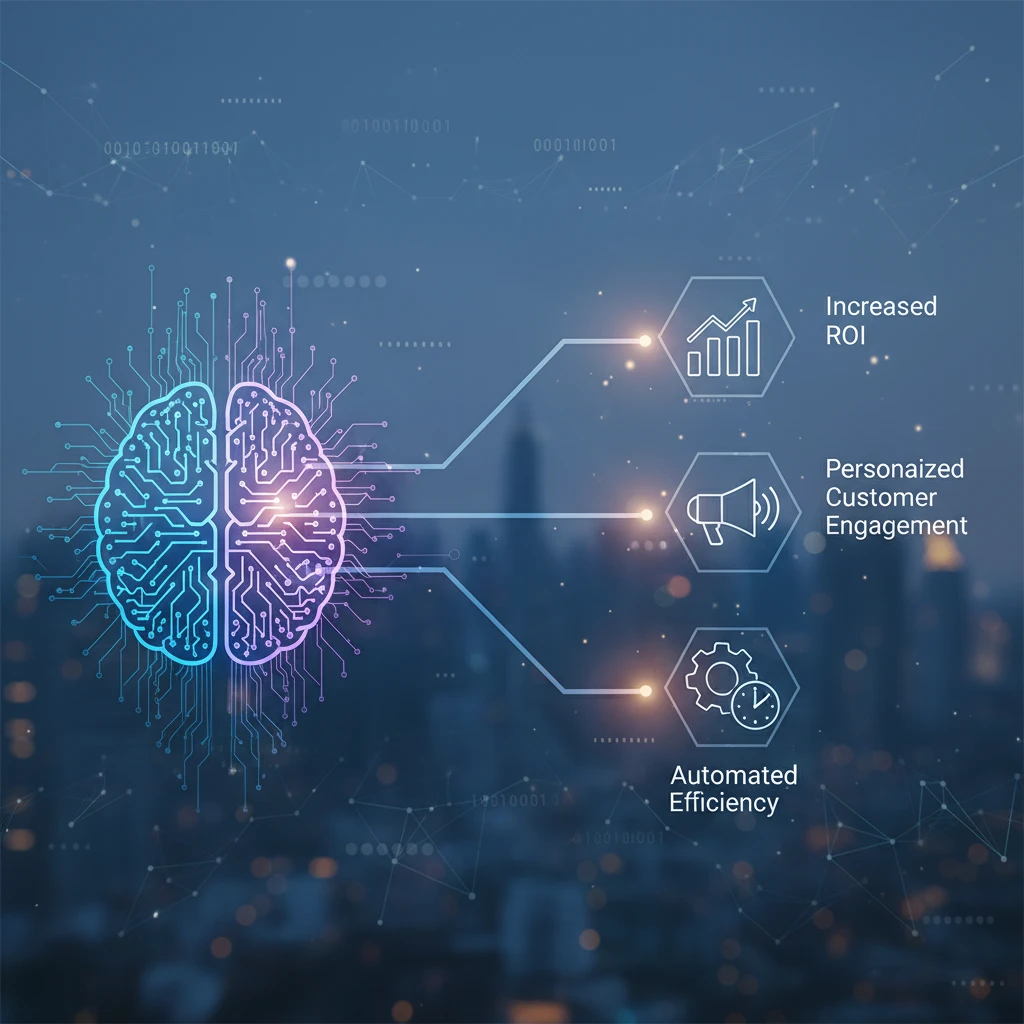
This guide cuts through the noise to highlight three concrete ways AI is delivering tangible wins for businesses right now. We’ll explore how AI can significantly boost your content creation, refine your copywriting, and deliver hyper-personalized customer experiences, all without requiring an advanced degree in computer science.
AI Isn’t Just for Sci-Fi Anymore: Real-World Digital Marketing Gains for Your Business
The idea of AI automating complex tasks was once relegated to science fiction, but the reality today is far more practical and impactful. For businesses, AI tools are democratizing sophisticated marketing strategies, making them accessible and actionable. You might think AI is only for large corporations with dedicated tech teams, but this couldn’t be further from the truth. Platforms and tools are increasingly designed with the business owner in mind, offering intuitive interfaces and clear benefits. The key is understanding where AI can provide the most immediate and measurable return on investment. For instance, AI can analyze vast datasets to uncover trends and customer behaviors that would take human teams weeks to decipher. This allows for **more informed decision-making** across all marketing channels. When considering AI adoption, businesses should evaluate tools based on ease of integration, the specificity of the problem they solve, and the clarity of their ROI. A common pitfall is chasing every new AI trend without a clear strategy; instead, focus on AI that addresses your specific business challenges. Tools like digital marketing AI tools are now capable of automating repetitive tasks, optimizing ad spend, and even generating initial drafts of campaign copy. This frees up valuable human resources to focus on strategy, creativity, and higher-level problem-solving.
When evaluating AI solutions, consider the decision criteria that matter most to your business. This includes **scalability** – can the AI tool grow with your business? **Cost-effectiveness** is paramount; ensure the AI’s benefits outweigh its price. **Data privacy and security** are non-negotiable. Finally, **support and training** are crucial for successful adoption, especially for those new to AI. A common mistake is underestimating the learning curve; even user-friendly tools require some familiarization. For example, an e-commerce business might use AI to predict customer churn and implement targeted retention campaigns, significantly reducing lost revenue. Another business might employ AI for **predictive analytics** to forecast demand for certain products, optimizing inventory management and reducing waste. The goal isn’t to replace human marketers, but to augment their capabilities, enabling them to achieve more with less. This shift allows for a more agile and responsive marketing operation, crucial in today’s dynamic market.
Supercharging Your Content Strategy with AI-Assisted Ideation
Content creation is the engine of digital marketing, but consistently generating fresh, engaging ideas can be a significant hurdle. This is where AI-assisted ideation tools shine, transforming the process from a brainstorming slog into a dynamic discovery phase. These tools analyze trending topics, competitor content, audience search queries, and even news cycles to identify **content gaps and opportunities** that humans might miss. Instead of staring at a blank page, you can feed AI prompts related to your niche and receive a curated list of potential blog post topics, video concepts, or social media campaign themes. For example, an AI tool might identify that while many businesses discuss “sustainable packaging,” there’s a growing interest in “biodegradable shipping materials for small e-commerce businesses,” presenting a specific, valuable content angle. The decision criteria for choosing an AI ideation tool should include its ability to understand **niche-specific language**, the **diversity of its output**, and its capacity for **iterative refinement** based on your feedback. A pitfall to avoid is accepting AI suggestions without critical review; AI is a co-pilot, not an autopilot.
To effectively use AI for content ideation, focus on crafting **specific and insightful prompts**. Instead of asking “Give me content ideas about marketing,” try prompts like “Generate 10 blog post titles about AI-powered SEO strategies for fashion retailers in the US, focusing on local search and customer engagement.” Tools like AI for content systems can help uncover long-tail keywords and related topics that resonate with specific audience segments. For instance, a consultancy specializing in B2B SaaS might use AI to discover emerging pain points for their target audience, leading to content that directly addresses these challenges before competitors do. This proactive approach ensures your content remains relevant and valuable. Another practical application is using AI to **analyze competitor content performance**, identifying themes that are successful and areas where you can offer a unique perspective or deeper dive. The outcome is a more targeted and impactful content calendar, reducing wasted effort on topics that don’t gain traction. By understanding these AI capabilities, businesses can move from a reactive content approach to a truly strategic one.
From Blank Page to Brilliance: AI for Faster, Smarter Copywriting
The pressure to produce compelling marketing copy—from website landing pages to social media ads and email campaigns—is immense. AI copywriting tools offer a significant leap forward, bridging the gap between a concept and polished prose with remarkable speed. These tools don’t just generate generic text; they can be trained on your brand’s voice, style guidelines, and target audience to produce copy that is both on-brand and persuasive. You can input basic product descriptions or campaign goals and receive multiple variations of headlines, body copy, and calls to action. The decision criteria for selecting an AI copywriting tool should focus on its **customization options** for brand voice, its ability to generate **audience-specific messaging**, and the **quality and coherence** of its output. A common pitfall is expecting AI to write perfect copy on the first try. It often requires human editing and refinement to inject nuance, personality, and strategic finesse. For example, an AI might generate a product description, but a human copywriter will ensure it includes a unique selling proposition that truly resonates with the intended customer.
To maximize AI’s impact on copywriting, think of it as a **powerful writing assistant** rather than a replacement. Start with clear, detailed prompts. For instance, instead of “write an ad for a new shoe,” try “Write three Facebook ad headlines and body copy variations for our new sustainable running shoe, targeting eco-conscious marathon runners aged 30-45, highlighting its lightweight design and recycled materials. Emphasize comfort and performance.” Tools that offer **A/B testing suggestions** for copy variations are particularly valuable, allowing you to quickly iterate and optimize for better conversion rates. For example, an e-commerce store can use AI to generate multiple product page descriptions, then test which ones lead to higher add-to-cart rates. This iterative process, guided by AI-driven insights, accelerates learning and improves marketing effectiveness. You might be surprised by how quickly AI can draft initial versions of emails, social media posts, or even website copy, freeing up your time to focus on strategic messaging and **final polish**. For businesses looking to scale their content production without compromising quality, AI copywriting presents a compelling solution, enabling faster iteration and better results.
Personalizing Customer Journeys: AI’s Role in Targeted Messaging
In today’s crowded digital space, generic messaging simply doesn’t cut it. Customers expect brands to understand their individual needs and preferences. AI is revolutionizing personalization by enabling businesses to deliver **highly targeted and relevant communications** at scale, transforming the customer journey from a one-size-fits-all experience to a bespoke interaction. AI algorithms can analyze vast amounts of customer data – including past purchases, browsing behavior, demographics, and engagement history – to segment audiences with incredible granularity. This allows for the creation of dynamic messaging that adapts to each customer’s stage in the buyer’s journey. For instance, a customer who has browsed a specific product category multiple times but hasn’t purchased might receive an email featuring a curated selection of items within that category, perhaps with a small discount. The decision criteria for implementing AI-powered personalization include the **quality and accessibility of customer data**, the **sophistication of the AI’s segmentation capabilities**, and the **ease of integrating personalized messages** across various channels like email, website content, and ads.
A common pitfall is the misconception that personalization means overwhelming customers with messages; true AI personalization is about **relevance and timing**. Instead of bombarding users, AI can trigger specific communications based on their actions or predicted needs. For example, a subscription service might use AI to identify users at risk of churning and proactively send them a personalized offer or helpful content to re-engage them. This proactive approach, powered by AI analytics, can significantly improve customer retention. Tools that enable **predictive modeling** can forecast future customer behavior, allowing you to tailor future interactions and offers. For instance, by analyzing buying patterns, AI can suggest complementary products to a customer who has just made a purchase, enhancing the overall customer experience. Businesses can also use AI to **personalize website content in real-time**, dynamically adjusting banners, product recommendations, and even calls to action based on the visitor’s profile and browsing session. This level of tailored engagement, facilitated by AI, not only drives conversions but also builds stronger, more loyal customer relationships. You’re likely familiar with how effective tailored emails are; AI takes this to a whole new level by automating the creation and delivery of these deeply personal touchpoints.
Predicting Trends and Customer Behavior: AI for Proactive Marketing
Understanding what your customers want before they even articulate it is the holy grail of marketing. AI excels at sifting through vast datasets to identify nascent trends and subtle shifts in consumer sentiment. Unlike traditional methods that rely on historical data and generalized demographics, AI algorithms can analyze real-time social media conversations, search queries, and purchase patterns to pinpoint emerging needs. This proactive approach allows businesses to pivot strategies, develop relevant products, and craft marketing messages that resonate deeply. The decision criteria for adopting AI in trend prediction often hinge on the volume of available data and the complexity of customer interactions. If your business operates in a dynamic market with a large customer base, AI’s predictive power becomes invaluable.
The pitfall here isn’t the AI itself, but rather the human interpretation and action taken based on its insights. Over-reliance on AI without human oversight can lead to misinterpretations or a failure to act decisively. For instance, an AI might flag a minor social media surge around a niche product, leading a business to invest heavily in its production, only to find the trend was fleeting. Actionable steps involve integrating AI-driven insights into existing market research workflows, validating AI predictions with qualitative data, and establishing clear roles for human analysts in refining AI outputs. A good example is a fashion retailer using AI to analyze global runway trends and social media influencer discussions to forecast demand for specific clothing styles six months in advance. This allowed them to adjust their manufacturing orders and inventory, reducing overstock by 20% and increasing sales of in-demand items by 15%.
To effectively implement this, start by identifying the data sources most relevant to your business – customer service logs, website analytics, and public social media data are good starting points. Then, explore AI tools capable of sentiment analysis and anomaly detection. Remember that building sophisticated predictive models takes time and expertise; initially, focus on AI that can help you understand immediate customer feedback. For deeper dives into how AI can inform business strategy, exploring resources on AI for Business: Beyond the Hype can provide further context on practical applications and potential challenges.
Streamlining SEO Tasks: How AI Tools Can Save You Hours Weekly
Search Engine Optimization (SEO) is a perpetually evolving field, demanding constant monitoring and adaptation. AI is stepping in to automate many of the time-consuming, repetitive tasks that previously required significant human effort. Think about keyword research, content gap analysis, and technical SEO audits. AI tools can process vast amounts of search data, competitor information, and website performance metrics far faster than any human analyst. This allows SEO professionals to shift their focus from granular data crunching to higher-level strategy and creative execution. Decision criteria for adopting AI in SEO often relate to the scale of your website, the number of competitors you face, and the available budget for specialized tools.
The primary pitfall in using AI for SEO is an over-automation that leads to generic, uninspired content or technical fixes that miss crucial user experience nuances. Simply asking an AI to “write an article about X” without strategic prompting can result in content that ranks but doesn’t engage. Actionable steps include using AI to identify keyword opportunities and content gaps, but then employing human expertise to craft unique, valuable content that satisfies user intent. AI can also flag technical SEO issues like crawl errors or slow page load times, but a human needs to prioritize and implement the fixes thoughtfully. For example, an e-commerce store used AI to identify long-tail keywords related to niche product accessories. This analysis revealed a content gap; by creating targeted blog posts and product descriptions around these keywords, they saw a 30% increase in organic traffic for those specific product categories within three months, while also improving conversion rates for those visitors.
To leverage AI effectively in SEO, begin by integrating AI-powered keyword research tools to uncover opportunities you might have missed. Then, utilize AI for competitor analysis to understand their strategies. Don’t forget to explore AI’s capabilities in identifying technical SEO issues. As you refine your approach, consider how AI can aid in optimizing existing content for better search visibility. For businesses looking to understand the nuances of AI-driven SEO, resources like AI-Powered SEO: Dominate Search in 2026-2027 offer valuable insights into current best practices.
Beyond Keywords: AI in Advanced Audience Segmentation
Traditional audience segmentation often relies on broad demographic categories like age, gender, and location. While useful, this approach can miss the subtle behavioral and psychographic nuances that truly define consumer segments. AI introduces a powerful capability for granular audience segmentation by analyzing a much richer set of data points. This includes past purchase history, browsing behavior on your site and across the web, social media interactions, and even sentiment expressed in reviews. By identifying these deeper patterns, AI allows marketers to move beyond guesswork and create highly targeted campaigns that speak directly to individual needs and preferences.
A common pitfall is creating too many micro-segments, making campaign management overly complex and resource-intensive. Another issue is the potential for AI to inadvertently create biased segments based on skewed training data. The decision criteria for implementing advanced AI segmentation should include your business’s capacity to manage more personalized campaigns and the ethical considerations of data usage. Actionable steps involve starting with a few key AI-identified segments that offer the highest potential ROI. Test and refine these segments based on campaign performance before expanding. For example, a software company used AI to segment its user base not just by job title, but by the specific features they used most frequently and their stated pain points in support tickets. This led to two distinct campaign strategies: one focused on advanced feature adoption for power users and another highlighting problem-solving capabilities for new users, resulting in a 25% increase in feature engagement and a 10% decrease in churn.
When approaching AI-driven segmentation, begin by assessing the data you currently collect and how it can be enriched with AI analysis. Experiment with AI tools that can identify behavioral patterns that aren’t immediately obvious. Remember that the goal is not just to divide your audience, but to understand them better to serve them more effectively. For businesses aiming to get more strategic with their audience understanding, exploring Digital Marketing AI: How to Use AI Tools for Business Growth can offer practical guidance.
AI for More Efficient Ad Campaign Management
Managing digital advertising campaigns, especially across multiple platforms, can be a complex and resource-intensive task. AI offers significant advantages in optimizing these campaigns for better performance and efficiency. It can automate bidding strategies, predict ad fatigue, identify the most effective ad creatives for specific audience segments, and optimize ad spend in real-time. The decision criteria for adopting AI in ad campaign management are often tied to the volume of ad spend, the number of active campaigns, and the desire to achieve a higher return on ad spend (ROAS). For businesses with substantial advertising budgets, the efficiency gains and performance improvements offered by AI can be substantial.
A significant pitfall is the “black box” nature of some AI ad platforms, where it’s difficult to understand *why* certain decisions are being made, potentially leading to a loss of strategic control. Another is the temptation to let AI run completely unchecked, which can lead to inefficient spending if not monitored. Actionable steps include using AI tools for tasks like automated bidding and audience expansion, but retaining human oversight for strategic direction, creative development, and budget allocation. Regularly reviewing AI-driven performance reports and testing different AI parameters is crucial. For example, a travel agency used AI-powered ad tools to dynamically adjust bids and ad creative variations based on real-time search interest and competitor activity. This led to a 15% reduction in cost per acquisition (CPA) and a 20% increase in booking conversions compared to their previous manual campaign management efforts. The AI also identified that certain ad creatives performed significantly better for audiences searching during weekdays versus weekends, allowing for more precise targeting.
To effectively implement AI in your ad campaign management, start by identifying which areas consume the most time and offer the most potential for AI-driven optimization, such as bidding or audience targeting. Explore AI features within your existing ad platforms or consider specialized AI ad management tools. Remember that AI is a tool to augment your strategy, not replace it entirely. For those looking to deepen their understanding of AI’s role in digital advertising, the insights in Digital Marketing: Actionable Insights for Startups can be particularly relevant in framing strategic application.
Measuring What Matters: AI-Powered Analytics for Deeper Insights
Traditional analytics often leave businesses scratching their heads, presenting vast datasets without clear paths to action. AI fundamentally shifts this by enabling a deeper, more nuanced understanding of customer behavior and campaign performance. Instead of just seeing raw numbers, AI can identify subtle patterns, predict future trends, and attribute conversions with unprecedented accuracy. For instance, AI-powered tools can analyze website visitor journeys, pinpointing exactly which touchpoints lead to a sale, which pages cause drop-offs, and even predict which customer segments are most likely to churn. This goes beyond simple click-through rates, offering insights into the *why* behind the numbers. When selecting AI analytics tools, consider their integration capabilities with your existing CRM and marketing platforms, the depth of predictive modeling offered, and the user-friendliness of the dashboard for non-technical users. Pitfalls to watch for include over-reliance on automation without human oversight and the risk of AI models becoming biased if trained on incomplete or skewed data. A concrete example: a small e-commerce business used AI analytics to segment its customer base based on purchase history and browsing behavior. They discovered a segment of customers who repeatedly viewed high-value items but never purchased. By cross-referencing this with website engagement data, they realized these customers were likely deterred by shipping costs. They then implemented a targeted promotional campaign offering free shipping to this specific segment, resulting in a 15% increase in conversions from that group within a month.
The key decision criterion for adopting AI analytics is its ability to move beyond descriptive reporting to prescriptive and predictive insights. Can the AI suggest concrete actions to improve ROI? Does it offer robust A/B testing capabilities driven by algorithmic optimization? For example, instead of just showing that ads on Platform X have a lower conversion rate, AI can analyze ad creatives, targeting parameters, and landing page performance on Platform X to suggest specific improvements. It can even automate the process of testing these variations. One common mistake is to expect AI to replace human analysts entirely. While AI excels at processing data at scale, human marketers are still essential for interpreting the context, understanding brand nuances, and making strategic decisions based on the AI’s findings. The goal is augmentation, not replacement. For businesses looking to harness these capabilities, start by identifying your most critical business questions that current analytics can’t answer. Then, explore AI platforms that specialize in those areas, such as customer journey mapping or predictive lead scoring. For businesses interested in how AI can enhance their understanding of digital marketing, exploring digital marketing actionable insights for startups can provide a good starting point.
Actionable steps include integrating AI analytics tools gradually, beginning with a specific campaign or customer segment. Ensure your team receives training not only on how to use the tools but also on how to interpret the AI-generated insights. Regularly review the AI model’s performance and accuracy, and be prepared to retrain or adjust it as market conditions or customer behaviors change. For instance, a SaaS company might use AI to analyze user engagement within their application. If the AI detects a pattern of users dropping off at a specific feature, the product and marketing teams can collaborate to improve that feature or create better onboarding materials. This proactive approach, driven by AI-driven insights, can significantly reduce churn and boost customer lifetime value. For a deeper dive into AI’s role in content, consider looking at content AI actionable business insights to understand how to make your content more data-driven.
The Human Element Still Reigns: When AI Falls Short (and How to Compensate)
While AI has made astounding advancements, it’s not a magic wand that absolves businesses of human input and critical thinking. AI excels at pattern recognition, data processing, and automation, but it often struggles with creativity, emotional intelligence, ethical judgment, and understanding complex, nuanced brand identities. For example, AI can generate grammatically correct and factually accurate ad copy, but it may miss the subtle humor, cultural references, or brand voice that truly resonates with a specific audience. This is where human marketers remain indispensable. Decision criteria for identifying AI’s limitations involve assessing tasks that require genuine empathy, subjective interpretation, or novel strategic thinking. If a task demands understanding unspoken customer needs, navigating complex ethical dilemmas, or forging deep personal connections, human intervention is crucial. A significant pitfall is the temptation to over-automate creative processes, leading to content that feels generic or disconnected from the brand’s soul. Imagine an AI recommending a marketing campaign based purely on past performance data. It might suggest doubling down on a strategy that, while effective historically, is now outdated or potentially alienating to a changing customer demographic. Humans, with their understanding of current social trends and audience sentiment, can override such recommendations.
Compensating for AI’s limitations requires a strategic integration of human oversight and creative input. This can involve using AI as a powerful assistant rather than a sole decision-maker. For instance, AI can generate multiple content ideas or draft initial copy, but human writers should refine, inject personality, and ensure brand alignment. Similarly, AI can analyze vast amounts of customer feedback, but human sentiment analysis and qualitative interpretation are needed to understand the underlying emotions and motivations. This is particularly true in areas like customer service, where complex issues or deeply frustrated customers often require empathy that AI cannot replicate. The ideal scenario is a collaborative workflow: AI handles the heavy lifting of data analysis and initial content generation, while humans provide strategic direction, creative flair, and ethical checks. An example of this synergy: a fashion brand uses AI to identify trending styles and predict demand for certain products. However, the brand’s creative director, a human with a keen eye for aesthetics and an understanding of the brand’s artistic vision, makes the final decisions on which styles to produce, ensuring they align with the brand’s unique identity and future direction. For businesses exploring how AI can assist in creating content, looking into AI content marketing: stop guessing, start growing can illustrate these collaborative possibilities.
Actionable steps for integrating human oversight include establishing clear quality assurance processes where human reviewers validate AI-generated content and strategies. Foster a culture where team members are encouraged to challenge AI suggestions and apply their creative judgment. Invest in training for your marketing team, not just on AI tools, but also on critical thinking, creative strategy, and emotional intelligence. Regularly conduct ‘post-mortems’ on AI-driven campaigns, not just to analyze data, but to discuss the human elements that either contributed to or detracted from success. For example, an AI might flag that a particular social media post generated high engagement. A human review might reveal that the engagement was due to controversy or negative sentiment, prompting a strategic pivot away from that type of content. This nuanced understanding is crucial for long-term brand health and customer loyalty. If you’re curious about how AI can refine messaging for specific audiences, consider researching prompt engineering unlock new marketing channels, as it highlights the human skill in guiding AI output.
Getting Started with AI in Your Business Marketing Today
Embarking on the AI journey doesn’t require a complete overhaul of your existing marketing stack. The most effective approach is incremental, focusing on specific pain points where AI can deliver immediate value. Begin by identifying one or two key areas where you face challenges with data analysis, content creation, customer segmentation, or campaign optimization. For instance, if generating consistent, high-quality blog posts is a bottleneck, exploring AI writing assistants can be an excellent starting point. Decision criteria for selecting your first AI tool should include ease of integration, the learning curve for your team, and the potential for measurable ROI. Avoid overly complex, enterprise-level solutions initially; opt for user-friendly tools that offer clear benefits for a specific task. A common pitfall is adopting AI for the sake of it, without a clear objective, which can lead to wasted resources and frustration. For example, a small business might purchase an AI social media scheduler without understanding how to craft compelling AI-generated captions or analyze the resulting engagement metrics, rendering the tool less effective.
Actionable steps for getting started involve research and experimentation. Explore AI tools tailored for small businesses, many of which offer free trials or freemium models. Consider AI-powered analytics dashboards that can provide deeper insights into website traffic and customer behavior. For content marketing, experiment with AI tools that can help brainstorm topics, generate outlines, or draft initial copy, but always with human editing and fact-checking. For SEO, look into AI-driven keyword research and competitor analysis tools to identify new opportunities. It’s also beneficial to understand the foundational skills needed to work with AI, such as prompt engineering. Learning how to effectively communicate your needs to AI systems can unlock their full potential. For example, a marketing manager could use an AI tool to analyze competitor ad campaigns. The AI might identify that competitors are focusing heavily on video content. The manager then uses this insight to direct their team to create more video content. If you’re interested in improving your website’s performance using AI, checking out WordPress SEO: AI Plugin Power-Up for Business can offer practical advice.
Furthermore, leverage resources that educate you and your team on AI in marketing. Many institutions and online platforms now offer introductory courses and workshops. For instance, understanding digital marketing AI: how to use AI tools for business growth can provide a roadmap. Focus on building a foundational understanding of how AI works in marketing contexts, rather than getting lost in the technical jargon. A practical next step for many businesses would be to experiment with AI-powered tools for email marketing, perhaps using AI to segment subscriber lists or personalize email content based on past interactions. Even small, targeted applications of AI can yield significant improvements in efficiency and effectiveness, paving the way for broader adoption as your team gains confidence and expertise. The key is to start small, measure the impact, and scale gradually.