
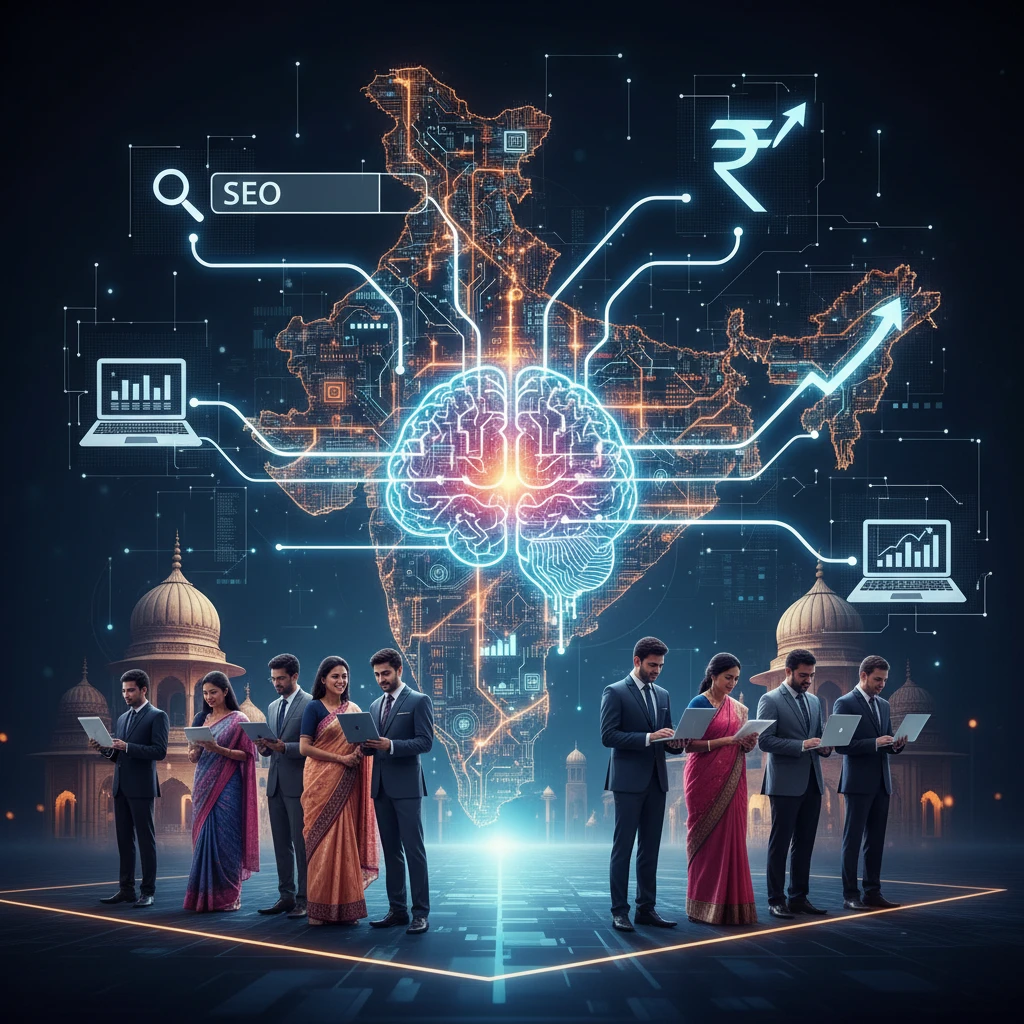
The rise of artificial intelligence is causing ripples across every industry, and digital marketing is no exception. For Indian businesses, AI presents both exciting opportunities and unique challenges, particularly when it comes to content creation. It’s no longer enough to simply produce high volumes of content; it needs to be relevant, engaging, and optimized for search engines like Google.
This is especially true in a diverse market like India, where cultural nuances and language play a significant role in connecting with your target audience. How can Indian businesses effectively use AI to create content that resonates with their customers and boosts their SEO performance? Let’s take a closer look.
Is AI Content a Game Changer for Indian Businesses in 2026? Exploring the Hype vs. Reality
The Promise: Increased Efficiency and Scale
One of the most alluring aspects of AI content creation is its potential to dramatically increase efficiency. For small and medium-sized businesses (SMBs) in India, resource constraints are a common hurdle. AI can help these businesses scale their content marketing efforts without needing to significantly expand their teams. For example, an e-commerce business selling traditional Indian clothing could use AI to rapidly generate product descriptions, blog posts about styling tips, and social media updates promoting new collections. This frees up valuable time for the business owner and their team to focus on other crucial areas, like customer service and product development. Imagine a small business owner saving 10-15 hours a week by automating content creation with AI, time they can then reinvest into strategic planning or expanding their product line. But is it *really* that simple? Not quite.
The Challenge: Maintaining Authenticity and Cultural Relevance
While AI excels at producing content quickly, ensuring that it resonates with Indian audiences requires careful consideration. India’s rich cultural tapestry, diverse languages, and varying regional preferences mean that generic AI content often falls flat. For example, a promotional campaign that relies solely on AI-written content might inadvertently use language or imagery that is insensitive to certain cultural groups, or simply misses the mark in terms of humor or tone. Indian consumers value authenticity, and they can easily spot content that feels impersonal or inauthentic. It’s crucial to remember that AI should be a tool to augment, not replace, human creativity and cultural understanding. Businesses need to carefully review and adapt AI-content to ensure it aligns with their brand values and resonates with their target audience. Ignoring this is like trying to force a square peg into a round hole: you *might* get it in, but it won’t be pretty.
Debunking the Myth of ‘Set It and Forget It’ AI Content
Many business owners mistakenly believe that AI content creation is a “set it and forget it” solution. This couldn’t be further from the truth. AI-generated content requires ongoing monitoring, editing, and optimization to ensure it remains accurate, relevant, and aligned with your brand’s goals. Treat AI as an intern, not a CEO. Even the most sophisticated AI tools can sometimes produce content that is factually incorrect, poorly written, or simply doesn’t make sense in a specific context. Furthermore, Google’s algorithms are constantly evolving, and AI-content that was effective last month may not be as effective today. Businesses need to establish a robust workflow for reviewing and updating their AI-content to maintain its quality and effectiveness. Neglecting this is akin to planting a seed and expecting it to grow into a flourishing tree without any watering, sunlight, or tending. As described in this page covering scaling marketing without losing authenticity, humans must be involved.
Understanding Google’s Stance on AI-Powered Content: What’s Acceptable, What’s Not

Focus on User Intent, Not Just Keyword Stuffing
Google’s primary focus is always on providing users with the most relevant and helpful results for their search queries. In the context of AI-content, this means that businesses need to prioritize creating content that truly addresses user intent, rather than simply stuffing keywords into AI-content. In 2026, Google’s algorithms are sophisticated enough to identify AI-content that is poorly written, repetitive, or lacks genuine value. Attempting to game the system by churning out low-quality AI-content filled with keywords will likely result in penalties and lower search rankings. Instead, businesses should focus on using AI to research user intent, identify common questions and pain points, and create content that provides comprehensive and insightful answers. This approach not only aligns with Google’s guidelines but also builds trust with your audience and establishes your brand as a valuable resource.
E-E-A-T and AI: Experience, Expertise, Authoritativeness, and Trustworthiness in the Age of AI
Google’s E-E-A-T framework (Experience, Expertise, Authoritativeness, and Trustworthiness) is more important than ever in the age of AI-content. While AI can help you generate content quickly, it cannot replace the unique insights and perspectives that come from human experience and expertise. To demonstrate E-E-A-T, businesses should focus on using AI to augment their existing content creation efforts, rather than relying on it to generate content from scratch. This might involve using AI to research topics, identify relevant data points, or improve the readability of existing content. For example, a financial services company could use AI to analyze market trends and identify potential investment opportunities, but the content should still be written by experienced financial advisors who can provide informed and nuanced perspectives. Building E-E-A-T is a long-term investment that pays off in higher search rankings and increased customer trust. For example, a blog post about digital marketing training should display the author’s credentials.
Avoiding AI Content That Sounds Generic or Robotic
One of the biggest challenges with AI-content is that it can often sound generic or robotic. This is because AI models are trained on massive datasets of text, and they tend to replicate the patterns and styles that they have learned from these datasets. To avoid creating AI-content that sounds bland and uninspired, businesses need to carefully craft their prompts and provide the AI with specific instructions on the desired tone and style. Furthermore, it’s essential to thoroughly edit and revise AI-content to add a human touch. This might involve rewriting sentences to make them more engaging, adding personal anecdotes or stories, or incorporating humor and wit. Remember, the goal is to create content that resonates with your audience and builds a connection, not to simply regurgitate information in a sterile and impersonal way. Aim to create content that sounds like it was written by a human, not a machine. This page emphasizes the need for human review after AI assistance.
Keyword Research Strategies Tailored for AI Content Creation in the Indian Market
Finding Low-Competition Keywords with High Conversion Potential
Effective keyword research is the foundation of any successful SEO strategy, and it’s especially important when using AI for content creation. In the Indian market, it’s crucial to identify low-competition keywords that have high conversion potential. This means focusing on keywords that are specific, relevant, and likely to attract users who are ready to take action, such as making a purchase or signing up for a service. One approach is to use keyword research tools to identify long-tail keywords that are highly specific to your niche. For example, instead of targeting the broad keyword “online shopping,” you could target a more specific keyword like “buy organic cotton sarees online India.” These long-tail keywords tend to have lower competition and higher conversion rates because they attract users who are further along in the buying process.
Long-Tail Keywords and AI: Answering Specific User Queries
Long-tail keywords are particularly well-suited for AI-content creation. Because they are so specific, it’s easier to train an AI model to generate content that directly addresses the user’s query. For example, if you’re targeting the long-tail keyword “best yoga classes for beginners in Mumbai,” you can use AI to create a blog post that provides a detailed list of yoga studios in Mumbai that offer beginner-friendly classes, along with information on pricing, schedules, and instructor qualifications. The AI can also be used to research common questions that users have about yoga for beginners, and to incorporate these questions into the content as subheadings or FAQs. This ensures that the content is highly relevant and helpful to the target audience, which can lead to higher search rankings and increased traffic.
Leveraging Regional Languages and Dialects for Local SEO
India is a country of many languages and dialects, and businesses that want to succeed in the Indian market need to tailor their content to the specific language preferences of their target audience. This is where AI can be particularly helpful. AI-powered translation tools can be used to quickly and accurately translate content into multiple Indian languages, allowing businesses to reach a wider audience and improve their local SEO. However, it’s important to remember that translation is not enough. Businesses also need to adapt their content to the cultural nuances and idioms of each language. This might involve using different imagery, humor, or messaging to resonate with the target audience. For example, a marketing campaign for a product in Hindi might use different slogans and visuals than a campaign for the same product in Tamil. Ignoring this is like trying to sell ice to Eskimos: you might make a few sales, but you’re not going to build a sustainable business.
Prompt Engineering for Indian Audiences: Crafting Prompts that Resonate
Understanding Cultural Nuances and Context in Your Prompts
The quality of AI-content is directly proportional to the quality of the prompts you provide. For Indian audiences, it’s essential to understand and incorporate cultural nuances and context into your prompts. This means considering factors such as religious beliefs, social customs, and regional differences when crafting your prompts. For example, if you’re creating AI-content about food, you need to be aware of dietary restrictions and preferences that are common in different parts of India. A prompt that asks the AI to “generate a list of popular Indian snacks” might produce results that are not suitable for vegetarians or people with certain allergies. To avoid this, you need to provide the AI with specific instructions on the types of snacks you want it to include and exclude. This level of cultural sensitivity is crucial for creating AI-content that resonates with Indian audiences and avoids causing offense or alienation.
Providing Examples of Indian Brands and Products to the AI
To help the AI understand your brand’s voice and style, it’s helpful to provide it with examples of Indian brands and products that are similar to yours. This allows the AI to learn from these examples and generate content that is more aligned with your brand’s identity. For example, if you’re a clothing brand that sells traditional Indian attire, you could provide the AI with examples of other popular Indian clothing brands, such as Fabindia or Biba. You could also provide the AI with examples of product descriptions or blog posts that these brands have created. This will give the AI a better understanding of the language, tone, and style that is commonly used in the Indian fashion industry. This page covering prompt engineering for business provides further detail about crafting effective prompts.
Iterating and Refining Prompts for Optimal Results
Prompt engineering is an iterative process. Don’t expect to get perfect results on your first try. It’s important to experiment with different prompts, analyze the results, and refine your prompts based on what you learn. This might involve changing the wording of your prompts, adding more specific instructions, or providing the AI with more examples. For example, if you’re not happy with the tone of the AI-content, you could try adding instructions such as “write in a friendly and conversational tone” or “use humor and wit.” You could also try providing the AI with examples of content that you think has the right tone. By continuously iterating and refining your prompts, you can gradually improve the quality of your AI-content and achieve optimal results. This continuous refinement process is the key to unlocking the full potential of AI for content creation in the Indian market. Consider different prompts, for example, to find the right voice for WordPress SEO tips.
Optimizing AI-Content for Local SEO: A Checklist for Indian Businesses
Claiming and Optimizing Your Google Business Profile
Your Google Business Profile (GBP) is often the first interaction potential customers have with your business online. It’s critical to claim and meticulously optimize it. For Indian businesses, this means ensuring your business name, address, and phone number (NAP) are accurate and consistent across the web. Add a detailed business description highlighting what makes you unique. Include relevant keywords, but avoid keyword stuffing. Select the correct primary and secondary categories for your business; this helps Google understand your offerings. Upload high-quality photos and videos showcasing your products, services, and team. Regularly post updates about promotions, events, and news. Encourage customers to leave reviews and respond promptly and professionally to all feedback, both positive and negative. Google uses GBP data to determine local rankings; inconsistencies or incomplete information can negatively impact your visibility. Consider adding FAQs directly to your GBP listing to address common customer queries. Think of your GBP as your digital storefront – make it inviting and informative.
Using Local Keywords in Your Content and Meta Descriptions
While AI can help with keyword research, it’s your job to ensure the keywords are relevant to your specific target audience and location. For instance, instead of just “digital marketing training,” target “digital marketing training Mumbai” or “AI-powered SEO courses Delhi.” Use keyword research tools to identify popular search terms in your area. Incorporate these keywords naturally into your website content, meta descriptions, and image alt text. Avoid keyword stuffing, as this can hurt your rankings. Focus on creating high-quality, informative content that answers user queries. Your meta descriptions should be compelling and include a call to action. For example, instead of “Best SEO services,” try “Top-rated SEO services in Bangalore. Get a free quote today!” Remember that user intent is paramount. Analyze what people are searching for when looking for businesses like yours in your area, and tailor your content accordingly. Don’t underestimate the power of long-tail keywords. These longer, more specific phrases often have lower competition and can attract highly qualified leads.
Building Local Citations and Backlinks
Local citations are online mentions of your business’s NAP data. These citations help Google verify your business’s legitimacy and improve your local search rankings. Submit your business to reputable online directories like Justdial, Sulekha, and IndiaMART, as well as industry-specific directories. Ensure your NAP data is consistent across all citations. Backlinks, or links from other websites to yours, are another crucial ranking factor. Focus on earning backlinks from authoritative local websites, such as news outlets, business associations, and local blogs. You can earn backlinks by creating valuable content that others want to link to, participating in local events, and reaching out to local journalists and bloggers. Avoid buying backlinks, as this can result in penalties from Google. A strong backlink profile signals to Google that your website is trustworthy and relevant to local users. Monitor your citations and backlinks regularly to ensure accuracy and identify any broken links. For example, if you’re a restaurant in Chennai, a backlink from a popular Chennai-based food blog would be highly valuable.
AI for Content Repurposing: Maximizing Your Reach Across Different Platforms (Think YouTube, Instagram, Blogs)
Transforming Blog Posts into Engaging Video Scripts
Take a blog post’s core argument and restructure it into a visually driven video script. Start with a compelling hook to grab attention. Break down the information into easily digestible segments, using visuals, animations, and examples. Use AI to generate storyboards and identify key visuals that support your message. Keep the language concise and conversational. Add background music and sound effects to enhance engagement. Optimize your video title and description with relevant keywords. Include a call to action, such as subscribing to your channel or visiting your website. For example, a blog post about “5 AI Tools for Content Marketing” could become a video demonstrating how to use each tool. Don’t just read the blog post aloud; adapt it for the video format. The script should include clear instructions for visuals and transitions. Remember to add captions to make your video accessible to a wider audience. Consider using AI-powered video editing tools to streamline the process.
Creating Social Media Snippets from Long-Form Articles
Extract key insights and quotes from your articles and transform them into attention-grabbing social media snippets. Use AI to identify the most shareable content. Create visually appealing graphics and videos to accompany your snippets. Tailor your message to each platform. For example, use shorter, punchier copy for Twitter and more detailed captions for Instagram. Consider using AI to create different variations of your snippets to test which performs best. Use relevant hashtags to increase your reach. Engage with your followers and respond to comments and questions. Schedule your posts for optimal times. For example, if you have an article about “The Future of SEO,” you could create a snippet that asks, “Is AI the future of SEO? Share your thoughts in the comments!” Don’t forget to include a link back to your original article. Use a variety of content formats, such as images, videos, and polls, to keep your audience engaged.
Adapting Content for Different Regional Languages
India is a diverse country with numerous regional languages. Translating your content into these languages can significantly expand your reach. Use AI-powered translation tools to translate your website, blog posts, and social media content. However, be sure to have a native speaker review the translations for accuracy and cultural relevance. Adapt your content to reflect the cultural nuances of each region. Use local examples and references to resonate with your target audience. Consider creating separate social media accounts for each language. This allows you to tailor your content and messaging to each region. For example, if you’re targeting customers in Tamil Nadu, translate your website and create Tamil-language social media content. This shows that you understand and value their culture. Don’t just translate the words; translate the intent and meaning behind them. Work with local influencers to promote your content and reach a wider audience.
AI-Powered Content and Link Building: Strategies for Earning High-Quality Backlinks
Creating Data-Driven Content with AI to Attract Links
One of the best ways to attract backlinks is by creating original, data-driven content. Use AI to analyze industry trends and identify topics that are likely to generate interest. AI can help you gather and analyze data from various sources, such as social media, search engines, and industry reports. Present your findings in a visually appealing and easy-to-understand format, such as infographics, charts, and graphs. Share your content with relevant websites and publications. Offer to provide exclusive data or insights to journalists and bloggers. For example, if you’re in the digital marketing industry, you could use AI to analyze the latest SEO trends and create a report on “The State of SEO in India.” This report would be valuable to other websites and publications in your industry, and they would be more likely to link to it.
Using AI to Identify Link Opportunities
AI can help you identify potential link opportunities by analyzing websites in your industry and identifying those that are likely to link to your content. Use AI-powered tools to find websites that have linked to similar content in the past. Identify broken links on relevant websites and offer to replace them with links to your content. Find websites that mention your brand or products without linking to you and ask them to add a link. Monitor your competitors’ backlinks to identify potential link opportunities. For example, you could use AI to find websites that have linked to your competitors’ blog posts on “AI in Content Marketing” and then reach out to those websites to see if they would be interested in linking to your content as well. Remember to personalize your outreach and explain why your content is valuable to their audience.
Guest Posting and Influencer Outreach Strategies
Guest posting and influencer outreach are effective ways to earn backlinks and increase your brand awareness. Use AI to identify relevant websites and blogs in your industry that accept guest posts. Personalize your outreach emails and explain why your content would be valuable to their audience. Offer to write a unique and informative article that is tailored to their website’s audience. Use AI to identify influencers in your industry who have a large and engaged following. Reach out to these influencers and offer to collaborate on content, such as blog posts, videos, or social media campaigns. For example, if you’re a digital marketing agency, you could reach out to a popular marketing blogger and offer to write a guest post about “AI-Powered SEO Strategies for Indian Businesses.” Or you could collaborate with a social media influencer on a campaign to promote your services.
Measuring the ROI of AI-Driven Content: Key Metrics to Track
Organic Traffic and Keyword Rankings
One of the primary goals of AI-driven content is to increase organic traffic to your website. Track your organic traffic using tools like Google Analytics. Monitor your keyword rankings to see how your content is performing in search results. Use AI-powered tools to identify which keywords are driving the most traffic to your website. Track the number of backlinks you’re earning and their quality. Monitor your website’s domain authority and page authority. For instance, if you implement AI to create content around “Prompt Engineering for Marketing,” track the increase in organic traffic from that keyword and related terms. Also, monitor how your rankings for related keywords improve over time. An increase in organic traffic and improved keyword rankings indicate that your AI-driven content is effective.
Engagement Metrics (Bounce Rate, Time on Page, Social Shares)
Engagement metrics provide insights into how users are interacting with your content. Track your website’s bounce rate, which is the percentage of visitors who leave your website after viewing only one page. A high bounce rate may indicate that your content is not relevant or engaging. Monitor the average time on page, which is the average amount of time visitors spend on your website. A longer time on page indicates that your content is engaging and informative. Track the number of social shares, which is the number of times your content is shared on social media. Social shares indicate that your content is valuable and shareable. If, after using AI to optimize your blog posts, you see a decrease in bounce rate and an increase in time on page, it suggests that the AI is helping you create more engaging content. Similarly, an increase in social shares demonstrates that your content is resonating with your audience.
Conversion Rates and Lead Generation
Ultimately, the goal of AI-driven content is to generate leads and drive conversions. Track your website’s conversion rates, which is the percentage of visitors who complete a desired action, such as filling out a form or making a purchase. Monitor the number of leads you’re generating from your content. Use AI-powered tools to identify which content is driving the most leads and conversions. Track the cost per lead and the return on investment (ROI) of your AI-driven content. For example, if you use AI to create a lead magnet, such as an e-book or a webinar, track the number of leads you generate from that lead magnet and the cost of creating it. If the lead magnet generates a significant number of leads at a low cost, then it is a successful AI-driven content campaign. Analyze the entire funnel from content consumption to lead conversion to sales to accurately assess the ROI. Consider investing in digital marketing training to better understand and implement these ROI strategies.
Optimizing AI-Content for Local SEO: A Checklist for Indian Businesses
For Indian businesses, optimizing AI-driven content for local SEO is crucial for attracting local customers. Here’s a checklist to guide you:
Claiming and Optimizing Your Google Business Profile
Start by claiming your Google Business Profile (GBP). Ensure all information, including your business name, address, phone number, website, and hours of operation, is accurate and up-to-date. Use AI to optimize your GBP description with relevant local keywords.
Using Local Keywords in Your Content and Meta Descriptions
Incorporate local keywords into your content and meta descriptions. For example, if you’re a restaurant in Mumbai, use keywords like “best restaurants in Mumbai” or “Mumbai seafood restaurant.” Use AI tools to identify the most relevant local keywords for your business and industry. For example, tools like Semrush or Ahrefs have keyword research features that help businesses find the search terms with the most volume. These can be included into blog posts or service pages.
Building Local Citations and Backlinks
Build local citations by listing your business in online directories like Justdial, IndiaMART, and Sulekha. Also, seek backlinks from other local businesses and organizations. AI can help you identify local link-building opportunities by analyzing the backlink profiles of your competitors.
AI for Content Repurposing: Maximizing Your Reach Across Different Platforms (Think YouTube, Instagram, Blogs)
Repurposing content is a great way to maximize your reach and engage different audiences. Here’s how to use AI to repurpose your content across different platforms:
Transforming Blog Posts into Engaging Video Scripts
Use AI to turn your blog posts into engaging video scripts. Feed your blog post into an AI tool and ask it to create a video script that summarizes the main points. Use the script as a basis for creating a video for YouTube or other video platforms.
Creating Social Media Snippets from Long-Form Articles
Use AI to extract key quotes and statistics from your long-form articles to create engaging social media snippets. Share these snippets on platforms like Twitter, Facebook, and LinkedIn to drive traffic back to your website.
Adapting Content for Different Regional Languages
Translate your content into different regional languages to reach a wider audience in India. Use AI-powered translation tools to ensure accurate and culturally relevant translations. For example, if you have a blog post in English, translate it into Hindi, Tamil, or Bengali to reach more people. For example, the Google Cloud Translation API can translate content from one language to another with high accuracy.
AI-Powered Content and Link Building: Strategies for Earning High-Quality Backlinks
High-quality backlinks are essential for improving your website’s search engine rankings. Here are some AI-powered strategies for earning backlinks:
Creating Data-Driven Content with AI to Attract Links
Use AI to analyze industry trends and create data-driven content that is valuable and link-worthy. For example, you can use AI to analyze market data and create a report on the latest trends in your industry. Other websites are more likely to link to content that provides unique insights and data.
Using AI to Identify Link Opportunities
Use AI to identify potential link opportunities by analyzing the content of other websites in your industry. Look for opportunities to contribute guest posts or to offer your expertise as a source for their articles. Tools like Ahrefs or Semrush can help find potential backlinks by crawling the web.
Guest Posting and Influencer Outreach Strategies
Use AI to identify relevant websites and influencers in your industry. Craft personalized outreach messages to these influencers, offering to contribute valuable content or to collaborate on a project. Consider using AI to summarize your content to use as the base of an email outreach campaign.
Measuring the ROI of AI-Driven Content: Key Metrics to Track
Measuring the ROI of AI-driven content is essential for determining the effectiveness of your content marketing efforts. Here are the key metrics to track:
Optimizing AI-Content for Local SEO: A Checklist for Indian Businesses
Local SEO is crucial for Indian businesses that want to attract local customers. Here’s how to optimize your AI-driven content for local search:
Claiming and Optimizing Your Google Business Profile
Ensure that your Google Business Profile is claimed and fully optimized. Include accurate information about your business, such as your address, phone number, and website. Use high-quality images and videos to showcase your business and attract more customers. The information you post to your Google Business Profile helps Google serve your business information to potential customers.
Using Local Keywords in Your Content and Meta Descriptions
Incorporate local keywords into your content and meta descriptions to target customers in your area. For example, if you own a restaurant in Mumbai, use keywords like “best restaurants in Mumbai” or “Mumbai food delivery” in your content. If a user searches for “Mumbai food delivery” your website is more likely to show up in the search results.
Building Local Citations and Backlinks
Build local citations by listing your business in online directories such as Justdial and Indiamart. Earn backlinks from other local businesses and organizations. Local citations and backlinks help to improve your website’s visibility in local search results. Aim to get backlinks from relevant websites with high domain authority.
AI for Content Repurposing: Maximizing Your Reach Across Different Platforms (Think YouTube, Instagram, Blogs)
Repurposing content is an excellent way to maximize your reach and engage with your audience on different platforms. Here are some ways to use AI for content repurposing:
Transforming Blog Posts into Engaging Video Scripts
Use AI to transform your blog posts into engaging video scripts for YouTube. You can use AI to summarize the main points of your blog post and create a video script that is concise and informative. Add visuals and animations to your videos to make them more engaging. You could also use the AI to generate visuals based on the text, as well.
Creating Social Media Snippets from Long-Form Articles
Use AI to extract key quotes and statistics from your long-form articles to create engaging social media snippets. Share these snippets on platforms like Twitter, Facebook, and LinkedIn to drive traffic back to your website.
Adapting Content for Different Regional Languages
Translate your content into different regional languages to reach a wider audience in India. Use AI-powered translation tools to ensure accurate and culturally relevant translations. For example, if you have a blog post in English, translate it into Hindi, Tamil, or Bengali to reach more people. For example, the Google Cloud Translation API can translate content from one language to another with high accuracy.
AI-Powered Content and Link Building: Strategies for Earning High-Quality Backlinks
High-quality backlinks are essential for improving your website’s search engine rankings. Here are some AI-powered strategies for earning backlinks:
Creating Data-Driven Content with AI to Attract Links
Use AI to analyze industry trends and create data-driven content that is valuable and link-worthy. For example, you can use AI to analyze market data and create a report on the latest trends in your industry. Other websites are more likely to link to content that provides unique insights and data.
Using AI to Identify Link Opportunities
Use AI to identify potential link opportunities by analyzing the content of other websites in your industry. Look for opportunities to contribute guest posts or to offer your expertise as a source for their articles. Tools like Ahrefs or Semrush can help find potential backlinks by crawling the web.
Guest Posting and Influencer Outreach Strategies
Use AI to identify relevant websites and influencers in your industry. Craft personalized outreach messages to these influencers, offering to contribute valuable content or to collaborate on a project. Consider using AI to summarize your content to use as the base of an email outreach campaign.
Measuring the ROI of AI-Driven Content: Key Metrics to Track
Measuring the ROI of AI-driven content is essential for determining the effectiveness of your content marketing efforts. Here are the key metrics to track:
Organic Traffic and Keyword Rankings
Monitor your website’s organic traffic and keyword rankings to see how your AI-driven content is performing in search engines. Use tools like Google Analytics and Google Search Console to track these metrics. An increase in organic traffic and keyword rankings indicates that your content is attracting more visitors and improving your search engine visibility.
Engagement Metrics (Bounce Rate, Time on Page, Social Shares)
Track engagement metrics such as bounce rate, time on page, and social shares to see how users are interacting with your content. A low bounce rate, high time on page, and high number of social shares indicate that your content is engaging and valuable to your audience.
Conversion Rates and Lead Generation
Measure your conversion rates and lead generation to see how your AI-driven content is contributing to your business goals. Track the number of leads generated, the conversion rate of your landing pages, and the revenue generated from your content marketing efforts. Use Google Analytics to understand how users are converting on your site.
Optimizing AI-Content for Local SEO: A Checklist for Indian Businesses
For Indian businesses, optimizing AI-driven content for local SEO is crucial for attracting local customers. Here’s a checklist to follow:
Claiming and Optimizing Your Google Business Profile
Ensure your Google Business Profile is claimed and fully optimized with accurate business information, including your address, phone number, business hours, and services. Use high-quality images and videos to showcase your business. Regularly update your profile with posts about new products, services, and promotions.
Using Local Keywords in Your Content and Meta Descriptions
Incorporate local keywords relevant to your target audience in your content and meta descriptions. Use tools like Google Keyword Planner to identify the most effective local keywords for your business. Optimize your content for specific cities, neighborhoods, and regions in India.
Building Local Citations and Backlinks
Build local citations by listing your business on reputable online directories and business listing sites. Focus on obtaining backlinks from local websites, such as local news outlets, blogs, and business associations. Participate in local community events and sponsorships to build relationships and earn backlinks.
AI for Content Repurposing: Maximizing Your Reach Across Different Platforms (Think YouTube, Instagram, Blogs)
Repurposing content with AI allows you to maximize your reach across different platforms, such as YouTube, Instagram, and blogs. Here’s how you can do it:
Transforming Blog Posts into Engaging Video Scripts
Use AI to summarize your blog posts and create engaging video scripts. Tools like Pictory and Lumen5 can help you convert text into videos automatically. Add visuals, animations, and voiceovers to create videos that are informative and entertaining. Use YouTube to post these videos.
Creating Social Media Snippets from Long-Form Articles
Extract key quotes, statistics, and insights from your long-form articles using AI, and create bite-sized social media snippets. Share these snippets on platforms like Instagram, Twitter, and Facebook to drive traffic back to your website. Use eye-catching visuals and hashtags to increase engagement.
Adapting Content for Different Regional Languages
Translate your content into different regional languages using AI-powered translation tools. This will allow you to reach a wider audience in India and improve your SEO in regional markets. Ensure that the translations are accurate and culturally relevant to the target audience.
AI-Powered Content and Link Building: Strategies for Earning High-Quality Backlinks
AI can significantly enhance your content and link building efforts, helping you earn high-quality backlinks and improve your website’s authority. Here are some strategies to consider:
Creating Data-Driven Content with AI to Attract Links
Use AI to analyze industry trends and identify topics that are likely to attract attention and backlinks. Create data-driven content, such as reports, infographics, and research papers, based on AI-generated insights. Promote your content to relevant websites and influencers to earn high-quality backlinks.
Using AI to Identify Link Opportunities
Leverage AI-powered tools to identify potential link opportunities, such as broken links, competitor backlinks, and resource pages. Reach out to website owners and offer to replace broken links with your content. Analyze your competitors’ backlink profiles to identify websites that may be willing to link to your content as well.
Guest Posting and Influencer Outreach Strategies
Use AI to identify relevant blogs and websites in your niche and personalize your guest post pitches. Research influencers in your industry and use AI to craft personalized outreach messages. Offer valuable content and insights to increase your chances of getting featured on their platforms and earning backlinks.
Measuring the ROI of AI-Driven Content: Key Metrics to Track
To ensure that your AI-driven content strategies are effective, it’s essential to track key metrics and measure the ROI of your efforts. Here are some metrics to consider:
Organic Traffic and Keyword Rankings
Monitor your website’s organic traffic and keyword rankings to assess the impact of your AI-driven content on your SEO performance. Use tools like Google Analytics and SEMrush to track these metrics and identify areas for improvement.
Engagement Metrics (Bounce Rate, Time on Page, Social Shares)
Analyze engagement metrics, such as bounce rate, time on page, and social shares, to evaluate the quality and relevance of your content. High engagement rates indicate that your content is resonating with your audience and providing value.
Conversion Rates and Lead Generation
Track conversion rates and lead generation to measure the impact of your AI-driven content on your business goals. Use conversion tracking tools to identify which content pieces are driving the most leads and sales. Optimize your content to improve conversion rates and generate more leads.
Ethical Considerations and Legal Compliance: Navigating the Complexities of AI Content in India
Avoiding Copyright Infringement and Plagiarism
AI excels at generating text quickly, but it doesn’t inherently understand copyright law. This means businesses must be extra vigilant about potential plagiarism. Before publishing any AI- content, run it through a plagiarism checker specifically designed for identifying paraphrased content, not just exact matches. Look for tools that can detect similarities in sentence structure and wording across multiple languages, given India’s diverse linguistic landscape. For example, if you’re using AI to create content based on a popular Indian movie, ensure the output doesn’t directly lift dialogue or plot points without proper attribution. If the AI tool was trained on copyrighted material, you might inadvertently be using someone else’s intellectual property. Document your content creation process, noting the AI tool used, the prompts given, and the steps taken to verify originality. If you need to incorporate licensed work, ensure you adhere to the licensing terms. Ignorance of copyright law is not a defense, especially in the digital age. Regular staff training on copyright principles is crucial.
Transparency and Disclosure: Informing Users About AI-Generated Content
While there’s no specific Indian law mandating disclosure of AI involvement in content creation (as of 2026), transparency fosters trust. Consider adding a disclaimer indicating that AI tools assisted in the content creation process, especially for sensitive topics like financial advice or medical information. A simple statement like, “This article was written with the assistance of AI, and reviewed by human editors for accuracy,” can suffice. Think about the user experience. If AI is used to personalize content or generate product descriptions, be upfront about it. Explain *why* you’re using AI and *how* it benefits the user. For instance, you could say, “AI helps us recommend products tailored to your needs based on your past purchases.” Avoid misleading users into thinking AI content is exclusively human-written if it isn’t. Misleading claims are against advertising standards. Establish clear internal guidelines for AI disclosure across all content formats (blog posts, social media updates, product descriptions, etc.).
Data Privacy and Security: Protecting User Information
Using AI often involves feeding it data, whether it’s customer information to personalize content or internal company data to train a model. Indian businesses are subject to data privacy regulations, including the Digital Personal Data Protection Act, 2023, and must ensure compliance. Prioritize data anonymization and pseudonymization techniques whenever possible. When using AI- for content creation, limit the amount of personally identifiable information (PII) you feed into the system. Review your AI vendor’s data privacy policies and security protocols thoroughly. Understand where your data is stored, how it’s processed, and who has access to it. Implement robust security measures to protect your data from unauthorized access, breaches, and leaks. Regularly audit your AI systems to ensure they comply with data privacy regulations and industry best practices. Encrypt sensitive data both in transit and at rest. Appoint a data protection officer to oversee data privacy compliance within your organization. If you’re collecting consent to use user data for AI- content personalization, be clear about how the data will be used and give users the option to withdraw their consent at any time.
Common Pitfalls to Avoid When Using AI for Content Creation: A Reality Check
Over-Reliance on AI and Neglecting Human Oversight
Treat AI as a tool, not a replacement for human creativity and judgment. Blindly accepting AI- outputs without review can lead to factual errors, inconsistencies, and a generic tone that doesn’t resonate with your target audience. Always have human editors review and refine AI- content before publication. They can catch subtle nuances, ensure brand voice consistency, and add a human touch that AI can’t replicate. Remember, AI struggles with sarcasm, humor, and cultural context, especially in India’s diverse cultural landscape. Human oversight is crucial for ensuring cultural sensitivity and avoiding offensive content. Develop a clear workflow for AI- content creation, with specific checkpoints for human review and approval. Example: At KPIDM, we encourage our students undergoing digital marketing training to always have a checklist for human edits after AI assistance. Encourage team members to challenge AI- outputs and suggest improvements. Document instances where human editors corrected or improved AI- content to identify potential areas for improvement in your prompts and AI workflows.
Creating Generic or Low-Quality Content
If you only give AI basic prompts, you’ll get basic results. Invest time in crafting detailed, specific prompts that provide context, instructions, and examples. Think about the desired tone, style, and target audience. Train your team in prompt engineering to maximize the quality of AI- outputs. Use AI to generate ideas, outlines, and drafts, but don’t rely on it to produce final, polished content without human input. Focus on adding value to your audience, not just churning out content for the sake of it. Provide AI with relevant data and research to inform its writing. Give it specific examples of high-quality content from your industry. Teach it your brand’s unique voice and style. Run A/B tests to compare the performance of AI- content with human-written content and identify areas for improvement. The goal is to use AI to *augment* human capabilities, not replace them entirely. Generic content will be filtered out by search engines over time, so prioritize quality above all else.
Ignoring SEO Best Practices
AI can assist with SEO tasks, like keyword research and meta description generation, but it’s not a magic bullet. You still need to understand and implement fundamental SEO best practices, such as conducting keyword research, optimizing on-page elements, and building high-quality backlinks. Don’t assume AI- content is automatically SEO-friendly. Always review and optimize it for relevant keywords, readability, and user experience. Use keyword research tools to identify relevant keywords with search volume in your target market. Optimize title tags, meta descriptions, and header tags with relevant keywords. Ensure your website is mobile-friendly and loads quickly. Build high-quality backlinks from reputable websites in your industry. Monitor your website’s search engine rankings and traffic to track the effectiveness of your SEO efforts. Remember, AI can help with tasks like SEO for local businesses, but a comprehensive SEO strategy is vital. Continuously monitor the SERPs for changes and adjust your approach as needed.
Case Studies: Indian Businesses Successfully Using AI for Content and SEO
Analyzing Successful AI Content Campaigns
While documented case studies of Indian businesses using AI for content are still emerging, we can analyze hypothetical scenarios. Example: “A Mumbai-based e-commerce company, ‘StyleSphere’, used AI to generate product descriptions for its clothing line. Previously, descriptions were short and generic, resulting in low conversion rates. By feeding the AI detailed information about each garment (fabric, design, target audience), StyleSphere generated unique, engaging descriptions that highlighted the product’s key features and benefits. Conversion rates increased by 15% within one month.” Another Example: “A Bangalore-based tech startup, ‘CodeCraft’, used AI to create blog posts explaining complex coding concepts in a simple, easy-to-understand manner. They targeted beginner programmers and saw a 30% increase in organic traffic within three months. The AI helped them create a consistent stream of high-quality content that attracted their target audience and improved their search engine rankings.” These examples highlight the importance of providing AI with detailed information and using it to create content that meets the specific needs of your target audience. Consider using AI to identify content gaps and create content that addresses those gaps. Also, focus on measuring the ROI of your AI content campaigns to track their effectiveness.
Lessons Learned and Best Practices
From hypothetical examples, key lessons emerge. First, the quality of AI- content depends heavily on the quality of the input data and prompts. Second, human oversight is essential for ensuring accuracy, relevance, and brand consistency. Third, AI is best used to *augment* human capabilities, not replace them. Some best practices include: Clearly defining your content goals and target audience. Developing detailed prompts that provide context and instructions to the AI. Establishing a workflow for human review and approval of AI- content. Measuring the ROI of your AI content campaigns and making adjustments as needed. Training your team on how to use AI effectively for content creation and SEO. Remember, using AI effectively requires a strategic approach and a commitment to continuous improvement. One more lesson, don’t forget to be ethical and transparent about your AI usage.
Adapting Strategies for Different Industries
The ideal AI content strategy varies depending on the industry. A financial services company, for example, needs to prioritize accuracy and compliance, while a fashion retailer can focus on creativity and engagement. Consider the specific needs and challenges of your industry when developing your AI content strategy. A healthcare provider, for instance, might use AI to generate personalized patient education materials, while a manufacturing company might use it to create technical documentation. Research how other businesses in your industry are using AI for content and SEO. Experiment with different AI tools and techniques to find what works best for your business. Don’t be afraid to try new things, but always track your results and make adjustments as needed. Consider the resources required for successful adoption, including training and technical skills. For instance, content marketing assisted by AI can produce significant ROI if implemented correctly with an appropriate understanding of your industry and audience.
Beyond the Hype: Future Trends in AI Content and SEO for Indian Businesses
The Rise of Personalized Content Experiences
The future of AI content lies in personalization. Businesses will use AI to create content that is tailored to the individual needs and preferences of each user. This will involve using data to understand user behavior, interests, and demographics, and then using AI to generate content that is relevant and engaging. Expect to see more dynamic content that adapts in real-time based on user interactions. Example: An e-learning platform might use AI to personalize the learning path for each student, providing them with content that is tailored to their learning style and pace. Indian businesses will need to invest in data analytics and AI technologies to create personalized content experiences. Data privacy and ethical considerations will become even more important as personalization becomes more prevalent. Consider using AI to create personalized email marketing campaigns, product recommendations, and website experiences.
AI-Powered Content Optimization Tools
AI-powered tools will play an increasingly important role in content optimization. These tools can help businesses analyze content performance, identify areas for improvement, and automate optimization tasks. Expect to see more tools that use AI to analyze keyword rankings, traffic patterns, and user engagement metrics. Example: A tool might use AI to identify underperforming content and suggest ways to improve its SEO, readability, and engagement. These tools can help businesses save time and improve the effectiveness of their content marketing efforts. Choose optimization tools based on the quality of the analysis offered, not just the breadth of features. Also, remember to combine AI-powered suggestions with your own judgement. As AI models become more sophisticated, they’ll be better at predicting content performance and recommending optimal strategies.
The Importance of Human Creativity and Expertise in the Age of AI
Despite the advancements in AI, human creativity and expertise will remain essential. AI can assist with content creation and optimization, but it can’t replace the human touch. Human writers and editors will continue to play a vital role in ensuring accuracy, relevance, and brand consistency. They will also be responsible for adding creativity, humor, and emotional intelligence to content, all of which AI struggles with. Indian businesses will need to invest in training and development to equip their employees with the skills needed to work alongside AI. A balanced approach that combines AI capabilities with human ingenuity will drive content success. Consider how AI can free up human writers to focus on more strategic and creative tasks. AI can handle tedious and repetitive tasks, such as keyword research and content formatting, while humans can focus on tasks that require critical thinking, problem-solving, and creativity.
In summary, AI offers incredible opportunities for content creation and SEO in India. However, successful adoption requires careful consideration of ethical implications, a realistic understanding of AI’s limitations, and a continued emphasis on human expertise. By embracing a strategic and responsible approach, Indian businesses can harness the of AI to enhance their content marketing efforts and drive growth.