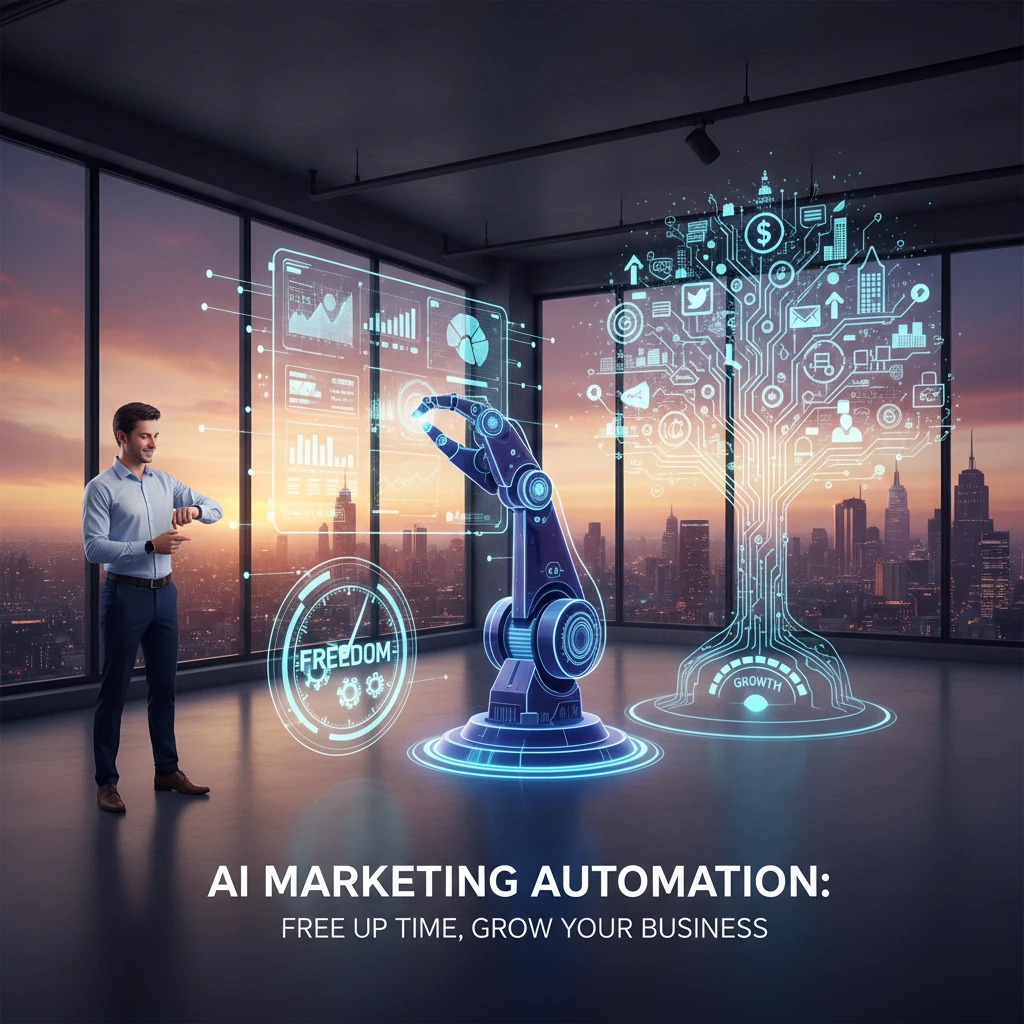
Are you spending countless hours on repetitive marketing tasks? Drowning in data but struggling to extract actionable insights? It’s time to face the music: your marketing efforts might be lagging behind. The good news? AI-powered marketing automation is no longer a futuristic fantasy; it’s a practical solution available to businesses of all sizes, ready to streamline your processes and boost your bottom line. Imagine freeing up your time to focus on strategy and creativity, while AI handles the mundane tasks. That’s the power of AI marketing automation.
This guide will provide a clear roadmap to understanding and implementing AI marketing automation. We will explore the tangible benefits, demystify the jargon, and show you how to select the right tools to transform your marketing strategy. Get ready to work smarter, not harder.
Is Your Marketing Stuck in the Stone Age? AI to the Rescue
Spot the Signs: Recognizing Inefficient Marketing Processes
How do you know if your marketing could benefit from some AI assistance? Here are some telltale signs: Are you spending hours manually scheduling social media posts? Is your email marketing yielding poor open rates despite your best efforts? Are you struggling to personalize content at scale, resulting in generic messaging that fails to resonate? Perhaps you’re drowning in spreadsheets, trying to make sense of website analytics without a clear picture of what’s working and what isn’t? Another key indicator is inconsistent brand messaging across different channels due to lack of unified automation. If any of these scenarios sound familiar, it’s time to consider AI. A key pitfall to avoid is resisting change simply because “that’s how we’ve always done it”. Consider tools like AI-powered keyword research to improve marketing performance.
The AI Promise: Automation, Personalization and Scalability
AI offers a three-pronged solution to inefficient marketing: automation, personalization, and scalability. Automation handles repetitive tasks like scheduling posts, sending emails, and generating reports, freeing up your team for more strategic initiatives. Personalization uses data to tailor content and messaging to individual customers, increasing engagement and conversion rates. Scalability allows you to reach a wider audience and manage larger campaigns without exponentially increasing your workload. Think about it: AI can analyze customer data to predict purchase behavior, enabling you to deliver hyper-targeted ads and offers at scale. This goes beyond simply using names in emails; it’s about understanding individual needs and delivering the right message at the right time. The advantage here is working smarter and increasing ROI significantly.
What Exactly *Is* AI Marketing Automation Anyway?
Breaking Down the Jargon: Key AI Marketing Terms Explained (No PhD Required!)
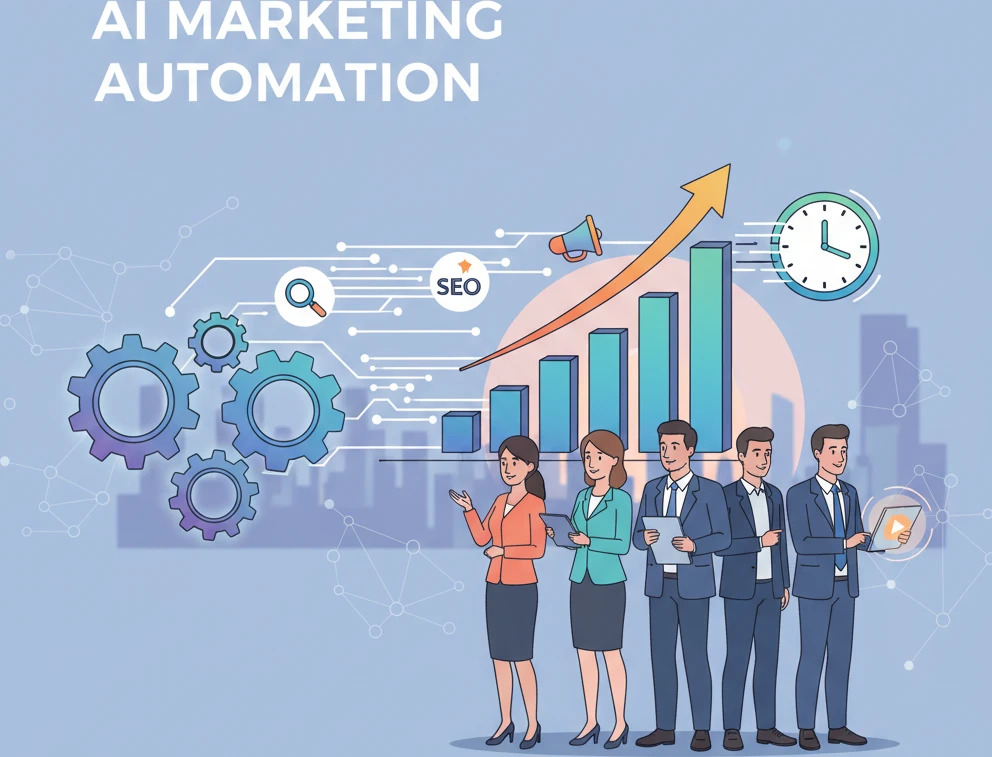
The world of AI can seem intimidating with its alphabet soup of acronyms and technical terms. Let’s demystify a few key concepts: Machine Learning (ML) is the ability of computer systems to learn and improve from experience without explicit programming. In marketing, ML can be used to predict customer behavior or optimize ad campaigns. Natural Language Processing (NLP) enables computers to understand and process human language, which is crucial for sentiment analysis and content creation. Predictive Analytics uses data and statistical techniques to forecast future outcomes, such as predicting which customers are most likely to churn. Chatbots use AI to simulate conversations with users, providing instant customer support and lead generation. Don’t be afraid to ask questions and dig deeper into these terms. Understanding these concepts will empower you to make informed decisions about which AI tools are right for your business. You can also get a clearer understanding from this AI for Business Owners training guide.
Real-World Examples: AI in Action Across Different Marketing Channels
AI is transforming marketing across various channels. In email marketing, AI can personalize subject lines, send time optimization, and segment audiences for hyper-targeted campaigns. For social media, AI tools can analyze trends, recommend optimal posting times, and even generate engaging content. In SEO, AI assists with keyword research, content optimization, and link building. In paid advertising, AI can automate bidding strategies, target specific demographics, and optimize ad creative for maximum ROI. Even in content marketing, AI can assist with generating blog posts, crafting compelling ad copy, and even producing video scripts. The common thread? AI is automating and optimizing tasks, allowing marketers to focus on strategy and creativity. For example, AI can analyze social media conversations to identify emerging trends, which can then be used to create timely and relevant content.
Top 5 AI Tools You Can Start Using Today (Yes, Really)
AI-Powered Content Creation: From Blog Posts to Social Media Updates
Several AI tools can assist with content creation. Jasper.ai is a popular tool for generating blog posts, website copy, and social media updates. It offers various templates and writing styles, allowing you to quickly create high-quality content. Rytr is another option, known for its user-friendly interface and ability to generate content in multiple languages. Copy.ai focuses on generating marketing copy, such as ad headlines, product descriptions, and email subject lines. When using these tools, remember that AI- generated content often requires human editing and refinement to ensure accuracy and brand voice. The key here is to leverage AI as a tool to augment your creativity, not replace it entirely. For example, use an AI tool to generate an outline for a blog post, then flesh out the details with your own expertise and insights.
Smart Email Marketing: Personalization That Actually Works
AI can elevate your email marketing from generic blasts to highly personalized experiences. Persado uses AI to generate persuasive marketing copy, including subject lines and calls to action, that are optimized for conversion. Seventh Sense analyzes email engagement data to predict the best time to send emails to individual subscribers, maximizing open rates and click-through rates. Phrasee focuses on creating emotionally intelligent email subject lines that resonate with recipients. When implementing these tools, focus on segmenting your audience based on behavior and preferences. Instead of sending the same email to everyone, use AI to tailor the message to each individual’s interests and needs. Remember, personalization isn’t just about using names; it’s about delivering relevant content that solves a specific problem or addresses a particular need.
AI-Driven SEO: Keyword Research and Content Optimization Made Easy
SEO can be a time-consuming and complex process, but AI can streamline many tasks. Surfer SEO uses AI to analyze top-ranking content for specific keywords, providing insights into keyword density, content structure, and other on-page factors. MarketMuse helps you identify content gaps and create comprehensive content that covers all aspects of a topic. Scalenut offers a suite of AI-powered SEO tools, including keyword research, content planning, and content optimization. When using these tools, focus on creating high-quality, informative content that provides value to your audience. Don’t rely solely on AI to optimize your content; use your own expertise and insights to create content that is both informative and engaging. Also consider this article about SEO strategy with AI.
Freeing Up Your Time: The ROI of AI Automation is Real
Case Study: How One Small Business Saved 20 Hours a Week with AI
Example: “Local Eats,” a small restaurant chain, implemented AI-powered social media scheduling and email marketing automation. Before AI, the marketing manager spent approximately 25 hours per week manually scheduling posts and crafting email campaigns. After implementing tools like Hootsuite (with AI scheduling features) and Mailchimp (with AI-powered segmentation), the manager’s workload decreased to just 5 hours per week. The restaurant saw a 30% increase in social media engagement and a 20% boost in email open rates. The time saved allowed the manager to focus on developing new marketing strategies and building relationships with local influencers, resulting in increased brand awareness and sales. This example showcases that even small businesses with limited resources can reap significant benefits from AI marketing automation.
Quantifying the Impact: Measuring the Benefits of AI Implementation
To truly understand the value of AI automation, you need to measure its impact on your key marketing metrics. Track metrics such as website traffic, lead generation, conversion rates, customer acquisition cost, and return on ad spend. Use A/B testing to compare the performance of AI-powered campaigns versus traditional campaigns. For example, compare the conversion rates of email subject lines generated by AI versus those written by humans. Regularly analyze your data to identify areas where AI is having the greatest impact and areas where it can be further optimized. Remember, the ROI of AI is not just about saving time; it’s about driving tangible business results. Don’t forget to factor in employee happiness; it’s been shown that reduced administrative burden with marketing tasks allows for more focus which increases satisfaction. Furthermore, you can consider prompt engineering. Here is more information about prompt engineering for business.
AI and SEO: A Match Made in Digital Marketing Heaven
Search Engine Optimization (SEO) and Artificial Intelligence (AI) are converging to create powerful marketing strategies. AI can automate time-consuming SEO tasks, allowing you to focus on strategy and creative work. By automating keyword research, optimizing content, and tracking rankings, AI-driven tools can help you improve your website’s visibility and drive more organic traffic. However, it’s important to remember that AI is a tool, not a replacement for human expertise. A successful SEO strategy blends AI capabilities with human insight.
Automated Keyword Research: Finding the Low-Hanging Fruit
AI excels at analyzing vast amounts of data to identify relevant keywords with high search volume and low competition. This process traditionally involved hours of manual research using tools like Google Keyword Planner or SEMrush. AI-powered tools, however, can automate this, providing a prioritized list of keywords tailored to your specific niche and target audience. When evaluating AI keyword research tools, consider factors such as data accuracy, the ability to filter by intent (informational, navigational, transactional), and integration with other SEO platforms. For example, an AI tool might identify “best running shoes for beginners 2026” as a keyword with rising search interest among your target demographic. An AI tool like the one mentioned here can help expedite this entire process. This allows you to create content that directly addresses their needs. Actionable step: Input your core business terms into an AI keyword research tool and analyze the suggested keywords. Prioritize those with a combination of high search volume and low competition.
Content Optimization: Ensuring Your Content is AI-Friendly and Human-Readable
AI can analyze your content and provide suggestions for improvement, ensuring it aligns with SEO best practices. This includes optimizing headings, meta descriptions, image alt text, and keyword density. AI algorithms can also assess readability and provide recommendations for simplifying language and improving sentence structure. However, it’s crucial to maintain a balance between AI-driven optimization and human readability. Over-optimizing content with keywords can result in a poor user experience and potentially trigger penalties from search engines. Consider using AI to identify areas for improvement, but always review and refine the suggestions to ensure your content remains engaging and informative. A good example of this is ensuring your content aligns with entity based SEO, where the AI helps you correlate topics between each other to improve overall ranking. Actionable step: Use an AI-powered content optimization tool to analyze a piece of existing content. Implement the suggested changes, focusing on improving readability and relevance. Make sure to also check out content marketing strategies that leverage AI, for additional context on how to make content friendly for both algorithms and users.
Rank Tracking: Monitoring Your Progress with AI-Powered Tools
Traditional rank tracking involves manually monitoring your website’s position in search engine results pages (SERPs) for specific keywords. AI can automate this process, providing real-time insights into your ranking performance. AI-powered rank tracking tools can also identify trends and patterns in your data, helping you understand the impact of your SEO efforts. When choosing a rank tracking tool, consider factors such as accuracy, the ability to track rankings across different devices and locations, and integration with other analytics platforms. Furthermore, AI-driven insights can help you understand competitor strategies, allowing you to adapt your approach and maintain a competitive edge. Actionable step: Select an AI rank tracking tool and monitor your website’s position for a set of target keywords. Analyze the data to identify areas where you can improve your SEO strategy.
AI in Social Media Management: From Scheduling to Engagement
AI isn’t just for SEO; it’s transforming social media management as well. From automatically curating content and scheduling posts to analyzing sentiment and engaging with followers, AI-powered tools can streamline your social media efforts and improve your results. By automating repetitive tasks, AI frees up your time to focus on building relationships with your audience and creating high-quality content. However, it’s important to use AI responsibly and avoid relying solely on automated interactions. Authenticity and genuine engagement are still crucial for building a strong social media presence. The same concepts from digital marketing AI can be applied here to increase ROI.
Content Curation: Finding Relevant and Engaging Content Automatically
Finding relevant and engaging content to share on social media can be time-consuming. AI can automate this process by scouring the internet for articles, videos, and other content that aligns with your brand and target audience. AI-powered content curation tools use natural language processing (NLP) to analyze content and identify topics that are likely to resonate with your followers. These tools can also filter content based on factors such as relevance, quality, and popularity. When selecting a content curation tool, consider factors such as the ability to customize search parameters, the variety of content sources, and integration with your social media management platform. Example: An AI tool analyzes industry news sources and identifies an article about the latest advancements in AI-powered SEO. The tool automatically suggests sharing this article on your company’s Twitter account with a pre-written caption: “Check out this article on how AI is revolutionizing SEO! #AI #SEO #DigitalMarketing”. Actionable step: Choose an AI content curation tool and configure it to find content relevant to your industry. Schedule the tool to automatically share the curated content on your social media channels.
Sentiment Analysis: Understanding How Your Audience Feels About Your Brand
Understanding how your audience feels about your brand is crucial for social media success. Sentiment analysis, powered by AI, can analyze social media posts, comments, and reviews to determine the overall sentiment (positive, negative, or neutral) towards your brand. This information can be used to identify potential issues, address customer concerns, and tailor your messaging to resonate with your audience. AI sentiment analysis tools use NLP to understand the context and nuances of language, providing a more accurate assessment of sentiment than simple keyword analysis. Example: An AI sentiment analysis tool detects a surge of negative comments on your company’s Facebook page regarding a recent product update. You can use this information to quickly address the concerns and provide a solution, preventing further damage to your brand reputation. Actionable step: Implement an AI sentiment analysis tool to monitor your brand’s social media mentions. Track sentiment trends over time and identify any potential issues that need to be addressed.
Automated Posting: Scheduling and Optimizing Your Social Media Calendar
AI can automate the process of scheduling and optimizing your social media calendar, ensuring your content is published at the optimal times for maximum engagement. AI-powered social media management tools analyze historical data to identify patterns in audience behavior, such as when your followers are most active and what types of content they are most likely to engage with. These tools can then automatically schedule your posts to maximize reach and engagement. However, it’s important to avoid relying solely on automated scheduling. You should still monitor your social media channels and engage with your audience in real-time. Example: An AI tool analyzes your Twitter data and determines that your followers are most active on Tuesdays and Thursdays between 10 AM and 12 PM. The tool automatically schedules your tweets to be published during these times, resulting in a 20% increase in engagement. Actionable step: Use an AI-powered social media management tool to schedule your posts. Analyze the results to identify the optimal times for publishing content.
Don’t Fear the Robots: Addressing Common Concerns About AI in Marketing
The rise of AI in marketing has sparked some concerns about the future of the industry. Some marketers fear that AI will replace human creativity and lead to job displacement. While AI can automate many tasks, it’s important to remember that it’s a tool, not a replacement for human expertise. A successful marketing strategy blends AI capabilities with human insight, creativity, and emotional intelligence. In fact, AI is more likely to augment, not replace, human marketers, freeing them up to focus on higher-level strategic work. Be sure to review SEO strategies for how AI is changing how businesses engage with their customers.
The Human Touch: Maintaining Authenticity in an AI-Driven World
In an AI-driven world, maintaining authenticity and a human touch is more important than ever. While AI can automate many tasks, it cannot replicate human empathy, creativity, and emotional intelligence. Your audience wants to connect with real people, not robots. Therefore, it’s crucial to balance AI automation with genuine human interaction. Use AI to streamline repetitive tasks, but always ensure your content and messaging reflect your brand’s personality and values. Respond to comments and questions in a timely and personalized manner. Share behind-the-scenes content that showcases your company’s culture and values. Remember, people buy from people they trust, and authenticity is key to building that trust. Example: While an AI tool drafts social media posts, a human marketer reviews and personalizes them, adding a touch of humor and empathy. This results in higher engagement and a stronger connection with the audience. Actionable step: Review your existing marketing materials and identify areas where you can inject more human personality and authenticity.
Job Displacement: How AI Can Augment, Not Replace, Human Marketers
While concerns about job displacement are understandable, AI is more likely to augment, not replace, human marketers. AI can automate repetitive tasks, freeing up marketers to focus on higher-level strategic work, such as developing marketing strategies, building relationships with customers, and creating engaging content. In fact, the rise of AI is creating new opportunities for marketers with skills in areas such as prompt engineering, data analysis, and AI strategy. Rather than fearing AI, marketers should embrace it as a tool to enhance their skills and productivity. Example: An SEO specialist uses AI to automate keyword research and rank tracking, freeing up time to focus on content strategy and link building. Actionable step: Identify areas where AI can automate your current tasks. Use the time saved to develop new skills in areas such as prompt engineering or data analysis. Check out more on prompt engineering and how it can improve your marketing results.
Getting Started with AI Marketing Automation: A Step-by-Step Guide for Beginners
Implementing AI marketing automation can seem daunting, but it doesn’t have to be. By following a step-by-step approach, even beginners can successfully leverage AI to improve their marketing efforts. Start by identifying your pain points, choosing the right tools, and implementing AI gradually for optimal results. Remember, AI is a journey, not a destination. Continuously experiment, learn, and adapt your strategy to maximize the benefits of AI. Here’s a training guide for how business owners can use AI for digital marketing.
Identify Your Pain Points: Where Can AI Make the Biggest Impact?
The first step in implementing AI marketing automation is to identify your pain points. What tasks are taking up too much time? What processes are inefficient? Where are you struggling to achieve your marketing goals? By identifying your pain points, you can focus your AI efforts on areas where it can make the biggest impact. For example, if you’re struggling to generate leads, you might focus on using AI to personalize email marketing campaigns. Or, if you’re spending too much time on social media management, you might focus on using AI to automate content curation and scheduling. Actionable step: Create a list of your top marketing pain points. Prioritize the list based on the potential impact of AI automation.
Choose the Right Tools: Selecting Solutions That Fit Your Needs and Budget
Once you’ve identified your pain points, the next step is to choose the right AI marketing tools. There are a wide variety of AI-powered tools available, ranging from free to enterprise-level solutions. When selecting tools, consider factors such as your budget, your technical skills, and your specific needs. Start by researching different tools and reading reviews. Look for tools that offer a free trial or a demo so you can test them out before committing to a purchase. Also, consider the integration capabilities of the tools. Do they integrate with your existing marketing platforms, such as your CRM and your email marketing software? This is crucial to ensuring a seamless workflow. Actionable step: Research AI marketing tools that address your identified pain points. Compare features, pricing, and reviews to find the best solutions for your needs.
Start Small, Think Big: Implementing AI Gradually for Optimal Results
Implementing AI marketing automation is a journey, not a destination. Start small by focusing on automating one or two key tasks. Once you’ve seen positive results, gradually expand your AI implementation to other areas of your marketing strategy. Avoid trying to automate everything at once, as this can be overwhelming and lead to poor results. Instead, focus on implementing AI gradually and strategically. Continuously monitor your results and adapt your strategy as needed. Example: A small business starts by using AI to automate email marketing personalization. After seeing a significant increase in click-through rates, they expand their AI implementation to social media management and content creation. Actionable step: Choose one small marketing task to automate with AI. Monitor the results and gradually expand your AI implementation as you see positive outcomes.
Common AI Marketing Automation Mistakes (and How to Avoid Them)
Over-Automation: Finding the Right Balance Between AI and Human Input
One of the biggest pitfalls is over-automation. While AI can handle many tasks, completely removing human oversight is a recipe for disaster. Imagine an e-commerce business automating its customer service replies entirely. If a customer has a complex issue or a complaint requiring empathy, an AI-only response might come across as impersonal or even offensive, leading to customer churn. The decision point here is this: can this task benefit from a human touch? Prioritize tasks where creativity, empathy, and nuanced understanding are critical. For example, use AI to draft initial email copy, but have a human review and personalize it before sending. Similarly, use AI for initial lead scoring, but have a sales representative validate the leads before outreach. Always maintain a feedback loop to evaluate the performance of your automated systems and identify areas where human intervention is needed. One concrete example: AI can segment your email list, but humans should craft the email *strategy* based on that segmentation. Finding the perfect equilibrium will maximize effectiveness.
Data Privacy Concerns: Ensuring Compliance with Regulations
Data privacy is paramount. Failing to comply with regulations like GDPR or CCPA can result in hefty fines and reputational damage. AI marketing automation relies on data, so it’s crucial to ensure you’re collecting, storing, and using data ethically and legally. Start by conducting a thorough data audit to understand what data you’re collecting and how it’s being used. Implement robust data security measures to protect data from unauthorized access or breaches. Obtain explicit consent from individuals before collecting their data. Provide clear and transparent information about how you’re using their data. Regularly review and update your data privacy policies to ensure they’re compliant with evolving regulations. For example, if you are using AI to personalize ads, you need to ensure that your ad platform is compliant with advertising regulations. Furthermore, consider implementing differential privacy techniques to anonymize data while still preserving its utility for AI training. Remember, compliance is not a one-time effort but an ongoing process.
Neglecting Training: Investing in Your Team’s AI Skills
Implementing AI marketing automation without adequate training is like giving someone a race car without teaching them how to drive. Your team needs to understand how the AI tools work, how to use them effectively, and how to interpret the results. Invest in training programs to upskill your team. This could include online courses, workshops, or even bringing in AI consultants to provide customized training. Focus on practical skills that your team can apply immediately to their daily tasks. Encourage experimentation and provide a safe space for them to learn and make mistakes. Start with a pilot project to test the waters and identify any knowledge gaps. For instance, your marketing team needs to grasp prompt engineering to effectively utilize AI-powered content creation tools. Moreover, ensure your data analysts can interpret the AI-driven insights to inform marketing strategy. A well-trained team will not only use the AI tools more effectively but also be more likely to embrace and champion the change.
The Future of Marketing is Here. Are You Ready?
Emerging Trends in AI Marketing Automation
The landscape of AI marketing automation is constantly evolving. One key trend is hyper-personalization, where AI is used to deliver highly tailored experiences to individual customers based on their unique preferences and behaviors. This moves beyond basic segmentation to create truly one-to-one marketing. Another trend is the increasing use of AI for predictive analytics, allowing marketers to anticipate customer needs and proactively offer solutions. Think of an AI predicting a customer is likely to churn and triggering a personalized offer to retain them. We are also seeing improvements in natural language processing (NLP) allowing for more sophisticated chatbots and voice-based marketing. Furthermore, AI is being integrated more deeply into marketing platforms, making it easier for businesses to adopt and use these tools. Keep an eye on developments in areas like reinforcement learning, which can optimize marketing campaigns in real-time, and generative AI, which can create entirely new marketing assets.
Preparing Your Business for the AI-Powered Future
Getting ready for an AI-powered future requires a strategic approach. Begin by assessing your current marketing processes and identifying areas where AI can have the biggest impact. This could be anything from lead generation and customer segmentation to content creation and campaign optimization. Develop a clear AI roadmap that outlines your goals, timelines, and resource allocation. Invest in the right AI tools and technologies that align with your specific needs. Ensure you have the infrastructure and data to support these tools. Build a data-driven culture where decisions are informed by insights. Encourage experimentation and be willing to adapt your strategies based on the results. Regularly evaluate the performance of your AI initiatives and make adjustments as needed. Focus on building a team with the skills and knowledge to leverage AI effectively. Change management is crucial; ensure your team understands the benefits of AI and is comfortable working alongside it. Change can be hard. Be sure to demonstrate the value of AI for the people using it.
KPIDM: Your Partner in AI Marketing Education and Implementation
At KPIDM, we understand the transformative potential of AI in marketing, and also the challenges of embracing that change. That’s why we offer comprehensive AI for business owners training guides and agency services designed to help businesses of all sizes harness the power of AI. Our training programs equip you with the knowledge and skills you need to leverage AI tools effectively. We cover everything from the fundamentals of AI to advanced techniques for content marketing, SEO, and advertising. Our agency services provide hands-on support to implement AI solutions tailored to your specific business goals. We can help you with everything from setting up AI-powered marketing automation systems to optimizing your campaigns for maximum ROI. We also offer guidance on navigating the ethical and legal considerations of using AI in marketing. Whether you’re just starting your AI journey or looking to take your marketing to the next level, KPIDM is here to help.
As AI reshapes the marketing landscape, those who embrace it strategically will gain a significant edge. By avoiding common pitfalls, investing in training, and partnering with experts, you can unlock the full potential of AI to drive growth and achieve your business goals. Remember that AI should amplify human capabilities, not replace them entirely. With a thoughtful and balanced approach, the future of marketing is bright.