
Unlocking Growth: How AI is Reshaping Digital Marketing for Small Businesses
Running a small business is tough. Juggling everything from product development to customer service leaves little time for mastering the ever-changing landscape of digital marketing. But here’s the thing: ignoring digital marketing is no longer an option. It’s the lifeblood of modern businesses. And now, artificial intelligence (AI) is changing the game, offering a powerful edge to those who know how to use it.
This article isn’t about robots taking over the world. It’s about practical, actionable strategies you can implement today to use AI to boost your digital marketing efforts, save time, and ultimately, grow your business. We’re not talking about replacing human creativity; we’re talking about amplifying it.
The Time-Saving Secret Weapon: AI Automation
One of the biggest benefits of AI in digital marketing is automation. Think about all the repetitive tasks that eat up your time – social media scheduling, email marketing, analyzing website data. AI can handle these tasks efficiently, freeing you up to focus on the bigger picture: strategy, creativity, and customer relationships.
For instance, AI-powered tools can automatically schedule social media posts across multiple platforms, ensuring consistent engagement without requiring you to manually post updates every day. Or consider email marketing. AI can analyze open rates, click-through rates, and other metrics to optimize your email campaigns for maximum impact. You can achieve this by creating effective content using AI-Powered Growth Guide.
Content is Still King, but AI is the Royal Advisor
Content marketing remains a cornerstone of any successful digital marketing strategy. But creating high-quality, engaging content consistently can be a challenge. AI can help in several ways:
- Topic Research: AI tools can analyze trends, identify popular keywords, and suggest content topics that are likely to resonate with your target audience.
- Content Creation: AI can assist with writing blog posts, articles, website copy, and even social media updates. Note, it’s crucial to review and edit AI-generated content to ensure accuracy, originality, and alignment with your brand voice. Consider exploring how automate topic rotation to keep content always fresh.
- Content Optimization: AI can analyze your existing content and provide recommendations for improving its search engine optimization (SEO), readability, and overall effectiveness.
It’s important to remember that AI is a tool, not a replacement for human creativity. Use AI to generate ideas, draft content, and optimize your work, but always add your own unique perspective and expertise. Don’t just blindly publish what AI spits out – refine it, personalize it, and make it your own.
Hyper-Personalization: Speaking Directly to Your Customers
Generic marketing messages are easily ignored. Customers want to feel understood and valued. AI enables hyper-personalization, allowing you to deliver tailored content and offers to individual customers based on their specific interests, behaviors, and preferences.
For example, imagine an e-commerce store that sells pet supplies. Instead of sending the same generic email to all customers, AI can analyze their past purchases and browsing history to send personalized recommendations. Customers who recently bought bird seed might receive an email showcasing different types of bird seed or new bird toys. This level of personalization increases engagement, drives sales, and builds stronger customer relationships.
SEO Enhanced: AI and Search Engine Optimization
SEO is essential for driving organic traffic to your website. AI can help you optimize your website and content for search engines in several ways:
- Keyword Research: AI can identify high-value keywords that are relevant to your business and your target audience.
- On-Page Optimization: AI can analyze your website’s structure, content, and meta tags to identify areas for improvement.
- Link Building: AI can help you identify potential link-building opportunities and automate the outreach process.
Remember to conduct an SEO audit checklist to improve your website ranking.
Paid Advertising: Smarter Campaigns with AI
AI can dramatically improve the performance of your paid advertising campaigns on platforms like Google Ads and social media. AI-powered tools can analyze vast amounts of data to identify the most effective keywords, target audiences, and ad creatives. They can also automatically adjust your bids and budgets to maximize your return on investment (ROI).
Here’s how AI can help:
- Predictive Bidding: AI algorithms analyze historical data to predict which keywords and placements are most likely to convert, allowing you to bid more strategically.
- Audience Targeting: AI can identify high-potential target audiences based on demographics, interests, behaviors, and other factors.
- Ad Creative Optimization: AI can test different ad variations to determine which headlines, images, and calls to action resonate best with your target audience.
Data Analysis: Making Sense of the Numbers
Data is the fuel that drives effective digital marketing. But analyzing vast amounts of data can be overwhelming. AI can help you make sense of the numbers by automatically identifying patterns, trends, and insights that you might otherwise miss.
For example, AI can analyze your website traffic data to identify which pages are performing well, which pages need improvement, and which traffic sources are driving the most conversions. It can also analyze your customer data to identify customer segments, predict customer churn, and personalize your marketing messages.
The Ethical Considerations of AI in Marketing
It’s crucial to address the ethical implications of using AI in marketing. While AI offers immense potential, it’s important to use it responsibly and ethically. Here are a few key considerations:
- Data Privacy: Be transparent about how you collect, use, and store customer data. Comply with all relevant data privacy regulations, such as GDPR and CCPA.
- Bias: AI algorithms can be biased if they are trained on biased data. Be aware of this potential and take steps to mitigate bias in your AI models.
- Transparency: Be transparent with your customers about how you are using AI to personalize their experience. Don’t try to hide the fact that you are using AI.
Putting It All Together: Building Your AI-Powered Digital Marketing Strategy
So, how do you actually implement AI into your digital marketing strategy? Here’s a step-by-step approach:
- Identify Your Goals: What do you want to achieve with AI? Do you want to increase website traffic, generate more leads, or improve customer engagement?
- Choose the Right Tools: There are numerous AI-powered digital marketing tools available. Do your research and choose tools that are appropriate for your specific needs and budget. For example, if you’re focusing on content creation, explore options for AI Website Content.
- Start Small: Don’t try to implement AI across all of your marketing efforts at once. Start with a small pilot project and gradually expand your use of AI as you gain experience.
- Monitor Your Results: Track your key performance indicators (KPIs) to measure the impact of AI on your marketing efforts.
- Adapt and Iterate: AI is constantly evolving. Stay up-to-date on the latest AI trends and technologies, and adapt your strategy accordingly.
Case Study: How a Local Bakery Used AI to Boost Sales
Let’s look at a real-world example. “Sweet Delights,” a local bakery, was struggling to attract new customers. They decided to implement an AI-powered marketing strategy to boost sales.
First, they used AI to analyze their customer data and identify their most valuable customer segments. They then used AI to personalize their email marketing campaigns, sending targeted offers and promotions to each customer segment. They also used AI to optimize their paid advertising campaigns, targeting potential customers who were likely to be interested in their products.
The results were impressive. Within three months, Sweet Delights saw a 20% increase in website traffic, a 15% increase in online sales, and a 10% increase in overall revenue. AI helped them to reach the right customers with the right message at the right time, leading to significant business growth.
The Future of Digital Marketing: AI is Here to Stay
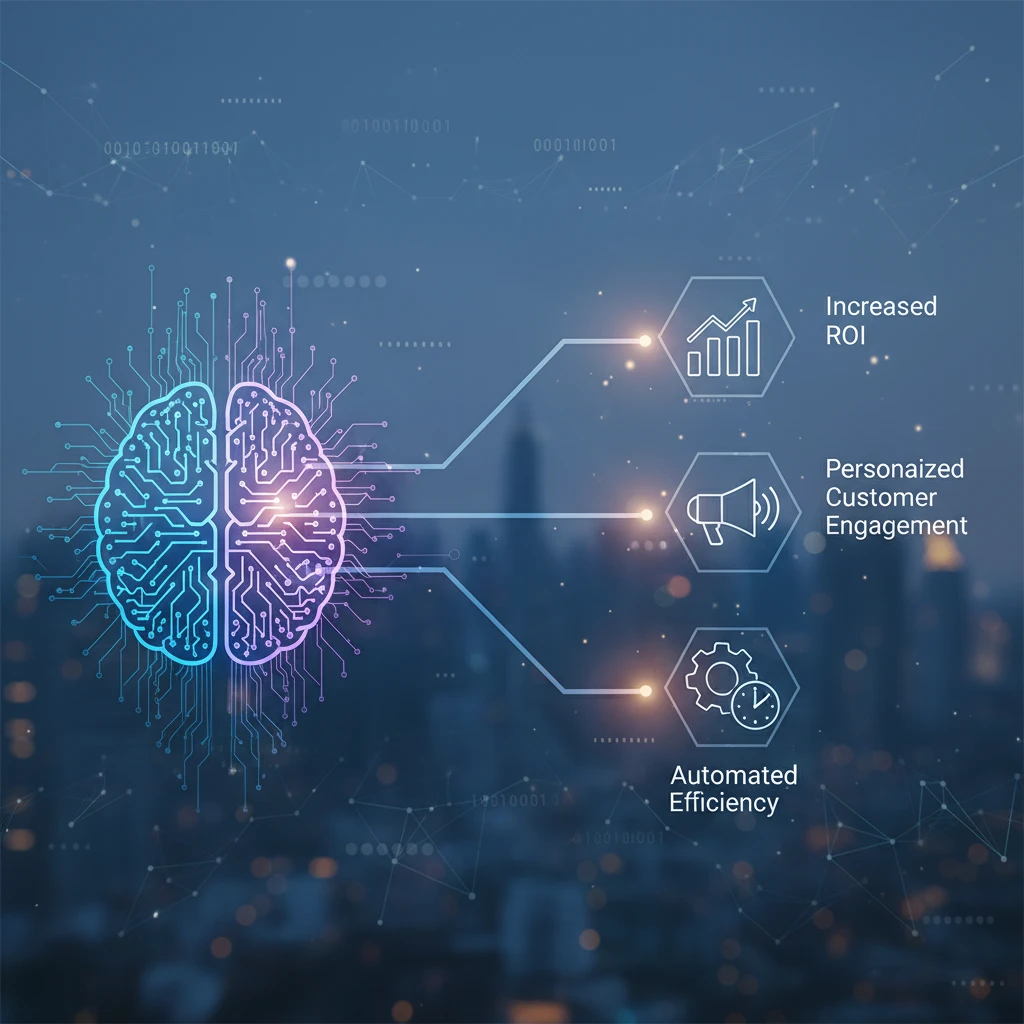
AI is not just a trend; it’s a fundamental shift in how digital marketing is done. Businesses that embrace AI will have a significant advantage over those that don’t. By automating tasks, personalizing experiences, optimizing campaigns, and analyzing data, AI empowers you to work smarter, not harder, and achieve your business goals more effectively.
So, are you ready to embrace the AI revolution and transform your digital marketing strategy? The tools are available, the potential is immense, and the time is now.
FAQ: Your Burning Questions About AI in Marketing Answered
Still have questions? Here are some of the most frequently asked questions about using AI in digital marketing for small businesses:
Q: Is AI going to replace marketers?
A: No. AI is a tool to augment marketers’ capabilities, not replace them. Human creativity and strategic thinking are still essential.
Q: How much does it cost to implement AI in my marketing?
A: The cost varies depending on the tools and strategies you choose. There are free and low-cost AI tools available, as well as more expensive enterprise solutions.
Q: Do I need to be a data scientist to use AI in marketing?
A: No. Many AI-powered marketing tools are designed to be user-friendly, even for those without a technical background.
Q: What are the biggest challenges of using AI in marketing?
A: Some of the biggest challenges include data privacy concerns, bias in AI algorithms, and the need for ongoing monitoring and optimization.
Final Thoughts: Your AI Advantage Awaits
The business owner’s AI advantage isn’t about some distant, theoretical future. It’s about practical, tangible benefits you can start realizing today. By embracing AI, you can unlock new levels of efficiency, personalization, and effectiveness in your digital marketing efforts. So, take the leap, explore the possibilities, and discover how AI can help your business thrive.