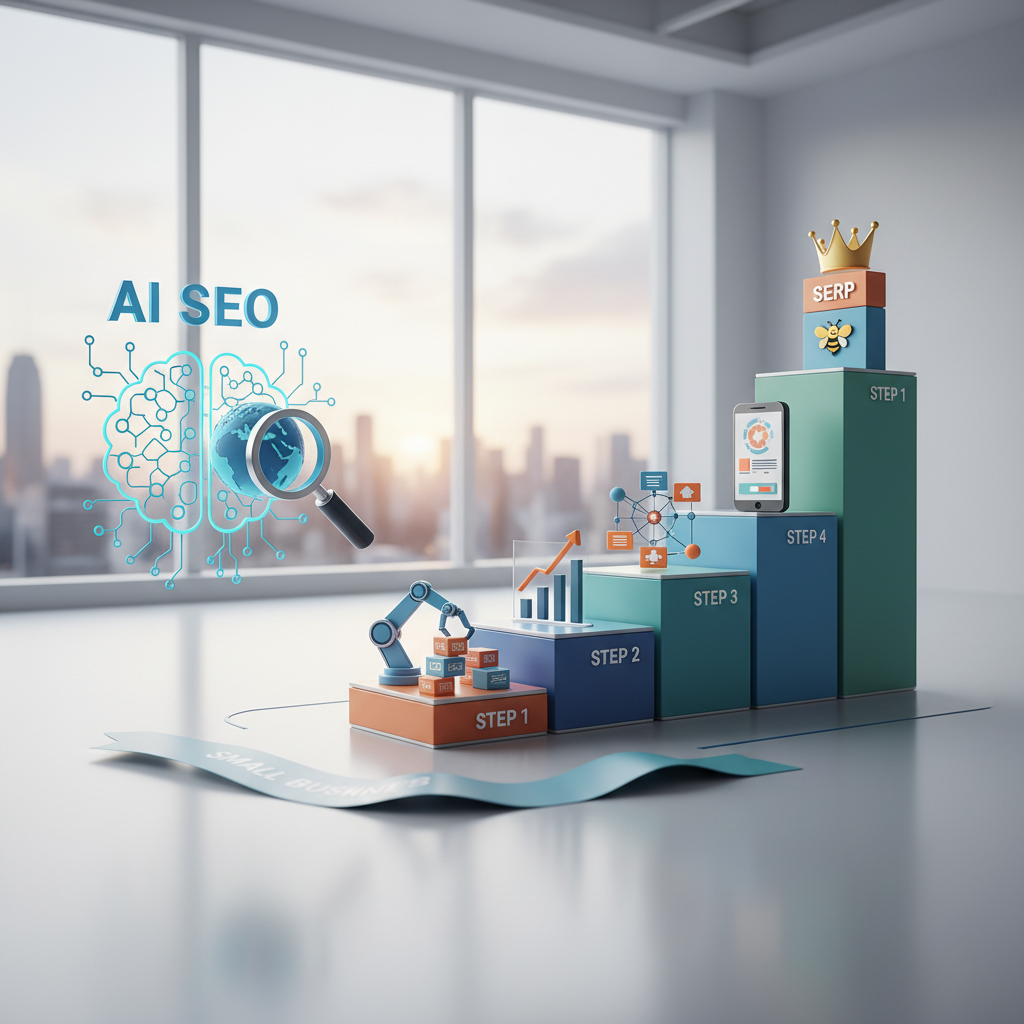

Are you a business owner drowning in the daily grind, wondering if AI is just another overhyped tech trend? Or are you seeing the potential but struggling to separate the signal from the noise? At KPIDM, we understand. We’re dedicated to helping business owners like you harness the power of AI to achieve tangible results.
This isn’t about replacing human creativity with robots. It’s about augmenting your existing skills, automating tedious tasks, and unlocking new insights that drive revenue. Let’s explore how you can implement AI in your marketing strategy and what tools actually deliver ROI in 2026.
Is AI the Secret Sauce for Marketing ROI in 2026?
Why the hype around AI in digital marketing now?
The recent surge in AI adoption stems from a confluence of factors. First, AI models have become significantly more accessible and user-friendly, even for those without a technical background. Platforms like ChatGPT and Google’s AI tools offer intuitive interfaces, making it easier to integrate AI into daily workflows. Second, the sheer volume of marketing data has become overwhelming. AI excels at processing vast datasets, identifying patterns, and generating actionable insights far beyond human capabilities. Finally, businesses are under increasing pressure to deliver personalized experiences and targeted campaigns. AI allows for hyper-personalization at scale, optimizing engagement and conversion rates. The rise of accessible prompt engineering also allows business persons to train AI for their own specific goals. It’s important to remember that AI is not a magic bullet. Success depends on clear objectives, quality data, and a willingness to experiment and adapt.
Defining ROI in the context of AI-driven campaigns
Return on investment (ROI) is paramount, and defining it clearly is the first step. For an AI-driven SEO campaign, ROI might be measured by increased organic traffic, higher keyword rankings, or improved conversion rates from organic leads. For ad campaigns, it could be a lower cost-per-acquisition (CPA), a higher click-through rate (CTR), or increased sales attributed to AI-powered targeting. For content marketing, ROI could mean more qualified leads, increased brand awareness, or improved customer engagement metrics like time on page or social shares. Crucially, it is important to establish a baseline *before* implementing AI. What are your current metrics *without* AI? Then, meticulously track the changes *after* AI implementation. Don’t rely solely on vanity metrics like follower count. Focus on metrics that directly impact your bottom line. Also, consider the long-term impact. Building brand authority through AI-assisted content creation, for example, might have a delayed but substantial ROI.
Unpacking the AI Toolkit for Business Owners: What’s Actually Useful?

AI-powered SEO tools for keyword research and content optimization
AI keyword research tools go beyond simple keyword volume and competition analysis. They can identify long-tail keywords with high conversion potential, uncover trending topics in your niche, and even analyze competitor content to find gaps in your strategy. For content optimization, AI can assess readability, suggest improvements to on-page SEO elements (like title tags and meta descriptions), and even predict which topics are most likely to resonate with your target audience. Before investing in an AI SEO tool, consider your specific needs and budget. Free tools like Google’s Keyword Planner can provide basic data, while paid tools offer more advanced features like semantic analysis and content scoring. Experiment with a few different tools to find the one that best fits your workflow and provides the most actionable insights. Be aware that AI doesn’t replace human judgment. Always review AI-generated suggestions and ensure they align with your brand voice and overall marketing strategy. Remember to always optimize for user intent and expertise.
AI for ad campaign management: bidding strategies and audience targeting
AI is transforming ad campaign management by automating bidding strategies and improving audience targeting. AI-powered bidding algorithms can analyze real-time data to optimize bids based on factors like time of day, device type, and user demographics. This helps you maximize your ad spend and achieve a lower CPA. For audience targeting, AI can analyze customer data to identify high-value segments and create personalized ad experiences. Tools like Google’s Performance Max campaigns leverage AI to target users across multiple channels, including search, display, and YouTube. A common pitfall is over-reliance on AI. While AI can automate many tasks, it’s crucial to monitor performance closely and make adjustments as needed. AI algorithms are only as good as the data they’re trained on, so ensure your data is accurate and up-to-date. Don’t be afraid to test different AI strategies and experiment with different settings to find what works best for your business. You can further explore these bidding strategies on Google’s official documentation.
Social Media Automation: balancing AI efficiency with human connection
AI can automate various social media tasks, from scheduling posts to generating content captions. This can save you time and free up your team to focus on more strategic initiatives. However, it’s crucial to balance AI efficiency with genuine human connection. Don’t rely solely on AI-generated content. Use AI to augment your existing content strategy, not replace it entirely. For example, you can use AI to generate different variations of a social media post to test which one performs best. Or, you can use AI to identify trending topics and create relevant content that resonates with your audience. One common pitfall is using AI to create generic or impersonal content. Always personalize your content and engage with your audience in a meaningful way. Use AI to understand your audience better, but don’t let it dictate your entire social media strategy. Social media is all about building relationships, and that requires a human touch. KPIDM provides resources like AI Marketing Strategy: A Practical Guide for Business Owners to help business owners navigate this complex landscape.
SEO on Steroids: How AI is Transforming Search Rankings for KPIDM
AI-driven content creation: From prompt to published (and ranked!)
AI now powers content creation far beyond simple article spinning. AI tools can generate blog posts, website copy, product descriptions, and even scripts for videos. The process usually starts with a well-crafted prompt outlining the topic, target audience, desired tone, and key talking points. The AI then generates a first draft, which you can then edit and refine. While AI can produce content quickly and efficiently, it’s crucial to ensure the content is accurate, original, and aligned with your brand voice. A significant danger is relying *exclusively* on AI-created content without human oversight, which can lead to generic, uninspired content that fails to engage readers. The best approach is to use AI as a tool to augment your content creation process, not replace it. Feed the AI with specific data that is unique to your company and brand to get the best results. Prompt engineering is now considered a core skill for marketers. Prompt Engineering: The Future of AI Marketing explores how to optimize your inputs for optimal output.
Automated link building strategies: ethical and effective?
Link building is a critical aspect of SEO, and AI is being used to automate various link building tasks, such as identifying potential link partners, crafting outreach emails, and monitoring link performance. Some tools even claim to automate the entire link building process. However, it’s essential to approach automated link building strategies with caution. Many “automated” solutions rely on tactics that violate Google’s guidelines and can result in penalties. Focus on ethical and sustainable link building practices, such as creating high-quality content that attracts backlinks naturally and building relationships with other website owners. AI can assist with these efforts by identifying relevant websites to target and personalizing outreach emails. Avoid any link building strategy that seems too good to be true, and always prioritize quality over quantity. Remember that the long-term value of a few authoritative backlinks is far greater than a large number of low-quality links. Consider focusing on reverse-engineering competitor backlinks. Use AI to discover their sources, and then create superior content to win those links for yourself. Detailed information on Google’s webmaster guidelines regarding link schemes can be found on Google’s Search Central.
Analyzing search data with AI: spotting trends and opportunities
AI can analyze vast amounts of search data to identify emerging trends, uncover hidden opportunities, and gain a deeper understanding of user behavior. For example, AI can analyze search queries to identify trending topics in your niche and create content that addresses those topics. It can also analyze competitor search rankings to identify keywords they’re targeting and find gaps in their strategy. Furthermore, AI can analyze user search behavior to understand what users are looking for when they search for your products or services. This information can be used to optimize your website and content to better meet user needs. When analyzing search data, it is helpful to connect this data with your customer relationship management (CRM) platform. By knowing the search queries and correlating that to actual customers you can find new opportunities to attract similar potential customers. Always focus on actionable insights and avoid getting bogged down in irrelevant data. Remember that AI is a tool to help you make better decisions, not a replacement for your own judgment and experience. The AI-Powered SEO Audit: Find & Fix Ranking Killers article provides detailed guidance on using AI to analyze your own website’s performance in search.
Content That Converts: Using AI to Craft Compelling Narratives
AI-powered copywriting tools: strengths and weaknesses for business content
AI copywriting tools have come a long way, offering features like generating headlines, writing ad copy, creating product descriptions, and even drafting entire blog posts. These tools are proficient at generating variations of existing content and creating content quickly based on provided prompts. However, it’s crucial to understand their limitations. AI often struggles with nuance, creativity, and deep subject matter expertise. The output can sometimes be generic, repetitive, or even factually incorrect. The strength of AI copywriting lies in its ability to handle repetitive tasks, such as generating multiple versions of ad copy for A/B testing, or creating basic drafts that can be refined by human copywriters. Businesses should avoid using AI to generate critical content without thorough review and editing. Human writers bring creativity, emotional intelligence, and contextual understanding that AI currently lacks. Think of AI as a powerful assistant that can speed up your workflow, but not replace your human expertise.
Personalizing content with AI: tailoring messages to individual customer segments
AI facilitates personalization at scale, allowing businesses to tailor content to specific customer segments based on their demographics, interests, and past behavior. For instance, an e-commerce website can use AI to recommend products based on a user’s purchase history or browsing activity. An email marketing campaign can personalize subject lines and content based on the recipient’s preferences. The advantages of personalization are clear: increased engagement, higher conversion rates, and improved customer loyalty. However, personalization can also backfire if not implemented carefully. Over-personalization can feel creepy or intrusive, leading to a negative customer experience. It’s important to strike a balance between relevance and privacy. Always be transparent about how you’re using customer data and give users control over their preferences. Use AI to understand your audience better, but don’t use it to manipulate or deceive them. A good strategy is to segment your audience based on broad characteristics, and then let the user further personalize the content experience.
Measuring content effectiveness with AI analytics: what metrics matter?
AI-powered analytics tools can provide deeper insights into content performance than traditional analytics platforms. They can analyze user behavior, identify patterns, and predict future trends. For example, AI can analyze user engagement metrics (like time on page, bounce rate, and scroll depth) to understand which parts of your content are most engaging. It can also analyze social media data to understand how your content is being shared and discussed. Instead of just tracking basic metrics like page views, focus on metrics that directly impact your business goals. If your goal is to generate leads, track the number of leads generated by each piece of content. If your goal is to increase brand awareness, track social media shares and mentions. A common pitfall is focusing too much on vanity metrics and ignoring the metrics that truly matter. Use AI to identify the key drivers of content performance and focus your efforts on creating content that resonates with your target audience and helps you achieve your business objectives. Tools like Google Analytics 4 (GA4) now offer AI-powered insights to help surface these important correlations. The team at 610 Digital has provided some excellent insights on this topic with their WordPress Web Design: 610 Digital’s Growth-First Approach.
AI-Enhanced Ads: Precision Targeting and Higher Conversion Rates
AI is changing the game in online advertising, offering capabilities that go far beyond traditional methods. Instead of relying on broad demographics, AI can analyze vast amounts of data to understand individual customer behavior, preferences, and purchase patterns, leading to precision targeting and higher conversion rates. This allows you to show the right ad to the right person at the right time, significantly improving the effectiveness of your ad spend. However, it’s important to note that data privacy regulations are constantly evolving, and businesses must prioritize ethical data handling practices and transparency when using AI for advertising. You must ensure compliance with laws like GDPR and CCPA and be upfront with customers about how their data is used for targeting purposes. One critical decision point is choosing the right AI platform, balancing cost, features, and ease of use. A pitfall to avoid is over-reliance on AI; human oversight is still needed to ensure ads align with brand values and avoid unintended biases.
Dynamic ad creative: A/B testing with AI for optimal performance
Dynamic ad creative is the ability to automatically tailor ad content to individual users based on their past interactions, browsing history, and other data points. AI plays a crucial role here by continuously A/B testing different ad variations—headlines, images, calls to action—to identify the combinations that resonate most with specific audience segments. For instance, a potential customer who has previously viewed product reviews might be shown ads highlighting customer testimonials, while someone who has visited your pricing page might see ads emphasizing discounts or promotions. The decision of which elements to test should be driven by data analysis, not guesswork. It requires a robust A/B testing framework and a clear understanding of your target audience. A pitfall is getting lost in endless testing without clear objectives or metrics. It’s essential to define key performance indicators (KPIs) such as click-through rate (CTR), conversion rate, and cost per acquisition (CPA) and focus on optimizing the elements that have the biggest impact on these metrics.
Predictive analytics: identifying high-potential customers before they even search
Predictive analytics uses AI algorithms to analyze historical data and identify patterns that can predict future customer behavior. This allows you to identify high-potential customers who are likely to convert, even before they actively search for your products or services. For example, if someone has recently engaged with content related to your industry and fits a specific demographic profile, AI might flag them as a high-potential lead and automatically trigger targeted ads or email campaigns. The decision to invest in predictive analytics requires careful consideration of data availability and quality. You need a sufficient amount of historical data to train the AI models accurately. A significant pitfall is relying on inaccurate or biased data, which can lead to skewed predictions and wasted ad spend. Regularly audit and cleanse your data to ensure its accuracy and relevance.
Budget optimization: letting AI manage your ad spend for maximum impact
AI-powered budget optimization can automatically adjust your ad spend across different platforms and campaigns to maximize ROI. Instead of manually setting budgets and constantly monitoring performance, AI algorithms can analyze real-time data to identify which channels and campaigns are generating the best results and allocate more resources to those areas. For example, if a particular keyword is driving a high volume of conversions at a low cost per acquisition, AI might automatically increase the budget for that keyword while reducing spend on underperforming keywords. The decision to delegate budget management to AI requires trust in the algorithm’s ability to make informed decisions. A pitfall is a lack of transparency and control. Choose platforms that offer clear explanations of how budget allocation decisions are made and allow you to set guardrails to prevent overspending or undesirable outcomes. For instance, you can set maximum daily or weekly spend limits and define specific KPIs that the AI must prioritize.
Social Media Management: From Tedious Tasks to Strategic Engagement Using AI
Social media management can be time-consuming, but AI can automate many tedious tasks and enable more strategic engagement with your audience. From scheduling posts to analyzing sentiment, AI tools can free up your time to focus on creating compelling content and building meaningful relationships with your followers. However, it is very important to not let AI overshadow the true purpose of social media, which is community building. Using AI solely for automation is not the key, it’s important to see how to use AI tools to enhance the community building. You can’t just post and run. A critical decision is choosing AI tools that align with your social media goals and budget. A significant pitfall is relying too heavily on automation and losing the human touch. Authenticity and genuine engagement are still crucial for building trust and loyalty with your audience.
AI-powered scheduling and posting: maintaining a consistent presence
Maintaining a consistent social media presence is essential for building brand awareness and engaging with your audience. AI-powered scheduling tools can help you plan and schedule posts in advance, ensuring that your content is published at optimal times, even when you’re not actively online. For example, AI can analyze historical engagement data to identify the times when your audience is most active and automatically schedule posts accordingly. The decision to use AI for scheduling requires careful consideration of your content strategy and audience behavior. A pitfall is scheduling posts without considering current events or trending topics. Regularly monitor social media trends and adjust your schedule as needed to ensure that your content remains relevant and timely.
Sentiment analysis: understanding customer feedback and addressing concerns
Sentiment analysis uses AI algorithms to analyze text and identify the emotional tone expressed within it. This allows you to understand how your audience feels about your brand, products, or services. For example, you can use sentiment analysis to monitor social media mentions, customer reviews, and survey responses to identify positive and negative feedback. This information can then be used to address customer concerns, improve your products or services, and enhance your overall customer experience. It’s important to consider the accuracy of sentiment analysis tools and interpret the results in context. A pitfall is relying solely on sentiment scores without considering the nuances of language and culture. For example, sarcasm or irony might be misinterpreted by AI, leading to inaccurate sentiment analysis. More information about sentiment analysis in the context of social media can be found in this academic review paper.
Content curation: finding and sharing relevant content to engage your audience
Content curation is the process of finding, organizing, and sharing relevant content from other sources to engage your audience and establish yourself as a thought leader in your industry. AI can assist with this process by automatically identifying and recommending relevant articles, blog posts, videos, and other content based on your chosen topics and keywords. You can then review these recommendations and share the most valuable content with your audience. The decision to use AI for content curation requires careful consideration of your target audience and content strategy. A pitfall is sharing low-quality or irrelevant content, which can damage your credibility and alienate your audience. Always review the recommended content carefully before sharing it and ensure that it aligns with your brand values and messaging.
Prompt Engineering: The Unsung Hero of Successful AI Marketing
Prompt engineering is the art and science of crafting effective prompts that elicit the desired responses from AI models. In the context of AI marketing, this involves creating prompts that can generate compelling ad copy, engaging social media content, personalized email messages, and more. Mastering prompt engineering is crucial for unlocking the full potential of AI and achieving optimal results in your marketing efforts. It’s about understanding how AI models interpret language and crafting prompts that guide them towards the desired outcome. The challenge is to be specific enough to provide clear instructions, yet flexible enough to allow for creativity and originality. It’s important to recognize that prompt engineering is not a one-time task but an iterative process of experimentation and refinement.
Crafting effective prompts: tips and tricks for getting the best results from AI tools
Crafting effective prompts involves several key principles. First, be clear and specific about what you want the AI to do. Instead of vague instructions, provide detailed context, desired tone, and specific formatting requirements. Second, use keywords and phrases that are relevant to your topic. This helps the AI understand the subject matter and generate more accurate and relevant results. Third, experiment with different prompt structures and wording to see what works best. Try using different question types, providing examples, or specifying the desired length and style of the output. Finally, don’t be afraid to iterate and refine your prompts based on the results you get. The best prompts are often the result of multiple iterations and refinements. However, keep track of your prompt variations and their respective outputs to identify patterns and best practices.
Iterative prompt refinement: improving AI outputs over time
Iterative prompt refinement is the process of continuously improving your prompts based on the feedback and results you receive from the AI model. This involves analyzing the AI’s outputs, identifying areas for improvement, and adjusting your prompts accordingly. For example, if the AI is generating outputs that are too generic or lack originality, you might try adding more specific instructions or providing more examples of the desired style. If the AI is misinterpreting your instructions, you might try rephrasing your prompts or using different keywords. The key is to treat prompt engineering as an ongoing learning process and continuously refine your prompts based on the feedback you receive. It is crucial to implement a structured system for recording and monitoring your prompt adjustments, guaranteeing that insights are documented for future use.
Avoiding common prompt engineering pitfalls: ethical considerations and biases
Prompt engineering is not without its pitfalls. One common mistake is using prompts that are too vague or ambiguous, leading to unpredictable or irrelevant results. Another pitfall is relying on biased or discriminatory language, which can lead to outputs that perpetuate harmful stereotypes. To avoid these pitfalls, it’s important to be mindful of the ethical implications of your prompts and to use inclusive and unbiased language. You should also be aware of the potential for AI models to generate outputs that are misleading, inaccurate, or offensive. Always review the AI’s outputs carefully and ensure that they are accurate, truthful, and appropriate. It’s also important to stay updated on best practices and ethical guidelines for AI development and usage. For example, avoid prompts that could be used to generate fake news, spread misinformation, or impersonate others.
AI Training for Business Owners: Leveling Up Your Digital Marketing Skills with KPIDM
At KPIDM, we recognize that understanding and applying AI in digital marketing is no longer optional but a necessity for business owners. Our training programs are specifically designed to equip you with the knowledge and skills needed to leverage AI tools and techniques effectively. We focus on providing practical, hands-on training that you can immediately apply to your business. Our approach is to demystify AI and empower you to use it confidently and strategically. We understand that business owners have limited time, so we prioritize delivering the most relevant and actionable information. We also emphasize the importance of continuous learning and adaptation in the ever-changing field of AI marketing.
Online vs. offline training: choosing the right format for your learning style
KPIDM offers both online and offline training options to cater to different learning styles and preferences. Our online courses provide flexibility and convenience, allowing you to learn at your own pace and on your own schedule. They include interactive video lectures, downloadable resources, and online forums where you can connect with instructors and fellow students. Our offline classes offer a more immersive and collaborative learning experience. You’ll have the opportunity to interact directly with instructors and classmates, participate in group discussions, and work on real-world case studies. The choice between online and offline training depends on your individual learning style, time constraints, and budget. Some people thrive in a self-directed online environment, while others prefer the structure and interaction of a classroom setting. We recommend considering your priorities and learning preferences when making your decision.
Curriculum overview: key AI tools and techniques covered in KPIDM’s courses
KPIDM’s AI-powered digital marketing courses cover a wide range of essential tools and techniques. You’ll learn how to use AI for AI SEO audits, keyword research, content creation, ad campaign optimization, social media management, and more. We delve into specific AI tools like Jasper.ai, Surfer SEO, and others, providing hands-on experience with each. You’ll also learn how to integrate AI into your existing marketing workflows and develop a comprehensive AI marketing strategy. Our curriculum is constantly updated to reflect the latest trends and developments in the field of AI marketing. We also emphasize the importance of ethical considerations and responsible AI usage. The curriculum includes guidance on prompt engineering, data privacy, and avoiding bias in AI models.
Real-world case studies: how KPIDM graduates are using AI to drive ROI
Example: A KPIDM graduate, Sarah, who owns a small e-commerce business selling handmade jewelry, used AI to improve her ad targeting and content marketing. By implementing AI-powered A/B testing for her Facebook ads, she increased her click-through rate by 45% and her conversion rate by 28% within three months. She also used AI to generate blog posts and social media content, which saved her 20 hours per week and increased her website traffic by 35%. Ultimately, Sarah saw a 60% increase in her overall revenue after implementing the AI strategies she learned at KPIDM. These kinds of stories highlight the practical benefits of using AI in marketing and show how KPIDM can help business owners achieve significant ROI.
Real-World Examples: How Businesses Like Yours Are Using AI to Boost ROI
AI’s impact on digital marketing isn’t theoretical; it’s driving tangible results for businesses of all sizes. From personalized customer experiences to streamlined operations, AI applications are reshaping how companies connect with their audience and achieve their goals. But results depend heavily on choosing the correct AI tools and integrating them strategically.
Case study 1: A small e-commerce store increases sales by X% with AI-powered product recommendations
Imagine “The Cozy Bookstore,” a small online retailer specializing in independent authors. Before implementing AI, their product recommendations relied on simple “customers who bought this also bought” logic. They found that the recommendations were often irrelevant. By integrating an AI-powered recommendation engine, the bookstore analyzed browsing history, purchase patterns, and even book descriptions to suggest more personalized and relevant titles. For example, if a customer purchased a sci-fi novel by a new author, the AI would recommend similar books, authors, and even related blog posts. The result? A 15% increase in sales within the first quarter and a 10% rise in average order value. Key to their success was choosing an engine that could integrate with their existing e-commerce platform and offered detailed analytics to track performance.
Case study 2: A local service business improves lead generation by Y% with AI-driven ad targeting
“GreenThumb Landscaping,” a local landscaping company, struggled to generate qualified leads through traditional advertising. Their ads were reaching a broad audience, resulting in low conversion rates. They decided to use AI-driven ad targeting. They used an AI platform that analyzed demographic data, online behavior, and even social media activity to identify potential customers interested in landscaping services. Their AI ad platform could also identify what type of people are likely to search about “lawn care near me”. Instead of simply targeting homeowners in a specific geographic area, the AI focused on individuals showing signs of interest in gardening, home improvement, or outdoor living. This resulted in a 22% increase in qualified leads and a 15% reduction in advertising costs. They attribute their success to A/B testing different ad creatives and regularly refining their target audience based on AI-generated insights. Consider also how SEO for Small Business, utilizing tools to research keywords and improve local ranking, can play a role in lead generation.
Avoiding the AI Pitfalls: Ethical Considerations and Practical Challenges
While AI offers tremendous potential, it’s crucial to be aware of the ethical considerations and practical challenges that come with its implementation. Failing to address these issues can lead to negative consequences, including reputational damage, legal liabilities, and a loss of customer trust. Before diving headfirst into AI, consider these points.
Data privacy and security: protecting customer information in an AI-driven world
AI algorithms often rely on vast amounts of data, including sensitive customer information. It’s essential to implement robust data privacy and security measures to protect this data from unauthorized access, breaches, and misuse. This includes complying with data protection regulations like GDPR and CCPA, anonymizing data whenever possible, and implementing strong encryption and access controls. Businesses should conduct regular security audits and penetration testing to identify vulnerabilities and ensure data security. For example, a company using AI for email marketing should ensure that all customer data is stored securely and that email campaigns comply with anti-spam laws. Ignoring these aspects can result in significant fines and a loss of customer trust. You could also find value in conducting an AI-Powered SEO Audit to evaluate your site’s security vulnerabilities.
Bias in AI algorithms: identifying and mitigating discriminatory outcomes
AI algorithms are trained on data, and if that data reflects existing biases, the AI will perpetuate and even amplify those biases. This can lead to discriminatory outcomes in areas like hiring, lending, and pricing. It’s crucial to carefully evaluate the data used to train AI algorithms and identify potential sources of bias. Businesses should implement techniques to mitigate bias, such as using diverse datasets, employing fairness-aware algorithms, and regularly auditing AI systems for discriminatory outcomes. For example, an AI-powered hiring tool should be evaluated to ensure it doesn’t discriminate against candidates based on gender, race, or ethnicity. It’s important to involve diverse teams in the development and testing of AI systems to ensure fairness and equity.
Over-reliance on AI: maintaining a human touch in customer interactions
While AI can automate many tasks and improve efficiency, it’s important to avoid over-reliance on AI and maintain a human touch in customer interactions. Customers still value human empathy, understanding, and personalized attention. Businesses should strike a balance between AI-powered automation and human interaction to provide the best possible customer experience. For example, while a chatbot can handle basic customer inquiries, complex issues should be escalated to a human representative. It’s important to train employees on how to effectively use AI tools while maintaining a focus on customer service. The most successful digital marketing strategies combine the power of AI with human creativity and judgment.
Future-Proofing Your Marketing Strategy: How to Stay Ahead of the AI Curve
The field of AI is rapidly evolving, so it’s essential to future-proof your marketing strategy by staying ahead of the curve. This involves continuous learning, experimentation, and building a data-driven culture within your organization. Companies need to commit to ongoing education and testing to extract full value from AI.
Continuous learning: keeping up with the latest AI developments
The AI landscape is constantly changing, with new tools, techniques, and best practices emerging regularly. To stay ahead of the curve, it’s essential to invest in continuous learning and development. This includes reading industry publications, attending conferences and webinars, and taking online courses. Businesses should encourage employees to explore new AI technologies and share their knowledge with the team. Consider subscribing to newsletters and following industry leaders on social media to stay informed about the latest AI developments. Additionally, resources like KPIDM’s Prompt Engineering: The Future of AI Marketing can provide valuable insight.
Experimentation and adaptation: trying new AI tools and techniques
Don’t be afraid to experiment with new AI tools and techniques to see what works best for your business. This involves setting clear goals, tracking results, and iterating based on the data. Businesses should allocate a portion of their marketing budget to experimentation and encourage employees to try new things. For example, try using a new AI-powered content creation tool or experimenting with different AI-driven ad targeting strategies. If one approach doesn’t work, don’t give up. Analyze the results, learn from your mistakes, and try something different. Adaptation is key to success in the ever-changing world of AI.
Building a data-driven culture: empowering your team to use AI effectively
To fully leverage the power of AI, it’s essential to build a data-driven culture within your organization. This means empowering your team to use data to make informed decisions, fostering a culture of experimentation and learning, and providing the necessary training and resources. Businesses should invest in data analytics tools and training to help employees understand and interpret data. Encourage employees to ask questions, challenge assumptions, and use data to improve their performance. Consider establishing a data governance framework to ensure data quality, security, and compliance. A data-driven culture will enable your team to use AI effectively and achieve your marketing goals. A useful resource for developing a data strategy can be found in this McKinsey & Company article.
Getting Started with AI: A Practical Checklist for Business Owners in 2026
Implementing AI in your marketing strategy can seem daunting, but it doesn’t have to be. Here’s a practical checklist to help business owners get started in 2026. These steps will help you strategically implement AI to improve marketing ROI.
Assess your current marketing needs and identify areas where AI can help
Before diving into AI, take a step back and assess your current marketing needs and identify areas where AI can make a real difference. This involves analyzing your marketing data, identifying pain points, and setting clear goals. For example, are you struggling to generate leads, improve customer engagement, or optimize your advertising campaigns? Once you’ve identified your needs, you can start exploring AI tools and techniques that can help you achieve your goals. Consider areas like Content Marketing with AI to improve content creation and distribution.
Choose the right AI tools for your specific business goals
There are many AI tools available, each with its own strengths and weaknesses. It’s important to choose the right tools for your specific business goals. This involves researching different tools, reading reviews, and trying out free trials. Consider factors like cost, ease of use, integration with existing systems, and customer support. For example, if you’re looking to improve customer service, you might choose an AI-powered chatbot. If you’re looking to optimize your advertising campaigns, you might choose an AI-driven ad targeting platform. Be sure to select tools that align with your budget, technical expertise, and marketing objectives. This can be a stumbling block, so do the necessary up front research.
Invest in training and resources to develop your AI skills
Implementing AI effectively requires a certain level of expertise. It’s important to invest in training and resources to develop your AI skills. This includes taking online courses, attending workshops, and hiring experts. Businesses should also create internal training programs to help employees understand and use AI tools effectively. Encourage employees to experiment with new AI technologies and share their knowledge with the team. The more knowledgeable your team is, the more effectively you can leverage AI to achieve your marketing goals.
By embracing AI strategically and addressing its potential pitfalls, businesses can unlock new levels of efficiency, personalization, and ROI in their marketing efforts. As AI continues to evolve, a proactive and adaptable approach will be crucial for sustained success in the ever-changing digital landscape.