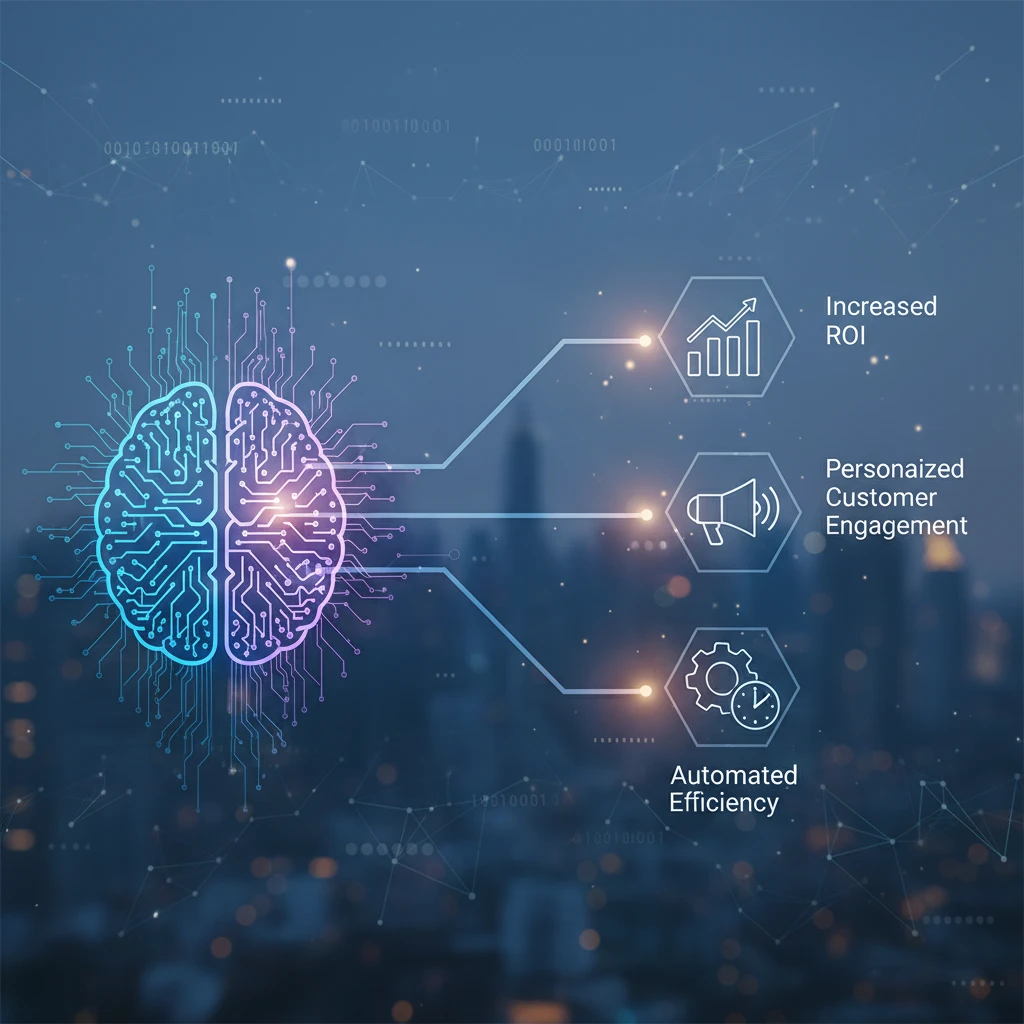

In today’s fast-paced business environment, staying ahead means adapting to new technologies that offer a genuine edge. Artificial intelligence is no longer a futuristic concept; it’s a tangible force reshaping how businesses connect with their audiences. This isn’t about adopting AI for the sake of it, but understanding its practical applications to drive measurable growth and efficiency.
For businesses looking to refine their marketing efforts and achieve more impactful results, AI presents a powerful suite of tools. We’re moving beyond the abstract discussions to concrete strategies that can be implemented today to foster smarter campaigns and deliver real, quantifiable outcomes.
Beyond Buzzwords: What AI Marketing Actually Means for Your Business in 2026
In 2026, AI marketing transcends the initial hype, offering concrete functionalities that directly impact a business’s bottom line. It’s about making your marketing efforts more precise, efficient, and ultimately, more profitable. This isn’t about replacing human creativity but augmenting it, automating repetitive tasks, and uncovering insights that were previously hidden. The focus is on practical application, moving from theoretical possibilities to tangible benefits that small and medium-sized businesses can readily adopt.
The essence of AI marketing lies in its ability to process vast amounts of data, identify patterns, and make predictions or decisions with a speed and scale unattainable by manual methods. For businesses, this translates into understanding customers at a deeper level, delivering hyper-personalized experiences, and optimizing campaign performance in real-time. It’s a fundamental shift towards data-driven decision-making, where insights are not just gathered but actively used to refine strategies and maximize return on investment. Understanding these core capabilities is the first step toward integrating AI effectively into your overall business strategy.
Defining AI-Powered Marketing for Small Businesses
For small businesses, AI-powered marketing isn’t about deploying complex, enterprise-level systems. It’s about utilizing accessible tools that automate routine tasks, provide deeper customer insights, and improve the effectiveness of existing marketing channels. Think of AI as an intelligent assistant that can handle repetitive work, freeing up valuable human resources for strategic thinking and creative execution. This could involve AI tools for customer segmentation, personalized email outreach, or even basic content generation. The key is to identify specific pain points within your marketing workflow that AI can address, making your operations more efficient and your campaigns more impactful.
The practical definition of AI marketing for smaller enterprises centers on affordability and ease of integration. Instead of massive investments, it involves subscribing to AI-driven software that performs specific functions. This might include tools that analyze website traffic to suggest content improvements, platforms that automate social media posting based on audience engagement patterns, or AI that helps draft ad copy tailored to different customer segments. The goal is to make sophisticated marketing capabilities accessible, helping small businesses compete more effectively without needing a large dedicated marketing department. For a broader overview of how AI impacts business, consider exploring AI for Business: Beyond the Hype.
The Shift from Hype to Practical Application
The marketing landscape has matured beyond the initial excitement surrounding AI. In 2026, the focus has definitively shifted from theoretical potential to demonstrable results. Businesses are no longer asking *if* AI can help, but *how* it can be implemented for tangible gains. This involves adopting AI-driven platforms for tasks like customer data analysis, predictive lead scoring, and automated campaign adjustments. The emphasis is on tools that offer clear ROI, such as increasing conversion rates, reducing customer acquisition costs, or improving customer retention through personalized interactions.
This practical application means moving away from generic AI solutions towards specialized tools designed for specific marketing functions. For instance, instead of a broad AI platform, a business might invest in an AI-powered tool specifically for optimizing ad spend on social media or another for generating high-performing email subject lines. The critical decision criteria for adopting AI now involve evaluating its ability to integrate seamlessly with existing marketing stacks, its ease of use for marketing teams, and, most importantly, its track record in delivering measurable improvements. This pragmatic approach ensures that AI investments are strategic and yield concrete benefits.
Targeting Smarter: AI’s Role in Understanding Your Ideal Customer
AI is revolutionizing how businesses understand and connect with their ideal customers by moving beyond broad demographics to nuanced behavioral insights. It allows for the analysis of vast datasets, uncovering patterns in consumer behavior that human analysts might miss. This means a deeper understanding of not just who your customers are, but *why* they make the purchasing decisions they do, what motivates them, and when they are most receptive to marketing messages. The ability to predict future customer actions based on historical data is a game-changer for campaign precision.
The core of AI’s impact here is in its predictive capabilities. By analyzing past interactions, purchase histories, and online activities, AI can create detailed customer profiles that extend far beyond basic segmentation. This enables businesses to anticipate customer needs, identify potential churn risks, and proactively engage customers with highly relevant offers or content. Ultimately, this leads to more efficient marketing spend and higher customer satisfaction, as communications feel less like unsolicited ads and more like helpful, timely suggestions. For those seeking to refine their understanding of AI’s business applications, resources like Digital Marketing AI: How to Use AI Tools for Business Growth offer valuable insights.
Predictive Analytics for Customer Behavior
Predictive analytics, powered by AI, is transforming marketing by allowing businesses to anticipate customer actions rather than just reacting to them. By analyzing historical data – including purchase history, website interactions, and engagement patterns – AI algorithms can identify trends and forecast future behavior with remarkable accuracy. This means a business can predict which customers are likely to churn, which are ready for an upsell, or even which new product features might appeal to a specific segment. These insights are invaluable for proactive customer relationship management and highly targeted marketing campaigns.
The decision criteria for implementing predictive analytics involve the quality and quantity of available data, as well as the specific business questions you aim to answer. For example, a business might use AI to predict the lifetime value of a customer or to identify the optimal time to send a promotional email for maximum impact. Pitfalls include relying on incomplete or biased data, which can lead to inaccurate predictions, or failing to integrate these predictions into actionable marketing strategies. An example: An e-commerce store uses AI to predict that customers who buy product X are 70% likely to also buy product Y within 30 days, leading to an automated email offer for product Y to be sent to those customers.
Personalized Content at Scale: Beyond Basic Segmentation
AI empowers marketers to deliver personalized content to individual customers on a massive scale, moving far beyond traditional segmentation. Instead of grouping customers into broad categories, AI analyzes individual preferences, behaviors, and past interactions to tailor messages, offers, and even content formats. This means a single customer might receive an email with a specific product recommendation, a website experience that highlights relevant categories, and social media ads featuring items they’ve previously shown interest in, all orchestrated automatically. The result is a significantly more engaging and relevant customer journey.
The key to achieving personalization at scale with AI lies in its ability to process complex data points and generate unique outputs for each user in near real-time. Decision criteria for implementing this include the availability of customer data, the AI tools’ capabilities in dynamic content generation, and the integration with your content delivery platforms (like email marketing software or your website CMS). A common pitfall is over-personalization, which can feel intrusive if not handled carefully. For instance, an online fashion retailer uses AI to track a user’s browsing history and past purchases. If the user frequently looks at formal wear and has bought dresses before, the AI might dynamically adjust the homepage to showcase new arrivals in formal dresses and send a targeted email featuring a curated selection of complementary accessories.
Identifying Untapped Audience Niches
AI can uncover hidden audience segments that might be overlooked by traditional market research methods. By analyzing vast amounts of data from social media, online forums, search queries, and purchase patterns, AI algorithms can identify emerging communities, underserved interests, or overlooked demographic groups that align with a business’s offerings. This ability to detect subtle signals within large datasets allows businesses to discover new markets and tailor their products or marketing messages to previously unrecognized customer pools.
When identifying untapped niches, decision criteria for AI include its capacity for sentiment analysis, pattern recognition across disparate data sources, and the ability to cluster similar user behaviors. A pitfall can be misinterpreting correlation as causation or focusing on niches that are too small to be commercially viable. For example, a sustainable home goods company notices through AI analysis of online discussions and purchase data that there’s a growing segment of urban dwellers interested in compact, multi-functional gardening solutions. This insight prompts them to develop a new product line specifically for this niche and target marketing efforts toward relevant online communities and publications.
Content Creation That Converts: AI as Your Creative Partner
AI is rapidly transforming content creation, moving beyond simple automation to become a genuine creative partner. It assists in generating ideas, researching topics, and even drafting initial content pieces, freeing up human creators to focus on strategy, refinement, and the emotional nuances that AI still struggles to replicate. This partnership allows businesses to produce higher volumes of relevant, engaging content more efficiently, which is crucial for SEO, audience engagement, and lead generation in today’s competitive digital landscape. The goal is to augment human creativity, not replace it, ensuring content resonates authentically with the target audience.
The power of AI in content creation lies in its ability to analyze what’s performing well, understand audience interests, and generate content that is optimized for both humans and search engines. This symbiotic relationship means that AI can handle the data-heavy lifting of identifying trends and drafting foundational text, while human marketers provide the strategic direction, brand voice, and critical oversight. For businesses looking to leverage AI for content, understanding how to effectively communicate with these tools is paramount. Exploring resources on Prompt Engineering: Solve Business Marketing Puzzles can provide crucial guidance on this front.
Prompt Engineering for High-Quality Marketing Copy
Prompt engineering is the art and science of crafting effective instructions, or “prompts,” to guide AI language models in generating desired outputs, particularly for marketing copy. It’s about learning to communicate with AI in a way that elicits specific tones, styles, and information, leading to higher-quality, more relevant content. Well-crafted prompts can specify target audiences, desired call-to-actions, key selling points, and even the emotional impact you want the copy to have. This skill is crucial for transforming generic AI-generated text into persuasive marketing materials that convert.
The decision criteria for effective prompt engineering include clarity, specificity, and context provided to the AI. For example, a prompt like “Write a short, punchy Instagram caption for a new sustainable coffee brand targeting Gen Z, highlighting ethical sourcing and bold flavor” will yield better results than a vague request. Pitfalls include vague or ambiguous prompts, which lead to generic or irrelevant content, and failing to iterate on prompts based on initial AI outputs. An example of an effective prompt: “Generate three variations of a Facebook ad headline for a local bakery specializing in gluten-free pastries. Each headline should be under 10 words, emphasize taste and availability, and include a sense of urgency. Target audience: health-conscious individuals aged 30-55.” This approach ensures the AI understands the brand, product, and marketing objective.
Automating Content Ideation and Research
AI significantly streamlines the often time-consuming processes of content ideation and research. By analyzing current trends, competitor content, search engine query data, and audience engagement metrics, AI tools can suggest relevant topics, identify content gaps, and even outline potential article structures. This capability allows marketing teams to move from creative block to content production much faster, ensuring their content remains timely and resonates with audience interests. The AI acts as a powerful research assistant, surfacing insights that inform a robust content strategy.
When considering AI for content ideation, decision criteria include the tool’s ability to access and interpret diverse data sources and its capacity for keyword research integration. A potential pitfall is relying solely on AI-generated ideas without human strategic input, which can lead to content that lacks originality or a clear brand connection. For instance, an AI tool might identify that “sustainable travel tips” is a trending search term. It could then suggest related sub-topics like “eco-friendly packing hacks,” “responsible tourism destinations,” or “reducing carbon footprint while traveling,” and even provide an overview of popular articles on these subjects, saving a content manager hours of manual research.
Optimizing Content for Search and Engagement
AI tools are invaluable for optimizing content not only for search engines but also for audience engagement. These tools can analyze vast amounts of data to identify high-performing keywords, optimal content length, ideal readability scores, and the best times to publish for maximum reach. Furthermore, AI can predict how audiences might interact with different content formats, suggesting improvements to headlines, calls-to-action, and visual elements to boost clicks, shares, and conversions. This data-driven approach ensures content is discoverable and compelling.
The decision criteria for using AI in content optimization include its integration with SEO platforms, its ability to perform natural language processing for readability checks, and its predictive capabilities for engagement metrics. A significant pitfall is over-optimizing for keywords to the detriment of natural language and user experience. An example: An AI tool analyzes a blog post draft and suggests adding a specific long-tail keyword relevant to the topic in the introduction, recommends breaking up long paragraphs for better readability on mobile devices, and identifies that including a short video summary at the beginning could increase average time on page by an estimated 25% based on similar content performance.
Ad Campaigns That Don’t Waste Your Budget
In today’s digital advertising landscape, efficiency is paramount. AI-driven advertising campaigns are designed to maximize return on investment by precisely targeting the right audiences, optimizing bids in real-time, and continuously learning from performance data. This moves beyond guesswork to a sophisticated, data-informed approach that reduces wasted ad spend and significantly improves campaign effectiveness. By automating complex decision-making processes, AI allows businesses to achieve better results with potentially lower budgets.
The core advantage of AI in ad campaigns is its ability to process more variables, more quickly than any human team. This includes everything from user demographics and online behavior to time of day and device type, all of which can influence ad performance. By making continuous, data-backed adjustments, AI ensures that your advertising budget is allocated to the most promising opportunities, rather than being spread thin across ineffective placements or audiences. For a deeper understanding of AI’s impact on business growth, consider resources on Digital Marketing: 3 AI Wins for Business.
AI-Driven Bidding Strategies and Real-Time Optimization
AI revolutionizes ad campaign bidding by moving from manual, often static, strategies to dynamic, real-time optimization. AI algorithms analyze vast datasets, including audience behavior, competition, time of day, device, and historical campaign performance, to adjust bids automatically for each impression. This ensures that ad spend is focused on opportunities most likely to convert, rather than being wasted on less valuable clicks. The result is a more efficient allocation of budget, leading to higher conversion rates and a better return on ad spend.
Decision criteria for implementing AI bidding strategies include the platform’s AI capabilities, the volume and quality of available data, and the specific campaign objectives (e.g., maximizing conversions, acquiring new customers, or increasing brand awareness). A common pitfall is disabling AI bidding too early, not allowing it sufficient time to learn and optimize, or setting unrealistic target goals that the AI cannot achieve with the available budget. For example, an AI bidding system might automatically increase bids during peak shopping hours for a specific product that has historically shown high conversion rates during those times, while simultaneously lowering bids for less engaged audiences or less opportune moments.
Audience Retargeting with Precision
AI significantly enhances audience retargeting by enabling a much higher degree of precision and personalization. Instead of showing the same generic ads to everyone who visited your site, AI analyzes individual user behavior to understand their specific interests and stage in the customer journey. This allows for the delivery of highly relevant ad content, such as showcasing products they viewed, offering discounts on items left in their cart, or recommending complementary products. This tailored approach dramatically increases the likelihood of conversion compared to broad retargeting efforts.
When implementing AI-powered retargeting, decision criteria include the AI platform’s ability to segment audiences based on granular behavior, the integration with your website’s data layer, and the creative assets available to personalize ads. A pitfall is over-bombarding users with retargeting ads, which can lead to annoyance and brand fatigue. An example: A user browses several hiking boots on an outdoor gear website but doesn’t purchase. AI identifies their specific interest in waterproof models and their price sensitivity. The retargeting ad they see later features a selection of waterproof boots within their previously browsed price range, perhaps with a limited-time offer, making it far more compelling than a general “check out our boots” ad.
Measuring Ad Performance with Granular Insights
AI transforms ad performance measurement by providing granular insights that go far beyond basic metrics like clicks and impressions. AI can analyze how various campaign elements – from ad creative and targeting parameters to landing page experience and time of day – contribute to conversions. It can identify micro-segments of users who respond best to specific messaging, predict future campaign performance based on current trends, and even attribute conversions across multiple touchpoints in the customer journey. This level of detail empowers marketers to make more informed, data-driven decisions.
Key decision criteria for leveraging AI in performance measurement include the AI tool’s advanced attribution modeling capabilities, its ability to identify causal relationships between campaign actions and outcomes, and its reporting clarity. A pitfall is mistaking correlation for causation, or relying solely on AI insights without human strategic interpretation. For instance, an AI might reveal that ads featuring user-generated content lead to a 30% higher conversion rate among a specific demographic, prompting the marketing team to allocate more budget towards creating and promoting such content, while also investigating why traditional product-focused ads perform poorly with that same group.
SEO Strategies Amplified by AI
Artificial intelligence is fundamentally reshaping how we approach Search Engine Optimization (SEO). It moves beyond simply identifying keywords to understanding the nuanced relationship between user intent, content, and search engine algorithms. In 2026, AI isn’t just a tool; it’s an integrated partner in developing sophisticated, effective SEO strategies. AI excels at processing vast datasets to reveal patterns and opportunities that manual analysis often misses, leading to more precise targeting and higher organic visibility. This allows businesses to stay ahead of algorithm updates and evolving search behaviors, ensuring their content reaches the right audience at the right time.
AI for Keyword Research and Topic Clustering in 2026
Traditional keyword research often focused on individual terms. However, AI now enables advanced topic clustering, grouping semantically related keywords into comprehensive themes. This approach better reflects how users search and how search engines understand content context. AI tools can analyze competitor content, user search queries, and emerging trends to identify long-tail keywords and question-based queries that represent high intent. For instance, instead of just targeting “digital marketing training,” AI can uncover clusters like “AI tools for small business marketing ROI,” “best online courses for prompt engineering India,” or “how to create content marketing strategies with AI.” This granular understanding helps create highly relevant, authoritative content that satisfies specific user needs, a key ranking factor. The effectiveness of this approach is detailed in resources like those discussing AI-Powered SEO: Dominate Search in 2026-2027.
Technical SEO Audits Made Efficient
Technical SEO forms the bedrock of website performance, and AI is revolutionizing its auditing process. AI-powered tools can scan websites at a scale and speed impossible for human auditors, identifying issues such as crawl errors, broken links, slow page load times, duplicate content, and schema markup problems. These tools can also analyze website structure, mobile-friendliness, and Core Web Vitals, providing detailed reports with actionable recommendations. For example, an AI might detect that a specific set of pages has unusually high bounce rates due to slow loading on mobile devices and suggest specific optimizations. This proactive identification and correction of technical flaws are critical for maintaining optimal search engine visibility and user experience, preventing rankings from being negatively impacted by underlying site issues. Understanding how AI can assist in competitor analysis for SEO is also a key benefit, as outlined in articles on AI SEO: Competitor Analysis Secrets for Businesses.
Predicting Search Intent Shifts
Search intent is the holy grail of SEO. AI can analyze vast datasets of search queries, user behavior, and emerging trends to predict subtle shifts in user intent before they become mainstream. By monitoring social media conversations, news cycles, and an array of search data, AI can flag when users begin to search for information with a different underlying need. For instance, a sudden surge in queries about “sustainable marketing practices” might indicate a growing user desire for environmentally conscious business approaches. AI can alert marketers to these shifts, allowing them to adapt their content strategy proactively. This foresight is invaluable for maintaining relevance and capturing new audience segments, ensuring that content continues to align with what users are *actually* looking for. For small business owners, understanding these trends is crucial for growth, as explored in resources about Digital Marketing: AI for Small Business.
Data Analysis: Turning Raw Numbers into Actionable Marketing Strategies
The true power of AI in digital marketing lies in its ability to transform raw data into clear, actionable insights. Businesses are often overwhelmed by the sheer volume of performance metrics. AI algorithms can sift through this data, identify significant patterns, detect anomalies, and provide predictive analysis that human marketers might miss. This allows for a more data-driven approach to campaign optimization, resource allocation, and strategic decision-making. Instead of guesswork, AI provides the evidence needed to refine campaigns, understand customer behavior, and ultimately drive better business outcomes. The capacity of AI to offer actionable insights is a cornerstone for many businesses looking to grow.
Automated Performance Reporting and Anomaly Detection
Generating regular performance reports can be time-consuming. AI automates this process, creating custom dashboards that track key performance indicators (KPIs) across various channels. More importantly, AI excels at anomaly detection – it can automatically flag significant deviations from expected performance, both positive and negative. For example, an AI might notice a sudden, unexplained drop in conversion rates for a specific ad set or an unexpected spike in traffic from a new geographic region. This immediate alert allows marketing teams to investigate the cause quickly, capitalize on opportunities, or address issues before they significantly impact campaign goals. This moves reporting from a historical review to an active, real-time management system.
Understanding ROI with AI-Powered Attribution Models
Determining the return on investment (ROI) for marketing efforts can be complex, especially with multiple touchpoints influencing a customer’s journey. AI-powered attribution models go beyond simple last-click or first-click analysis. They can analyze complex customer paths, assigning appropriate credit to various marketing channels and touchpoints based on their influence on conversions. For instance, an AI model might reveal that while a social media ad generated initial awareness, a targeted email campaign and subsequent search ad were more influential in driving the final purchase. This granular understanding of channel effectiveness allows marketers to optimize their budget allocation, focusing spend on the activities that demonstrably contribute to ROI, leading to more efficient and profitable campaigns. This level of insight is vital for understanding Digital Marketing: 3 AI Wins for Business.
Forecasting Campaign Success
Predicting future campaign performance is a critical aspect of strategic planning. AI leverages historical data, market trends, and real-time campaign metrics to forecast potential outcomes with increasing accuracy. This includes predicting key metrics such as click-through rates, conversion volumes, customer acquisition costs, and even potential revenue. For example, an AI might analyze an upcoming campaign’s parameters and predict a 15% higher conversion rate if a specific audience segment is targeted with personalized creative. This forecasting capability allows businesses to set realistic goals, identify potential risks or opportunities early on, and make informed adjustments to campaigns before launch or during their execution, ensuring resources are deployed optimally for maximum impact.
The Human Element: Where AI Augments, Not Replaces, Your Marketing Team
It’s easy to get caught up in the capabilities of AI, but it’s crucial to remember that AI is a tool designed to assist, not replace, human marketers. The real power emerges when AI handles repetitive tasks and data analysis, freeing up human teams to focus on higher-level strategic thinking, creativity, and relationship building. The nuances of brand voice, ethical considerations, and understanding complex human emotions often require a human touch that AI cannot replicate. Therefore, the future of marketing involves a synergistic relationship where AI amplifies human expertise, leading to more efficient, creative, and impactful campaigns. This collaborative approach is key to successful digital transformation.
Freeing Up Time for Strategic Thinking
One of the most significant benefits of AI adoption is its ability to automate time-consuming, repetitive tasks. This includes data collection, report generation, basic content creation, and even initial campaign setup. By offloading these duties to AI, marketing professionals can reclaim valuable hours. This newly available time can be redirected towards activities that require human ingenuity and strategic acumen, such as developing innovative campaign concepts, crafting compelling brand narratives, conducting in-depth market research, and building stronger relationships with clients or customers. This shift allows teams to move from tactical execution to strategic leadership, driving greater long-term business value. For businesses looking to understand these opportunities, articles on Digital Marketing AI: How to Use AI Tools for Business Growth are highly relevant.
Enhancing Customer Service with AI Support
AI is increasingly being used to augment customer service operations, providing faster and more efficient support. AI-powered chatbots can handle a high volume of common customer inquiries 24/7, offering instant responses and freeing up human agents to address more complex or sensitive issues. These AI assistants can also personalize customer interactions by accessing past data, remembering preferences, and offering tailored solutions. For example, an AI chatbot might guide a customer through troubleshooting steps for a product or help them track an order. This not only improves customer satisfaction through immediate assistance but also allows human support staff to focus on building deeper customer relationships and resolving critical problems, leading to a more holistic and positive customer experience.
The Importance of Human Oversight and Ethical AI Use
While AI offers incredible potential, human oversight remains critical. AI algorithms are trained on data, and if that data contains biases, the AI can perpetuate them. Marketers must ensure that AI-generated content is accurate, ethical, and aligns with brand values. This includes reviewing AI-generated copy for tone, factual correctness, and potential insensitivity, as well as ensuring that AI-driven targeting and personalization do not cross ethical boundaries. Furthermore, understanding the “why” behind AI’s recommendations often requires human interpretation. The responsibility for ethical AI deployment, data privacy, and ensuring fairness ultimately rests with the human marketing team, making continuous learning and critical evaluation essential. Learning about Prompt Engineering: Solve Business Marketing Puzzles is a good step for understanding how to guide AI ethically.
Practical AI Tools for Business Owners: A 2026 Snapshot
For business owners, integrating AI into daily operations no longer requires a deep technical background. A wide array of user-friendly AI tools are available today, designed to streamline marketing efforts, boost efficiency, and provide actionable insights. These tools span various functions, from content creation and optimization to advanced analytics and ad management. The key is to identify solutions that align with specific business goals and operational workflows. By strategically implementing these AI-powered platforms, small to medium-sized businesses can compete more effectively, gain a deeper understanding of their market, and achieve measurable results without needing a dedicated AI development team. The availability of such tools democratizes advanced marketing capabilities.
Tools for Content Generation and Optimization
Content is king, and AI is making content creation more accessible and effective than ever. Tools like Jasper, Copy.ai, and Writesonic can assist in generating blog post outlines, social media updates, email copy, and even product descriptions based on simple prompts. Beyond just generation, AI plays a crucial role in content optimization. Tools like Grammarly Business and MarketMuse analyze existing content for readability, SEO effectiveness, and factual accuracy, suggesting improvements to increase engagement and search rankings. Some platforms can even identify content gaps or suggest new topic ideas based on audience interest and keyword analysis, transforming the content lifecycle from creation to ongoing performance. Understanding AI’s role in storytelling is also a growing area, as explored in Content AI: Storytelling for Business Leads.
Platforms for Ad Management and Analytics
Advertising platforms are increasingly integrating AI to optimize campaign performance. Google Ads and Meta Ads utilize AI-powered features for automated bidding, audience targeting, and ad creative suggestions. Beyond these major platforms, specialized AI tools exist to manage ad spend across multiple channels, identify the most effective ad creatives, and predict campaign outcomes. For analytics, platforms like Tableau, Power BI, and specialized AI analytics tools can process vast amounts of data to provide insights into customer behavior, campaign ROI, and market trends. For instance, an AI might recommend reallocating budget from underperforming ad sets to those showing higher conversion potential, ensuring marketing spend is as efficient as possible. Businesses can find value in exploring Content AI: Actionable Business Insights to inform ad strategies.
AI-Powered SEO and Market Research Solutions
For businesses aiming to dominate search engine results, AI offers powerful SEO tools. Platforms like Semrush and Ahrefs incorporate AI for advanced keyword research, competitor analysis, and technical SEO auditing. They can identify ranking opportunities, analyze search intent more accurately, and suggest content strategies to improve visibility. In market research, AI tools can analyze customer sentiment from social media, reviews, and forums, providing real-time feedback on brand perception and emerging market trends. Tools like Brandwatch and Talkwalker can monitor online conversations, flagging potential PR crises or identifying new product development opportunities based on consumer demand. For small businesses, such solutions are invaluable for staying competitive and understanding their market landscape deeply, as discussed in articles concerning AI for Business: Beyond the Hype.
Implementing AI in Your Digital Marketing Workflow: A Phased Approach
Integrating AI into your digital marketing doesn’t require a complete overhaul overnight. A phased approach allows for learning, adaptation, and demonstrable wins. Start by identifying specific pain points or areas where AI can offer the most immediate value. This could be anything from automating repetitive tasks like social media scheduling to gaining deeper insights from customer data. Consider the scale of your current operations and available resources. A small business might begin with AI-powered content generation tools for blog posts or email subject lines, while a larger enterprise could explore AI for advanced customer segmentation or predictive analytics. The key is to start with manageable projects that build confidence and provide tangible benefits, paving the way for more complex AI implementations down the line. This gradual adoption ensures your team can keep pace with technological advancements and adapt strategies effectively.
Starting Small: Low-Risk AI Integrations
Beginning with low-risk AI integrations is a prudent strategy for any business looking to embrace AI marketing. These initial steps should focus on tools that augment existing processes rather than replacing them entirely. For instance, using AI for content ideation and first drafts can significantly speed up content creation without sacrificing human oversight. Tools that analyze customer feedback or social media sentiment can provide valuable, actionable insights without requiring complex data science expertise. Another excellent starting point is AI-powered email marketing assistants that suggest subject lines, optimize send times, or even draft personalized email copy. These applications often integrate seamlessly with existing platforms and offer immediate improvements in efficiency and engagement. For those focused on search visibility, exploring AI-driven keyword research or content optimization suggestions can also be a low-stakes entry point. It’s about finding AI tools that offer clear, measurable improvements to specific tasks, allowing your team to become comfortable with AI’s capabilities and potential.
Measuring Success and Iterating
Once AI tools are in place, establishing clear metrics for success is paramount. Without measurement, it’s impossible to determine if an AI implementation is truly driving value. Focus on key performance indicators (KPIs) relevant to the specific AI application. For example, if you’re using AI for content generation, track metrics like content output volume, time saved in content creation, website traffic to AI-assisted content, or conversion rates. If AI is used for ad campaign optimization, monitor metrics such as click-through rates, conversion costs, and return on ad spend. It’s crucial to set baseline metrics before introducing AI to accurately gauge its impact. Regularly review these KPIs, ideally on a weekly or bi-weekly basis. This allows for timely adjustments. If a particular AI tool or strategy isn’t yielding the expected results, don’t be afraid to iterate. This might involve refining prompts, adjusting AI parameters, re-training models, or even switching to a different tool. Think of AI implementation as an ongoing dialogue; the more you learn from the data, the smarter your AI becomes, and the better your results will be. This iterative process ensures your marketing efforts remain dynamic and responsive to market changes.
Building Internal AI Competence with Training
To truly unlock the potential of AI in marketing, investing in your team’s capabilities is non-negotiable. AI is not a set-it-and-forget-it technology; it requires human intelligence to guide, interpret, and strategize. Offering comprehensive training programs focused on AI tools and their practical applications is essential. This training should cover not only how to use specific AI platforms but also the underlying principles of how they work and how to effectively communicate with them. For instance, learning prompt engineering is vital for extracting the best results from generative AI models. Training should also empower your team to understand the data AI processes, identify biases, and ensure ethical usage. Consider a blended learning approach, combining online modules, workshops, and hands-on projects. As AI evolves, ongoing professional development will be key. By building internal AI competence, you foster a culture of innovation and ensure your marketing team can adapt to future technological shifts, making AI a sustainable part of your workflow. This also helps demystify AI, making it accessible rather than intimidating.
Common Pitfalls to Avoid When Adopting AI Marketing
While the promise of AI in marketing is immense, numerous pitfalls can derail even the most well-intentioned implementations. One of the most significant dangers is viewing AI as a magic bullet that will solve all your marketing problems without strategic direction. It’s easy to get swept up in the hype and invest heavily in tools without a clear understanding of how they align with your overarching business goals. This can lead to wasted resources and significant disappointment. Another critical area of concern is data management. AI models are only as good as the data they’re trained on, and poor data quality or insufficient data can lead to flawed insights and ineffective campaigns. Furthermore, ethical considerations and regulatory compliance, particularly around data privacy, are paramount and often overlooked in the rush to adopt new technologies. Finally, failing to integrate AI seamlessly with human expertise often results in underperformance, as AI tools can lack the nuance, creativity, and strategic foresight that seasoned marketers possess. Understanding and proactively addressing these common pitfalls is crucial for successful AI adoption.
Over-reliance on Automation Without Strategy
A common misstep in AI marketing is the temptation to automate everything without a guiding strategy. While AI excels at repetitive tasks and data analysis, it cannot independently devise a comprehensive marketing plan or understand subtle market nuances. Businesses sometimes fall into the trap of implementing AI tools for automation’s sake, leading to disconnected campaigns that lack a cohesive narrative or strategic objective. For example, an AI might automate social media posting, but without a content strategy defining the brand voice, target audience engagement, and campaign goals, these posts can become generic and ineffective. You might find yourself generating a high volume of AI-assisted content, but if it doesn’t align with your overall business objectives, it won’t drive meaningful results. The danger lies in confusing efficiency with effectiveness. True marketing success stems from a blend of AI-driven insights and human strategic thinking. Without a clear strategy, AI automation can lead to wasted effort and a disconnect from genuine customer needs and market opportunities. Remember, AI is a powerful tool to execute strategy, not a substitute for it.
Data Privacy and Security Concerns
The integration of AI in marketing inherently involves the collection, processing, and analysis of vast amounts of data, raising significant data privacy and security concerns. Many AI marketing tools rely on user data to personalize campaigns, predict behavior, and optimize ad spend. This data can include sensitive personal information, making robust security measures and adherence to privacy regulations absolutely critical. Failure to comply with regulations like GDPR or CCPA can result in substantial fines and severe damage to a brand’s reputation. Beyond regulatory compliance, ethical considerations around data usage are also vital. Customers are increasingly aware of how their data is being used and expect transparency and control. Implementing AI without a clear data governance policy, including how data is collected, stored, secured, and used, is a risky proposition. You might think you’re gathering valuable customer insights, but if the methods are perceived as intrusive or insecure, you’ll alienate your audience. Prioritizing secure data practices and transparent data policies is not just a compliance issue; it’s fundamental to building and maintaining customer trust in the age of AI-driven marketing. It’s about protecting your customers and your business from potential breaches and reputational damage.
Ignoring the Need for Human Strategy and Creativity
One of the most significant oversights when adopting AI marketing is neglecting the indispensable role of human strategy and creativity. AI tools are exceptional at analyzing data, identifying patterns, and automating tasks, but they lack the capacity for genuine innovation, empathy, and nuanced strategic thinking. For instance, AI can generate ad copy, but it cannot intuitively understand the emotional resonance required for a breakthrough campaign or anticipate a competitor’s next bold move with the same foresight as a seasoned marketer. Human marketers bring a unique blend of storytelling, cultural understanding, and brand intuition that AI currently cannot replicate. Relying solely on AI for creative direction or strategic planning can lead to generic, uninspired marketing efforts that fail to connect with audiences on a deeper level. The most successful AI marketing strategies are those where AI acts as an amplifier for human creativity and strategic decision-making. It’s about using AI to inform and enhance human-led initiatives, not to replace them. A campaign that relies only on AI might be efficient, but it’s the human touch that makes it memorable and impactful. This balance ensures that your marketing remains both data-driven and emotionally intelligent.