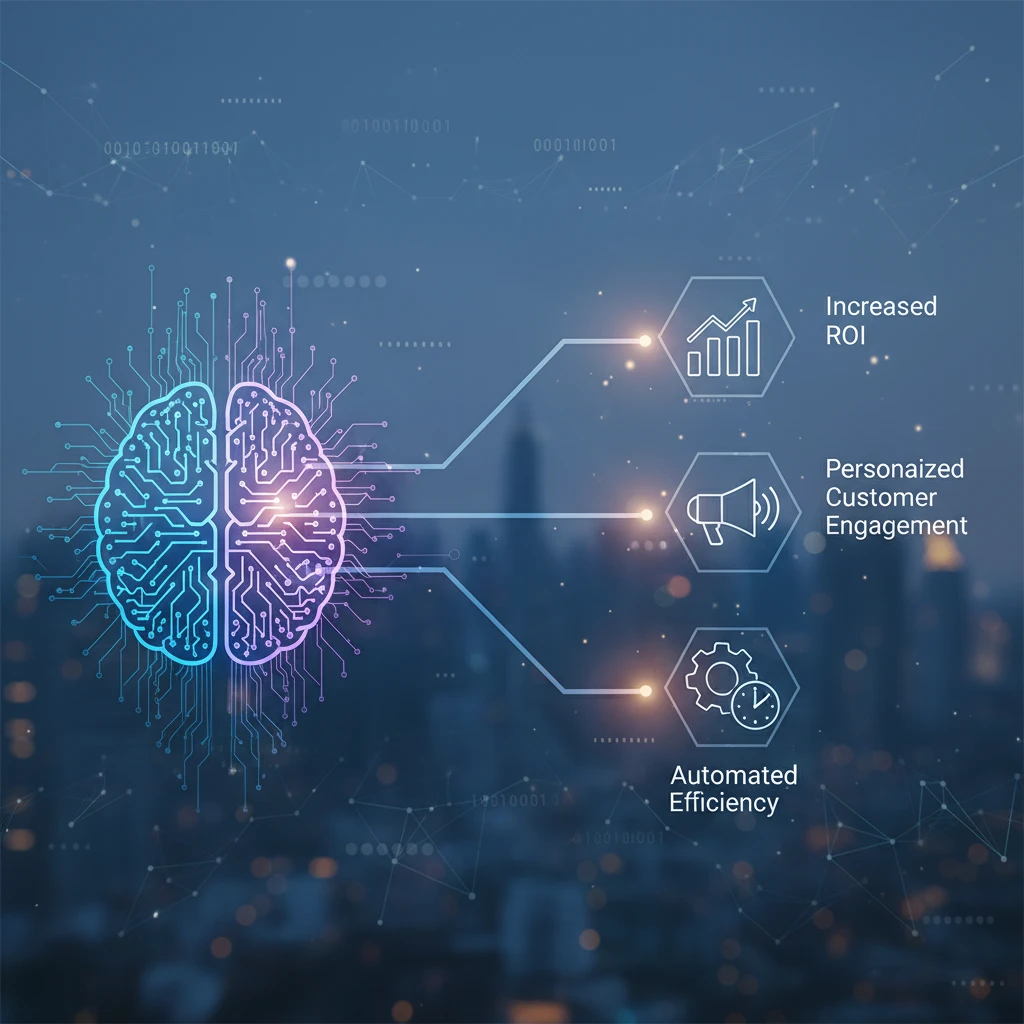

This blueprint is designed to cut through the noise and provide a clear, actionable roadmap for business owners. We’ll explore precisely how AI impacts core digital marketing functions, from search engine optimization and content creation to campaign management. You’ll learn to identify tangible benefits and practical applications, moving beyond theoretical possibilities to real-world implementation that drives measurable business growth.
The AI Shift: Why Business Owners Can’t Afford to Ignore Digital Marketing’s New Era (2026 Edition)
The digital marketing arena in 2026 is fundamentally different, thanks to the pervasive influence of artificial intelligence. What was once experimental is now standard practice for businesses aiming to connect with their audiences effectively. We’re seeing AI move from a supplementary tool to a core component of strategic marketing planning, influencing everything from how consumers search for products to how brands communicate their value propositions. For business owners, this means a significant opportunity to gain a competitive edge by adopting these advanced technologies.
The speed of AI development means that strategies that were cutting-edge last year might be considered conventional today. Businesses that hesitate to integrate AI risk falling behind competitors who are already leveraging its capabilities for improved targeting, personalization, and operational efficiency. You might think that AI is just for large corporations, but the reality is that numerous accessible AI tools and services are specifically designed to empower small to medium-sized businesses. Understanding these tools is key to not only surviving but thriving in the current digital ecosystem. This isn’t about chasing trends; it’s about adopting essential capabilities that are reshaping customer expectations and market dynamics.
Decoding AI’s Role in Your Marketing Toolkit
What AI Actually Does for Your Business Goals
At its core, AI in digital marketing is about augmenting human capabilities to achieve business objectives more effectively. It excels at processing vast amounts of data to identify patterns and insights that would be nearly impossible for humans to detect manually. This translates into smarter decision-making across various marketing functions. For instance, AI can analyze customer behavior to predict future purchasing decisions, allowing businesses to proactively tailor offers and communications. It also plays a critical role in optimizing campaign performance by continuously learning from real-time data and making micro-adjustments to ad spend, targeting parameters, and creative elements to maximize return on investment.
Furthermore, AI empowers businesses to deliver highly personalized experiences at scale. Instead of generic messaging, AI can segment audiences into minute groups based on demographics, behavior, and preferences, then craft unique messages for each. This level of personalization significantly boosts engagement rates and builds stronger customer relationships. Think about it: a customer sees an ad for a product they were just browsing on a competitor’s site—that’s often AI at work, anticipating needs and delivering relevant content at the right moment. This proactive engagement is crucial for customer retention and fostering loyalty in a crowded marketplace. For a deeper understanding of how AI drives smarter campaigns, exploring resources on AI marketing for tangible results can be highly beneficial.
Moving Beyond the Hype: Practical AI Applications
While the term “AI” can sound daunting, its practical applications in marketing are becoming increasingly straightforward and accessible. One of the most impactful uses is in customer segmentation and targeting. AI algorithms can analyze website visitor data, social media interactions, and purchase history to create highly granular customer profiles. This allows businesses to move beyond broad demographic categories and target individuals with messages that resonate with their specific needs and interests. For example, an e-commerce store could use AI to identify customers who frequently purchase athletic wear and then target them with promotions for new arrivals in that category, rather than a general sales email.
Another crucial area is predictive analytics. AI can forecast trends, identify potential customer churn, and even predict the lifetime value of a customer. This foresight enables businesses to allocate resources more effectively. For instance, if AI predicts a certain segment of customers is at high risk of churning, a marketing team can implement a targeted retention campaign—perhaps offering exclusive discounts or personalized support—before they even consider leaving. AI also significantly enhances efficiency through automation. Tasks like data entry, report generation, and even initial draft creation for marketing copy can be handled by AI, freeing up human marketers to focus on strategy and creativity. These practical applications demonstrate how AI directly contributes to improving operational efficiency and driving better business outcomes, moving beyond theoretical discussions to concrete advantages.
Your AI-Powered SEO Strategy: From Keywords to Conversions
AI’s Impact on Search Intent and Ranking Factors
Search engine optimization in 2026 is inextricably linked with AI, primarily because search engines themselves heavily rely on AI to understand and rank content. Google’s algorithms, for instance, use sophisticated AI models to interpret the context and nuance of search queries, moving beyond simple keyword matching to understand the user’s underlying intent. This means that simply stuffing your content with keywords is no longer effective. Instead, SEO strategies must focus on providing comprehensive, high-quality answers that directly address what a user is looking for. AI helps us understand this by analyzing search patterns and identifying the questions people are actually asking.
Understanding search intent is paramount. AI tools can analyze vast datasets of search results, user behavior, and natural language processing patterns to help marketers predict how users will search for a product or service. This insight allows for the creation of content that not only ranks well but also genuinely satisfies the user’s needs, leading to higher conversion rates. Furthermore, AI is increasingly influencing ranking factors by detecting sophisticated forms of spam, assessing content quality, and even understanding user experience signals more deeply. For businesses, this necessitates a shift towards creating user-centric, authoritative content that AI-driven search engines can easily identify as valuable and relevant. Ignoring AI’s role in search intent means your SEO efforts will likely be misdirected.
Finding Undervalued Keywords with AI Assistance
Identifying the right keywords remains a cornerstone of SEO, but AI is transforming how we discover them, particularly by uncovering undervalued or long-tail keyword opportunities. Traditional keyword research often focuses on high-volume terms, which are usually highly competitive. AI can analyze search trends, competitor strategies, and emerging topics to identify niche keywords that have sufficient search volume but lower competition. These “hidden gems” can drive highly qualified traffic to your website, as users searching for these specific terms often have a clear intent and are further down the sales funnel.
AI-powered tools can also analyze vast amounts of forum discussions, social media conversations, and Q&A sites to pinpoint the exact language and questions your target audience uses. This provides a rich source of long-tail keywords and question-based queries that can be incorporated into your content strategy. For example, instead of targeting a broad term like “digital marketing training,” AI might identify phrases like “how to use AI tools for small business marketing in India” or “best AI prompt engineering courses for entrepreneurs,” which are more specific and indicate a stronger intent to learn or purchase. This approach not only helps you capture valuable traffic but also positions your business as a knowledgeable resource. Learning how to effectively use AI for these tasks is a key skill, and exploring topics like prompt engineering to solve marketing puzzles can be a significant step.
Automating SEO Audits and Performance Monitoring
Regular SEO audits are essential for identifying technical issues, content gaps, and opportunities for improvement. AI is revolutionizing this process by automating many of the complex and time-consuming tasks involved. AI-powered SEO tools can crawl websites, analyze site structure, identify broken links, check for mobile-friendliness, assess page speed, and even evaluate the quality and relevance of your content at an unprecedented scale and speed. This means you can receive detailed audit reports much faster and more frequently than with manual methods.
Beyond initial audits, AI excels at continuous performance monitoring. These systems can track keyword rankings, monitor backlinks, analyze competitor movements, and detect any sudden drops in traffic or engagement. Crucially, AI can often pinpoint the *cause* of these changes, providing actionable insights rather than just raw data. For instance, if a keyword ranking suddenly declines, an AI tool might identify that a competitor has recently published a highly authoritative article on the same topic, or that a technical issue on your site has affected crawlability. This proactive and intelligent monitoring allows businesses to respond quickly to changes in the search landscape, adjust their strategies accordingly, and maintain optimal SEO performance. Understanding how AI can automate these processes is a significant step towards more efficient digital marketing, as covered in discussions on AI automation for marketing efficiency.
Content Creation at Speed: AI’s Influence on Your Brand Voice
Generating High-Quality Drafts with AI Prompts
The landscape of content creation has been significantly altered by AI, particularly in its ability to generate high-quality drafts rapidly. By providing well-crafted prompts, business owners and marketers can instruct AI models to produce initial versions of blog posts, social media updates, email copy, and even website content. The key to success here lies in the quality and specificity of the prompts. Simply asking AI to “write a blog post” will yield generic results. However, detailing the target audience, desired tone, key talking points, length, and specific keywords can result in surprisingly nuanced and relevant content drafts.
Consider a business needing to announce a new product. Instead of spending hours brainstorming, a business owner could use a prompt like: “Write a 500-word blog post introducing our new eco-friendly water bottle. Target audience: environmentally conscious young adults. Tone: enthusiastic and informative. Include benefits like durability, BPA-free materials, and a portion of profits going to ocean cleanup. End with a call to action to visit our product page.” The AI can then generate a cohesive draft that captures these requirements. This doesn’t replace human editors, but it drastically cuts down the initial writing time, allowing for focus on refinement and strategic messaging. For business owners, mastering prompt engineering is becoming an essential skill, opening doors to new content possibilities, as detailed in guides on prompt engineering to unlock new marketing channels.
Personalizing Content for Specific Audience Segments
One of AI’s most powerful contributions to content creation is its capacity for personalization at scale. Businesses can now move beyond one-size-fits-all messaging to deliver content that speaks directly to the unique needs, interests, and pain points of different customer segments. AI analyzes data from customer interactions, purchase history, and browsing behavior to understand individual preferences. It can then dynamically adjust website content, email newsletters, and even ad copy to match these profiles.
For example, an online retailer might use AI to show different product recommendations and promotional banners on their homepage based on whether a visitor is a new customer, a returning loyal shopper, or someone who has previously browsed a specific product category. Similarly, email marketing campaigns can be automatically segmented, with AI tailoring subject lines, body copy, and offers to resonate with distinct groups. This not only improves customer engagement but also significantly increases conversion rates by making the customer feel understood and valued. The goal is to create a tailored experience that makes each customer feel as though the communication was crafted just for them, fostering a stronger connection. This personalized approach is a key differentiator in today’s market.
Optimizing Existing Content for Better Reach
AI isn’t just for creating new content; it’s also a powerful tool for optimizing what you already have. Many businesses have a wealth of existing content that may be underperforming or outdated. AI can analyze this content, identifying areas for improvement to boost its relevance, search engine visibility, and overall impact. This process often involves assessing keyword performance, content structure, readability, and user engagement metrics.
AI tools can suggest specific improvements, such as adding relevant internal links, updating statistics, expanding on underdeveloped sections, or rephrasing sentences to better target specific search intents. For instance, AI might flag a blog post that consistently ranks poorly for its target keywords and suggest incorporating related semantic terms or answering questions that users frequently ask in search results. It can also help in repurposing content—identifying key insights from a long-form article that could be turned into social media snippets or an email campaign. By systematically optimizing existing assets, businesses can maximize their content marketing ROI, breathing new life into valuable assets and extending their reach without the need to constantly produce entirely new material. Discovering how AI can help generate actionable insights from your content is covered in discussions on content AI for actionable business insights.
Smart Advertising with AI: Boosting Your ROI
Predictive Analytics for Ad Spend Optimization
AI is transforming advertising by shifting it from guesswork to a data-driven science. Predictive analytics, powered by AI algorithms, can forecast campaign performance with remarkable accuracy. These systems analyze vast datasets, including historical campaign results, market trends, audience behavior, and even competitor activities, to identify patterns that humans might miss. For instance, an AI can predict which ad creatives are likely to resonate with specific audience segments or forecast the optimal time to launch a campaign for maximum impact. This foresight allows businesses to allocate their advertising budgets more intelligently, focusing spend on channels and tactics that offer the highest probability of return. Instead of broad-stroke campaign adjustments, businesses can now make micro-optimizations based on AI-generated forecasts, leading to significant improvements in cost-per-acquisition (CPA) and overall return on ad spend (ROAS). You’re still working through the nuances, but it seems like the core benefit is channeling resources where they’ll do the most good, proactively.
The decision criteria for adopting AI in ad spend optimization involve evaluating the complexity of your current marketing data and the potential for AI to uncover actionable insights. If your campaigns are already generating substantial data but you’re struggling to extract meaningful patterns, AI can be a game-changer. Key metrics to consider are the cost of implementing AI tools versus the projected savings from optimized ad spend and the potential revenue increase. Pitfalls to avoid include relying solely on AI without human oversight, which can lead to rigid strategies that fail to adapt to unforeseen market shifts. It’s also important to ensure data quality; AI models are only as good as the data they’re trained on. A practical step is to start with a pilot program on a specific campaign, measure the AI-driven results against a control group, and then scale based on performance. For example, a small e-commerce business might use AI to predict the best budget allocation between Google Ads and Facebook Ads for a new product launch, aiming for a 15% reduction in CPA.
AI-Driven Audience Targeting and Segmentation
AI excels at identifying and defining target audiences with unprecedented precision, moving beyond basic demographics to nuanced psychographics and behavioral patterns. By analyzing user data from websites, social media, and other digital touchpoints, AI can create highly detailed audience segments. This allows for the delivery of personalized ad experiences tailored to individual interests, behaviors, and purchase intent. For instance, an AI might identify a segment of users who have recently searched for sustainable travel options, visited eco-tourism blogs, and shown engagement with outdoor brands. This level of granular targeting means ads for eco-friendly resorts or sustainable gear are shown to individuals most likely to convert, dramatically increasing campaign efficiency. You used to think targeting was mostly about age and location, but this shows it’s far more sophisticated.
The criteria for selecting AI tools for audience segmentation should include their ability to integrate with your existing marketing platforms (like CRMs and ad networks) and their capacity for real-time data analysis. Look for tools that offer explainable AI features, allowing you to understand *why* certain segments are identified. A common pitfall is over-segmentation, where too many tiny, unmanageable segments are created, diluting campaign focus. Another is data privacy; ensure any AI tool used complies with relevant regulations. To implement this, begin by identifying your most valuable customer segments and feed their characteristics into an AI tool. Refine these segments based on the AI’s output and then create targeted ad campaigns. For example, a fashion retailer could use AI to identify a segment of customers interested in vintage clothing and then run highly specific ad campaigns showcasing curated vintage collections on platforms they frequent, potentially seeing a 20% uplift in click-through rates from these targeted ads.
Automated Ad Copy and Creative Testing
Crafting compelling ad copy and creatives is time-consuming. AI can significantly accelerate this process through automated ad generation and A/B testing. AI models can analyze top-performing ad elements from past campaigns and industry benchmarks to generate multiple variations of ad headlines, body copy, and even visual concepts. These variations can then be systematically tested at scale to determine which combinations yield the best engagement and conversion rates. Instead of a marketer manually creating a few ad variations, AI can produce dozens or hundreds, allowing for rapid iteration and optimization. This means businesses can quickly identify winning ad strategies without the significant manual effort traditionally involved. It’s honestly a relief to think about the sheer volume of testing AI can handle.
When choosing AI tools for ad creation and testing, prioritize those that offer robust reporting and analytics, allowing you to track performance across different creative elements. Ensure the tool can adapt to your brand’s voice and style guidelines. A pitfall to watch out for is generating generic, uninspired ad copy that lacks a human touch or emotional connection. AI should augment, not replace, creativity entirely. Start by providing the AI with clear objectives, target audience details, and key selling points for your product or service. Then, let it generate multiple options. An actionable step is to set up automated A/B tests for these AI-generated variations on your ad platforms. For instance, a software company could use AI to generate 10 different headlines for a campaign promoting a new feature. The AI can then automatically test these headlines, identifying the top 3 that drive the most sign-ups, leading to a quicker discovery of what resonates with users. This process could improve conversion rates by up to 25% compared to manual testing.
Social Media Management: AI for Engagement and Growth
Scheduling and Content Optimization with AI Insights
Effective social media management requires consistent posting and engaging content. AI tools can analyze audience activity patterns across various platforms to recommend the optimal times for posting, ensuring maximum reach and engagement. Beyond just timing, AI can also provide insights into what types of content (e.g., videos, carousels, text-based posts) perform best with specific audience segments. By processing engagement data, trending topics, and competitor content, AI can help businesses create a more strategic content calendar. This means less time spent guessing what to post and when, and more time focusing on creating high-quality, relevant content that resonates. You’re starting to see how much of this is about removing the guesswork and letting data guide decisions.
When evaluating AI for social media scheduling and content optimization, look for tools that offer cross-platform analytics and can provide actionable recommendations rather than just raw data. Ensure the AI can learn from your specific brand’s historical performance. A common pitfall is blindly following AI recommendations without considering your brand’s unique voice or strategic goals. AI should be a guide, not a dictator. For instance, if AI suggests posting at 3 AM because that’s when your audience is most active, but your brand’s voice is more about timely, responsive engagement, you might adjust. To implement this, start by connecting your social media accounts to an AI analytics tool. Analyze the reports to understand peak engagement times and content preferences. Then, use these insights to build your content calendar. A hypothetical example: a local restaurant could use AI to discover that their audience engages most with behind-the-scenes videos posted on Tuesday evenings. Implementing this insight could lead to a 30% increase in video views and shares.
Sentiment Analysis for Brand Reputation Management
Monitoring what people are saying about your brand online is critical. Sentiment analysis uses AI to process vast amounts of text data from social media, reviews, forums, and news articles to gauge public opinion. It can automatically classify mentions as positive, negative, or neutral, providing a real-time pulse on brand perception. This allows businesses to quickly identify and address negative feedback before it escalates, capitalize on positive mentions by engaging with satisfied customers, and understand broader market sentiment towards their products or services. It’s like having a constant, intelligent focus group observing public discourse about your business. This is a pretty powerful tool for damage control and customer service.
The criteria for selecting a sentiment analysis tool should include its accuracy in understanding nuanced language, including sarcasm and context, and its ability to integrate with your social media monitoring tools. Consider the breadth of data sources it can analyze. A significant pitfall is relying on simplistic AI that misinterprets sarcasm or industry-specific jargon, leading to inaccurate sentiment readings. Another is failing to act on the insights generated; sentiment analysis is only valuable if it drives corrective or proactive measures. A practical step is to set up alerts for negative sentiment spikes related to your brand. When an alert triggers, investigate the source and respond appropriately. For example, if a particular product feature receives a surge of negative comments, AI sentiment analysis can quickly flag this, allowing the company to issue a timely statement or address the issue publicly, potentially mitigating widespread negative publicity and preventing a decline in sales.
Identifying Influencer Opportunities
AI is revolutionizing how businesses discover and vet potential influencers. Instead of manual searches and guesswork, AI tools can analyze social media data to identify influencers whose audience demographics, engagement rates, and content align with a brand’s target market and campaign objectives. These tools can go beyond simple follower counts, assessing an influencer’s authenticity, audience sentiment, and past collaboration performance. This data-driven approach helps ensure that influencer partnerships are more strategic and likely to yield measurable results. You’re still figuring out the exact metrics AI uses to assess authenticity, but it seems much more robust than just looking at follower numbers.
When choosing AI for influencer identification, prioritize tools that offer detailed audience analytics for potential partners and provide an authenticity score or risk assessment. Look for features that can help you identify micro-influencers who may have smaller but highly engaged niche audiences. A pitfall is partnering with influencers solely based on AI-generated metrics without also considering the qualitative aspects of their content and brand fit. AI can identify relevance, but human judgment is still needed for alignment. Another risk is not tracking campaign performance effectively, making it hard to measure ROI. To implement this, define your ideal influencer profile and campaign goals. Use an AI platform to search for influencers matching these criteria, then review their profiles and past work. For example, a sustainable skincare brand could use AI to find micro-influencers whose followers are predominantly interested in organic beauty and ethical consumption. Collaborating with such an influencer might result in a 50% higher engagement rate on sponsored posts compared to a larger, less targeted influencer.
Prompt Engineering Basics for Business Owners: Getting the AI to Work for You
Crafting Effective Prompts for Specific Marketing Tasks
To unlock the full potential of AI for your business, you need to communicate effectively with it. This is where prompt engineering comes in – the art and science of designing inputs (prompts) that guide AI models to produce desired outputs. For marketing tasks, a well-crafted prompt is specific, clear, and provides sufficient context. Instead of a vague request like “write an ad,” a better prompt would be: “Generate three ad headlines for a new eco-friendly water bottle targeting young professionals aged 25-35 who are active on Instagram. Focus on durability and sustainability. Keep each headline under 15 words.” This level of detail helps the AI understand your audience, objective, and constraints, leading to more relevant and useful results. It’s about framing your request in a way the AI can truly understand and act upon.
The key criteria for a good marketing prompt include defining the AI’s role (e.g., “Act as a social media strategist”), specifying the task, outlining the target audience, detailing desired output format, and setting any constraints (word count, tone, keywords). A common pitfall is using overly broad or ambiguous language, which results in generic or irrelevant AI responses. Another is not providing enough background information about your business or product. To get started, identify a specific marketing task you want AI to assist with, such as drafting email subject lines or brainstorming blog post ideas. Then, practice writing detailed prompts for that task. For example, if you need social media post ideas, a prompt like: “Brainstorm five Instagram post ideas for a local bakery promoting their new sourdough bread. The target audience is foodies aged 30-50 in the local area. Include a call to action for each idea. The tone should be warm and inviting,” will yield much more useful suggestions than simply asking for “social media posts.” You’re still figuring out the perfect prompt for everything, but this approach makes a noticeable difference.
Iterative Prompting: Refining Your AI Outputs
Rarely will an AI produce the perfect output on the first try, especially for complex marketing needs. This is where iterative prompting becomes essential. It’s a process of refining your AI’s responses by providing follow-up instructions and adjustments. If the initial output isn’t quite right, don’t start over – simply tell the AI what needs to be changed. For instance, if the AI generated ad copy that’s too formal, you can prompt it with: “Make this copy more conversational and add an emoji.” Or, if it missed a key selling point, you’d add: “Also, highlight the fact that it’s BPA-free.” Each subsequent prompt builds upon the previous interaction, gradually steering the AI towards your desired outcome. You’ll be honest, you first thought this was just about typing the right thing once, but it’s more of a conversation.
The criteria for effective iterative prompting include being specific about the changes you want, clearly referencing the previous output, and knowing when to stop. It’s about constructive feedback, not just criticism. A pitfall is getting frustrated and making arbitrary changes; always tie your adjustments back to your original marketing goal. Another mistake is making too many small, disconnected changes, which can confuse the AI. A practical approach is to identify the top 1-2 areas for improvement in the AI’s output and focus your next prompt on those. For example, if an AI-generated blog post intro is too dry, your follow-up prompt might be: “Rewrite the introduction to be more engaging and include a hook that addresses a common pain point for small business owners.” This iterative process, as detailed in resources like Prompt”>https://kpidm.com/uncategorized/prompt-engineering-solve-business-marketing-puzzles/”>Prompt Engineering: Solve Business Marketing Puzzles, allows you to sculpt the AI’s output into something truly valuable for your marketing efforts.
Common Prompting Pitfalls and How to Avoid Them
Even with a basic understanding of prompting, business owners can fall into common traps that hinder AI’s effectiveness. One frequent issue is the “lazy prompt” – asking overly general questions that yield generic answers. For example, asking “What’s a good marketing strategy?” won’t provide actionable advice. Another pitfall is providing conflicting instructions within a single prompt. If you ask for a formal tone and then immediately ask for slang, the AI will likely produce a confused output. You’re still figuring out the perfect way to phrase things, but recognizing these common issues helps a lot. It’s like learning a new language, and some phrases just don’t translate well.
The key to avoiding these pitfalls lies in clarity, specificity, and context. Before prompting, take a moment to clearly define what you want the AI to achieve. Think about the ideal output: what should it look like, what information should it contain, and what tone should it have? A practical step is to use prompt templates or frameworks, especially when you’re starting out. For instance, if you want AI to write website copy, use a template that includes fields for product description, target audience, key benefits, and desired call to action. This structured approach ensures you provide all necessary information. Another tip is to break down complex tasks into smaller, more manageable prompts. Instead of asking AI to “create a complete marketing campaign,” ask it to “generate five social media post ideas,” then “write three ad copy variations,” and so on. This methodical process helps prevent errors and ensures better quality outputs. For instance, asking for “a marketing plan” might give you a generic outline, but breaking it down into specific requests for “target audience segmentation for organic cosmetics” and “content calendar ideas for a natural beauty blog” will provide much more tailored and useful results. This is the kind of focused approach that makes AI truly work for you, preventing the common frustration of getting unusable AI output.
WordPress and AI: Streamlining Your Website Operations
AI Tools for Content Management and SEO Integration
WordPress is a powerful content management system, and AI is making it even more efficient, especially for content creation and Search Engine Optimization (SEO). AI-powered tools can assist in various stages of content management. They can help generate topic ideas, draft initial content outlines, and even write full articles, which business owners can then refine. For SEO, AI can analyze content for keyword density, suggest internal linking opportunities, and identify areas for improvement to better align with search engine algorithms. This integration allows for more consistent, high-quality content production that is also optimized for search visibility, driving organic traffic more effectively. This is definitely an area where AI is taking a lot of the grunt work out of digital marketing.
When selecting AI tools for WordPress content management and SEO, look for plugins or services that integrate seamlessly with your existing WordPress setup and offer tangible benefits in terms of time savings and SEO improvement. Key features to consider include content generation capabilities, keyword research assistance, and on-page SEO analysis. A common pitfall is relying too heavily on AI-generated content without human editing, which can result in content that lacks personality, factual accuracy, or a unique brand voice. AI should be seen as a co-pilot, not an autopilot. Another mistake is not understanding that AI recommendations are suggestions, and a human expert should still review and implement them strategically. To implement this, start by exploring AI writing assistant plugins available for WordPress. Use them to brainstorm blog post ideas or to draft sections of content. After generating content, always review and edit it for accuracy, tone, and SEO. For example, an AI tool could suggest optimizing an article for the keyword “best WordPress themes for small business.” After the AI drafts the content, the business owner can then refine it, ensuring it’s not just keyword-rich but also genuinely helpful and authoritative, potentially leading to a higher ranking on search results pages.
Automating Website Maintenance and Security Checks
Maintaining a WordPress website involves regular updates, backups, and security monitoring – tasks that can be time-consuming and prone to human error. AI is stepping in to automate many of these critical functions. AI-powered security tools can monitor your site for suspicious activity, identify potential vulnerabilities, and even take proactive measures to block threats in real-time, offering a much more sophisticated defense than traditional firewalls. For maintenance, AI can schedule automatic backups, monitor plugin and theme compatibility after updates, and alert you to performance issues before they impact user experience. This frees up business owners to focus on growth rather than worrying about the technical upkeep of their online presence. You’re still figuring out the deep technical details, but it seems like AI can spot patterns of attack much faster than manual methods.
When choosing AI for website maintenance and security, prioritize tools that offer robust threat detection, automatic patching capabilities where appropriate, and reliable backup solutions. Ease of integration with your hosting environment is also important. A significant pitfall is trusting AI with complete automation without oversight, especially concerning security. While AI can detect threats, complex situations might still require human intervention and judgment. Another mistake is overlooking the importance of regular, off-site backups, which even AI-driven systems should complement. To implement this, research reputable AI-powered WordPress security plugins or managed hosting services that incorporate AI features. Configure the chosen solution to perform regular scans and backups. For instance, an AI security plugin might detect a brute-force attack attempt on your WordPress login page and automatically block the offending IP address, while simultaneously notifying you of the incident. This level of automated vigilance can significantly reduce the risk of a successful hack and the associated downtime and reputational damage.
Using AI for Enhanced User Experience on Your Site
A positive user experience (UX) is paramount for any website’s success, and AI can play a crucial role in enhancing it. AI-powered chatbots are becoming increasingly sophisticated, offering instant customer support, answering frequently asked questions, and guiding visitors through your site 24/7. They can learn from interactions to provide more personalized and helpful responses over time. Furthermore, AI can analyze user behavior on your site – such as click patterns, time spent on pages, and bounce rates – to identify areas where visitors might be encountering friction. This data can then inform design and content improvements aimed at making navigation more intuitive and content more engaging. You might think of chatbots as just simple Q&A bots, but they’re getting quite smart about understanding intent.
When considering AI for UX enhancement, focus on tools that can genuinely assist your visitors and provide measurable improvements in engagement and conversion rates. Key AI applications include chatbots, personalized content recommendations, and predictive search. A pitfall is implementing a chatbot that is poorly trained or difficult to use, which can frustrate users more than help them. Another mistake is using AI to personalize content without understanding user privacy concerns. Always be transparent about data usage. To implement this, identify the most common inquiries your customer support team receives or the most frequent points of confusion on your website. Implement an AI chatbot trained on this information. For example, an e-commerce site could use AI to power a chatbot that helps customers find products based on their preferences or provides real-time order tracking. This not only improves customer satisfaction but can also reduce the load on human support staff and potentially increase sales by making the shopping journey smoother.
Measuring Success: Key AI-Driven Metrics for Business Owners
When you’re investing in AI-powered digital marketing, understanding what’s actually working is paramount. It’s not just about vanity metrics anymore; it’s about tangible business outcomes. You need to shift your focus from simply tracking clicks to measuring how AI contributes to lead generation, customer acquisition cost (CAC), and ultimately, revenue. For instance, if an AI tool is optimizing your ad spend, you should see a measurable decrease in CAC alongside an increase in qualified leads. It’s also about measuring the efficiency gains – how much time are your teams saving on tasks that AI now handles? This directly impacts operational costs and allows human capital to focus on higher-value, strategic activities. For a deeper dive into how AI can boost efficiency, consider exploring AI automation for efficiency.
Identifying Leading Indicators with AI
Traditional KPIs often tell you what happened; leading indicators help you predict what *will* happen. AI excels at identifying these subtle signals. For example, an AI monitoring social sentiment might flag a growing negative trend about a specific product feature long before it impacts sales numbers. This early warning allows you to proactively address the issue. Similarly, AI can analyze website user behavior to predict churn. If a user exhibits patterns associated with past churned customers, like reduced engagement or specific navigation paths, you can trigger a targeted re-engagement campaign. The key is to train your AI models on historical data that correlates with desired outcomes (like conversions) or undesired ones (like cart abandonment). These predictive insights are invaluable for preemptive action, allowing you to steer campaigns before problems fully materialize. It’s about moving from reactive analysis to proactive strategic intervention.
Attribution Modeling in an AI-Influenced Landscape
The customer journey today is more complex than ever, with AI playing a role across multiple touchpoints. Traditional attribution models (like last-click) often fail to capture the true impact of AI-driven efforts. You might have an AI chatbot assisting a user early in the funnel, an AI-powered ad campaign reaching them later, and AI-driven email personalization nurturing them toward conversion. A simple last-click model would credit only the final touchpoint, underserving the AI’s cumulative influence. Advanced AI-powered attribution models can analyze the entire customer journey, assigning appropriate credit to each AI touchpoint based on its historical impact on conversions. This provides a more accurate picture of which AI strategies are most effective. For businesses looking to refine their campaign effectiveness, understanding smarter campaigns with real results is essential.
Setting Realistic Benchmarks for AI Marketing Efforts
When you first implement AI marketing tools, it’s easy to get swept up in the hype and set overly ambitious targets. However, a grounded approach to benchmarking is crucial for sustained success. Start by analyzing your pre-AI performance data. If your average conversion rate was 2%, aiming for a 50% increase within the first month might be unrealistic. Instead, set incremental goals, perhaps a 5-10% improvement in conversion rate within the first quarter, with a focus on specific AI-driven segments or channels. Consider industry benchmarks, but always prioritize your own historical data and the specific capabilities of the AI tools you’re deploying. For example, if an AI content generator is assisting with blog posts, a realistic benchmark might be an increase in organic traffic to those posts by 15% over six months, rather than expecting immediate viral success. This allows for learning and iteration, rather than setting yourself up for disappointment.
Navigating the Ethics and Limitations of AI in Marketing
While the power of AI in marketing is undeniable, it’s imperative for business owners to approach its implementation with a strong ethical compass and a clear understanding of its limitations. The allure of automation and sophisticated insights must be balanced with responsible data handling, transparency, and an acknowledgment that AI is a tool, not a replacement for human judgment. Ignoring these aspects can lead to significant reputational damage and legal repercussions. It’s about ensuring that AI serves your business goals without compromising user trust or violating privacy. This requires a thoughtful integration of AI into your existing marketing frameworks, rather than a wholesale handover of strategic decision-making.
Data Privacy and AI: What You Need to Know
AI marketing tools often thrive on vast amounts of data, and ensuring this data is handled ethically and legally is non-negotiable. Regulations like GDPR and CCPA are not just compliance hurdles; they are frameworks for building trust. When using AI for personalization or targeted advertising, you must be transparent with your audience about what data is being collected and how it’s being used. This means clear privacy policies and obtaining explicit consent where required. AI models themselves can inadvertently perpetuate biases present in the training data, leading to discriminatory targeting or messaging. Regularly auditing your AI systems for bias and implementing strong data anonymization techniques are critical steps. For instance, if your AI is analyzing customer feedback, ensure it’s not disproportionately amplifying the voices of a particular demographic without acknowledging the broader spectrum of opinions. Businesses must prioritize data security and user consent as foundational elements of their AI marketing strategy.
The Human Touch: Where AI Falls Short
Despite its impressive capabilities, AI cannot replicate genuine human empathy, creativity, or nuanced understanding. While AI can generate content or analyze sentiment, it struggles with truly original thought, deep emotional intelligence, and the serendipity that often sparks breakthrough marketing ideas. For instance, an AI might craft a technically perfect social media post, but it might miss the cultural zeitgeist or the subtle emotional appeal that a human copywriter would instinctively grasp. Building authentic relationships with customers often requires a personal connection – a handshake, a thoughtful conversation, or understanding an unspoken need. These are areas where human marketers remain indispensable. Relying solely on AI for customer service, for example, can lead to frustrating experiences if the AI cannot handle complex or emotionally charged situations effectively. It’s in these complex interactions that your human team’s intuition and judgment become most valuable.
Staying Ahead of AI’s Evolving Capabilities
The field of AI is advancing at an astonishing pace. What seems cutting-edge today might be commonplace tomorrow. For business owners, this means continuous learning and adaptation are essential. Don’t just adopt an AI tool and forget about it; regularly assess its performance, explore new features, and stay informed about emerging AI technologies. This could involve dedicating time for your team to experiment with new AI platforms, attend industry webinars, or even take courses focused on AI for marketing. For example, as new AI models emerge that can generate more sophisticated video content, businesses should explore how these tools can be integrated into their content strategies. It’s also wise to foster a culture of experimentation within your team, encouraging them to test the boundaries of what AI can do and to identify potential new applications. Proactively seeking out information and maintaining a spirit of continuous learning and experimentation will be key to leveraging AI effectively in the long run.