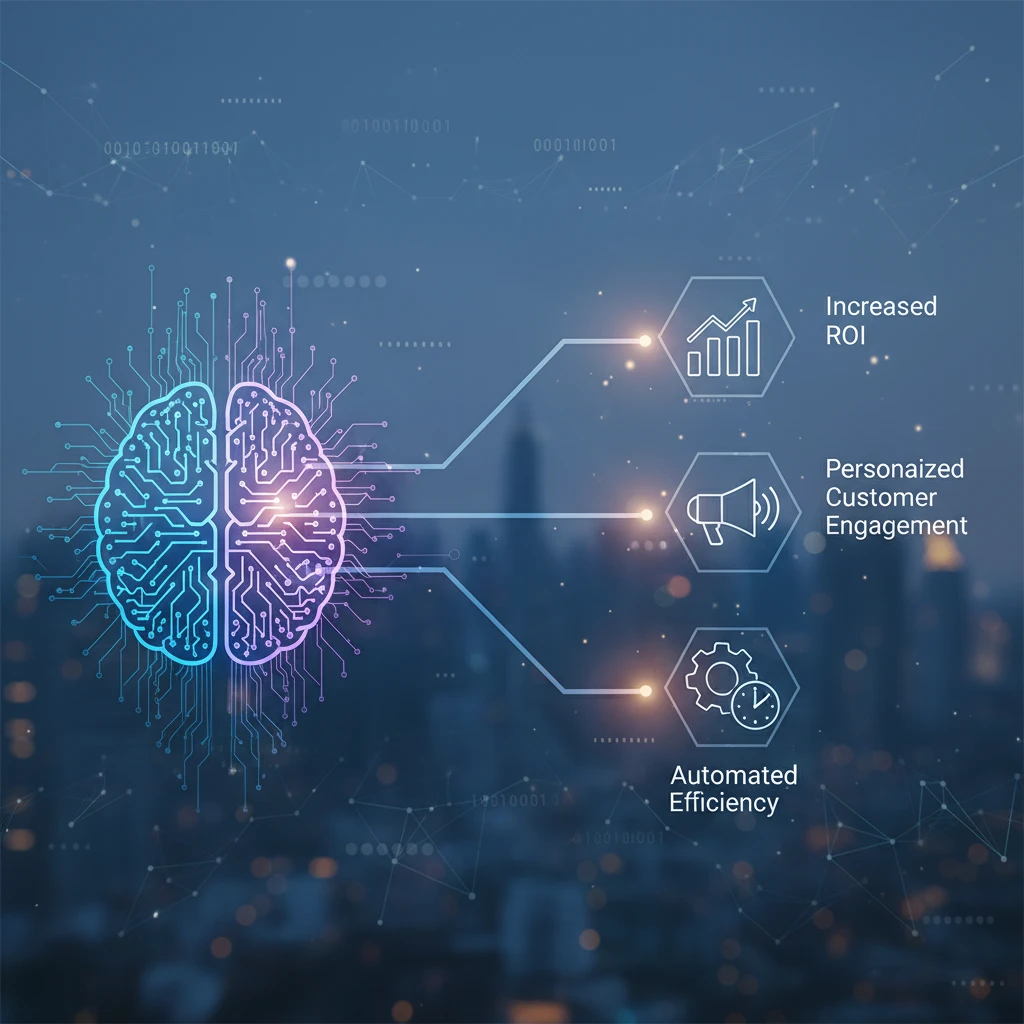

For small businesses operating today, standing out in a crowded digital marketplace isn’t just an aspiration—it’s a necessity for survival and growth. Traditional marketing approaches often demand significant time and resources, creating a barrier for leaner operations. However, advancements in artificial intelligence are rapidly reshaping this landscape, offering powerful new avenues for efficiency and impact.
AI is no longer a futuristic concept; it’s a present-day toolkit that can level the playing field. By integrating AI into your content marketing efforts, you can move beyond guesswork and toward data-driven strategies that resonate with your audience and drive tangible business results. Let’s explore how this transformative technology can become your secret weapon.
Why AI is a Game Changer for Your Small Business Marketing in 2026
In 2026, the competitive edge for small businesses hinges on their ability to adapt and innovate quickly. Artificial intelligence provides this agility, democratizing access to sophisticated marketing capabilities that were once the exclusive domain of larger corporations. The core advantage lies in AI’s capacity to process vast amounts of data and identify patterns that human marketers might miss. This leads to more precise audience targeting, personalized content recommendations, and optimized campaign performance, all crucial for maximizing limited budgets. For instance, AI can analyze customer behavior across various platforms to predict their needs, allowing businesses to proactively deliver relevant content and offers, significantly boosting conversion rates and customer loyalty.
Furthermore, AI excels at automating repetitive tasks, freeing up valuable human resources to focus on strategic initiatives and creative problem-solving. Imagine your team spending less time on manual data analysis or drafting basic social media posts and more time developing innovative campaign concepts or nurturing key client relationships. Tools powered by AI can also provide deep insights into market trends and competitor activities, enabling small businesses to stay ahead of the curve and make informed decisions. This capability is particularly vital in a rapidly shifting digital environment where understanding evolving consumer preferences is paramount. You might think that AI marketing is only for big players, but that’s really not the case anymore; it’s becoming accessible and essential for even the smallest operations aiming for substantial growth.
The impact of AI extends to improving the overall customer experience. By personalizing every touchpoint, from website interactions to email communications, AI-driven marketing ensures that each customer feels understood and valued. This level of personalization fosters deeper connections and can significantly reduce customer churn. It also allows businesses to measure the effectiveness of their marketing efforts with unprecedented accuracy, providing clear metrics for success and areas for improvement. Embracing AI in your marketing strategy isn’t just about adopting new technology; it’s about fundamentally rethinking how you connect with your audience and achieve sustainable business growth. For a deeper dive into how AI can specifically benefit business owners, exploring resources like the AI Digital Marketing: Business Owner’s Blueprint can offer targeted strategies.
Beyond Buzzwords: Practical AI Tools for Content Creation
When we talk about AI in content creation, it’s easy to get lost in the hype, but the reality is that numerous practical tools are available today that can genuinely streamline your workflow. For small businesses, the key is identifying solutions that offer tangible benefits without overwhelming complexity. One of the most impactful applications is AI-powered writing assistance. Tools like Jasper, Copy.ai, or Writesonic can help generate blog post outlines, social media captions, ad copy variations, and even entire drafts based on your prompts. These tools don’t replace human creativity entirely but act as a powerful co-pilot, helping you overcome writer’s block and produce content much faster. You’re still the editor-in-chief, shaping the output to match your brand voice and strategic goals.
Visual content creation is another area where AI tools are making significant strides. Platforms like Canva’s Magic Design or Adobe Firefly can help generate unique images, suggest design layouts, and even automate the resizing of graphics for different social media platforms. For video content, AI tools can assist with transcription, subtitle generation, and even basic video editing, making video production more accessible. Consider a scenario where you need to create social media graphics for a campaign; instead of spending hours searching for stock photos or designing from scratch, AI can generate several custom options in minutes, saving considerable time and effort. This allows small businesses to maintain a consistent and professional visual presence across all channels without requiring a dedicated design team.
Beyond text and visuals, AI is also transforming content ideation. Tools that analyze trending topics, keyword research, and competitor content can provide valuable insights into what your target audience is searching for and discussing. This data-driven approach ensures that your content is not only engaging but also relevant and discoverable. For example, an AI content generator could analyze search queries related to your industry and suggest blog post topics that have high demand but low competition. This proactive approach to content planning is a significant advantage, especially when resources are limited. Understanding how to prompt these tools effectively is also crucial; learning about prompt engineering for marketing can unlock even greater potential from these AI assistants.
AI-Powered Content Strategy: From Ideas to Distribution
Developing a robust content strategy can feel like navigating a maze, but AI offers a compass and a map. At the ideation stage, AI can analyze vast datasets of search queries, social media conversations, and industry news to identify emerging trends and audience pain points. This data allows you to move beyond guessing what your audience wants and instead create content that directly addresses their needs and interests. For instance, an AI tool might flag a surge in searches for “eco-friendly packaging solutions for small e-commerce businesses,” indicating a prime opportunity for a blog post or guide. This strategic insight ensures your content creation efforts are laser-focused on areas with high potential impact, aligning perfectly with your business objectives.
Once ideas are generated, AI can assist in refining your content calendar and even predicting which content formats will perform best. By analyzing historical data on engagement, click-through rates, and conversions, AI can suggest whether a particular topic is better suited for a blog post, an infographic, a video, or a podcast episode. This predictive capability helps optimize resource allocation, ensuring that your team invests time and effort into content that is most likely to resonate with your target audience. Furthermore, AI can help personalize content delivery. Instead of a one-size-fits-all approach, AI can segment your audience and tailor content recommendations based on individual preferences and past interactions, creating a more engaging and effective customer journey. This intelligent approach to content distribution is a cornerstone of modern digital marketing success.
The distribution phase is where AI can truly shine in amplifying your content’s reach. AI-powered tools can identify the optimal times and platforms to share your content for maximum engagement. They can also automate social media posting, manage email campaigns, and even optimize ad spend for content promotion. For example, an AI platform could analyze when your followers are most active on Instagram and schedule your posts accordingly, or it might suggest boosting a particular blog post on Facebook by targeting specific demographic segments that have shown interest in related topics. The goal is to ensure your valuable content reaches the right eyes at the right time, driving traffic and generating leads efficiently. This holistic integration of AI from idea conception to final distribution is key to scaling your business. To see how automation can boost efficiency, consider exploring Digital Marketing: AI Automation for Efficiency.
Crafting Killer Content: AI for SEO and Reader Engagement
Achieving high search engine rankings and keeping readers engaged are two sides of the same coin in content marketing, and AI offers powerful assistance for both. For Search Engine Optimization (SEO), AI tools can go beyond basic keyword suggestions. They can analyze search intent, identify semantic keywords that users are likely to employ, and even assess the comprehensiveness of your content compared to top-ranking competitors. Tools like SurferSEO or MarketMuse can provide detailed content briefs, outlining the subtopics, keywords, and entities you should cover to create content that Google’s algorithms will favor. This data-driven approach ensures your content is not just keyword-stuffed but truly valuable and answers user queries thoroughly.
Beyond on-page SEO, AI can help optimize content for readability and user experience, factors increasingly important for search rankings. AI writing assistants can suggest improvements for sentence structure, clarity, and tone, making your content more accessible and enjoyable for your target audience. For instance, AI might flag overly technical jargon or long, convoluted sentences, suggesting simpler alternatives. This focus on reader experience directly impacts engagement metrics like dwell time and bounce rate, which search engines interpret as signals of content quality. Tools that analyze readability scores can help you tailor your language to specific audience segments, ensuring your message lands effectively. Improving reader engagement can lead to more shares, backlinks, and ultimately, better search performance.
Moreover, AI can personalize content delivery at scale, further boosting engagement. By understanding individual reader preferences and behavior patterns, AI can recommend related articles, products, or services, keeping visitors on your site longer and encouraging deeper interaction. Imagine a user reading a blog post about sustainable gardening; an AI system could then suggest other relevant articles on composting, organic pest control, or native plant species, creating a tailored content journey. This personalized approach not only enhances the user experience but also increases the likelihood of conversion. For small businesses looking to refine their content’s effectiveness, understanding AI-driven insights into reader behavior is paramount. Exploring how AI can help craft better campaigns is also a valuable next step, as detailed in AI Marketing: Smarter Campaigns, Real Results. You might also find it beneficial to look into mastering human-sounding AI content from resources like mastering human-sounding AI.
Prompt Engineering 101: Getting the Best Output from Your AI Assistant
Working with AI for content creation isn’t just about typing a question and hoping for the best. It’s about learning to communicate effectively with your digital assistant, and that’s where prompt engineering comes in. Think of it like giving instructions to a junior marketer; the clearer and more specific you are, the better the final output. This involves understanding the nuances of how AI models process information and how to guide them towards your desired outcome. It’s a skill that pays dividends, transforming generic text into targeted, high-quality content.
To craft effective prompts, start with clear objectives. What is the purpose of this content? Who is the target audience? What is the desired tone and format? For instance, instead of asking “Write a blog post about SEO,” try: “Write a 500-word blog post for small business owners in the US explaining the importance of keyword research for organic search visibility. The tone should be informative yet accessible, avoiding overly technical jargon. Include a call to action to explore further SEO resources.” This level of detail helps the AI understand constraints and expectations, leading to more relevant results. Learning to solve business marketing puzzles with precise instructions is key, as explored in resources about prompt engineering.
Experimentation is also crucial. AI models learn from vast datasets, but your specific business context is unique. Don’t be afraid to iterate on your prompts. If the initial output isn’t quite right, analyze what’s missing or incorrect and adjust your prompt accordingly. Consider adding negative constraints, like “do not include…” or specifying desired elements, such as “ensure it covers X, Y, and Z.” You might also want to try different phrasing or prompt structures to see what yields the best results. Understanding how to unlock new marketing channels often begins with mastering these foundational communication skills with AI.
AI for Social Media: Amplifying Your Small Business Voice
Social media is a dynamic space, and AI can be a powerful ally for small businesses looking to cut through the noise. Beyond just scheduling posts, AI tools can help identify trending topics relevant to your niche, suggest optimal posting times based on audience activity, and even draft initial content variations. This allows you to maintain a consistent and engaging presence without dedicating an overwhelming amount of time. For instance, an AI can analyze competitor content and suggest content angles that are performing well, helping you to refine your own strategy.
Consider using AI for generating captions and post ideas. Instead of staring at a blank screen, you can provide an AI with a topic, a product image, or a recent blog post, and it can generate several caption options. You can then select the best fit, edit it to add your brand’s unique personality, and ensure it aligns with your campaign goals. AI can also assist in creating variations of ad copy for A/B testing, rapidly iterating to find the most effective messaging for different audience segments. This approach helps to streamline content creation and allows your marketing team to focus on strategy and engagement.
Furthermore, AI can play a role in social listening. Tools can monitor mentions of your brand, industry keywords, and competitor activity, alerting you to opportunities for engagement or potential issues. This proactive approach allows you to respond quickly to customer inquiries, join relevant conversations, and stay informed about market sentiment. While AI can draft the initial responses, it’s vital for a human to review and personalize them, ensuring authenticity and building genuine connections. This strategic use of AI can significantly amplify your brand’s voice and reach on social platforms.
Measuring What Matters: AI’s Role in Content Marketing ROI
One of the most compelling benefits of integrating AI into content marketing is its capacity to provide deeper, more actionable insights into performance. While traditional analytics tell you *what* happened, AI can help uncover *why* it happened and predict *what might happen next*. This allows for more informed decision-making and a greater return on your marketing investments. AI tools can analyze vast datasets of user behavior, correlating content consumption with conversion rates, customer lifetime value, and other key performance indicators. This moves beyond simple vanity metrics to focus on business-driving outcomes.
AI excels at identifying patterns that human analysts might miss. For example, it can pinpoint which content formats, topics, or distribution channels are most effective at driving qualified leads for your specific business. This could reveal that a series of short, informative videos on TikTok are generating higher quality sign-ups than long-form blog posts on a particular topic, or that a specific set of keywords is driving traffic that converts at a significantly higher rate. Such insights enable you to allocate resources more effectively and optimize your content strategy for maximum impact. Exploring AI marketing can lead to smarter campaigns and tangible results.
Moreover, AI can automate reporting, consolidating data from various platforms into a single, coherent overview. This saves considerable time and reduces the risk of human error in data compilation. You can set up custom dashboards that track the metrics most important to your business, with AI providing context and highlighting anomalies or significant trends. This proactive measurement allows for continuous improvement. By understanding the true ROI of your content efforts, you can refine your strategy, invest more in what works, and confidently scale your business. This analytical power is a core component of any successful content AI strategy.
Common Pitfalls When Using AI for Content Marketing (and How to Avoid Them)
While AI offers immense potential for content marketing, several common pitfalls can undermine its effectiveness if not addressed proactively. One of the most significant is relying too heavily on AI-generated content without human oversight. AI models can sometimes produce generic, repetitive, or factually inaccurate information. If this content is published without review, it can damage your brand’s credibility and lead to poor search engine rankings. Always remember that AI is a tool to *assist*, not replace, human creativity and critical thinking. A thorough editorial review process is non-negotiable.
Another pitfall is failing to provide adequate context or specificity in prompts. Vague or ambiguous instructions will inevitably lead to outputs that miss the mark. This can result in wasted time and resources as you repeatedly try to guide the AI towards your desired outcome. You might think, “Why isn’t this giving me what I need?” when the real issue is the prompt itself. Investing time in learning the principles of effective prompt engineering, as discussed in resources like AI digital marketing, can mitigate this significantly. Specificity is your best friend here.
Overlooking the unique voice and tone of your brand is also a common mistake. AI can mimic styles, but it might not inherently capture the subtle nuances that make your brand resonate with your audience. If your brand is known for its witty humor or its empathetic approach, a purely AI-generated piece might sound sterile or off-brand. Ensure you have guidelines for AI-assisted content that include maintaining your brand’s distinct personality. You’ll also want to conduct regular audits to ensure AI outputs align with your established brand voice, preventing a disconnect that could alienate your audience. It’s a delicate balance, and humans are still essential for adding that final layer of polish and authenticity.
AI Content Tools: Balancing Automation with Human Touch
Many small businesses are eager to implement AI in their content creation process to save time and resources. AI content generation tools can produce drafts of blog posts, social media updates, email newsletters, and even product descriptions at remarkable speed. The key is to approach these tools not as replacements for human writers, but as powerful assistants. You might think of them as exceptionally fast interns who need clear direction and thorough editing. For instance, a tool can quickly generate multiple headline variations for a blog post, but it’s the human marketer who understands the target audience’s pain points and can select or refine the headline for maximum impact. This collaboration ensures that the content remains authentic, engaging, and aligned with your brand voice. It’s a delicate balance: harness the efficiency of AI without sacrificing the nuance and creativity that only a human can provide. You’re still figuring out the perfect ratio, but starting with AI for bulk content generation and human input for strategic editing and final polish seems like a solid initial approach.
When selecting AI content tools, consider your specific needs and budget. Some tools excel at generating factual summaries, while others are better suited for creative writing or SEO optimization. A crucial decision criterion is the tool’s ability to handle specific content formats and tones. For example, if your business relies heavily on storytelling to connect with customers, you’ll need an AI that can be prompted effectively to evoke emotion and narrative. Another important factor is the learning curve; some platforms are intuitive, while others require significant time investment in prompt engineering. You’ll be honest, you first thought prompt engineering was just fancy jargon, but reading about prompt engineering showed you how critical precise instructions are for getting useful output from AI. Pitfalls to avoid include over-reliance on AI-generated text without fact-checking or human review, leading to inaccuracies or generic content that fails to resonate. You also don’t want to fall into the trap of simply copying and pasting AI output; always aim to add your unique perspective and insights. Understanding content AI capabilities means recognizing its strengths in speed and idea generation, while acknowledging its limitations in emotional intelligence and original thought.
Actionable steps for integrating AI tools include starting with a small, defined project, such as generating social media captions for a week. Experiment with different prompts to see what yields the best results. A hypothetical small e-commerce store selling artisanal soaps might use an AI to generate 50 product description variations. After reviewing them, they select the top 10, then a human editor refines these descriptions, adding specific details about ingredients, scent profiles, and benefits. This iterative process ensures quality and efficiency. Another example: a local bakery could use AI to draft weekly blog post outlines about seasonal baking tips. A staff member then fleshes out these outlines with personal anecdotes and specific recipes. For those new to this, exploring resources on AI content marketing can provide a good starting point. Remember, the goal isn’t to replace your marketing team but to empower them with tools that can augment their capabilities and free up time for more strategic, high-value tasks. The technology is developing so rapidly, it’s exciting to see what’s coming next, but the human element will always be the differentiator.
The Future of AI in Small Business Marketing: What’s Next?
The trajectory of AI in small business marketing points towards increasingly sophisticated and integrated solutions. We’re moving beyond simple text generation towards AI that can analyze vast datasets to predict consumer behavior, personalize marketing messages at scale, and even automate entire campaign workflows. You might think of AI as evolving from a helpful assistant to a strategic partner. Expect AI to become more adept at understanding complex human emotions and cultural nuances, leading to more empathetic and relevant marketing. For example, AI could soon power highly personalized video content tailored to individual viewer preferences, or chatbots that engage in natural, emotionally intelligent conversations. This advancement will necessitate a deeper understanding of AI ethics and data privacy, ensuring that businesses use these powerful tools responsibly and transparently. The focus will shift from just *generating* content to *strategizing* with AI, understanding its outputs, and making informed decisions based on AI-driven insights.
A significant development to watch is the rise of AI that can proactively identify emerging market trends and suggest innovative marketing strategies. Instead of just reacting to data, AI will help businesses anticipate shifts in consumer demand and competitor activity. Imagine an AI identifying a growing interest in sustainable packaging within your niche and suggesting a content marketing campaign around eco-friendly product options. Decision criteria for adopting these future AI tools will likely revolve around their integration capabilities with existing business systems, the depth of their analytical insights, and their ROI potential. Pitfalls could include the risk of AI creating echo chambers, reinforcing existing biases if not properly managed, or businesses becoming overly dependent on AI, neglecting critical human oversight. You’re still figuring out how to best prepare for these shifts, but investing in continuous learning about AI’s evolving capabilities is clearly essential. Many see the future of digital marketing AI for small business as a pathway to unprecedented growth and efficiency.
Actionable steps for small businesses preparing for the future include staying informed about AI advancements and continuously experimenting with new tools. Consider how AI can automate more complex tasks beyond simple content creation, such as customer segmentation, A/B testing optimization, or even predictive analytics for inventory management. A hypothetical online retailer might use AI to predict which products are likely to become popular next quarter, allowing them to adjust their stock and marketing efforts proactively. Another business, perhaps a service provider, could use AI to analyze customer feedback across all channels, identifying common pain points and suggesting service improvements. For those looking to deepen their understanding, resources like AI for Business: Beyond the Hype offer valuable perspectives. The key is to foster a culture of innovation where AI is viewed not as a threat, but as an opportunity to enhance human creativity and strategic thinking, driving sustainable growth. Keeping an eye on these developments can help you make informed choices about technology investments and strategic planning for the years ahead.
This discussion highlights how AI can be a transformative force for small businesses, offering efficiency and new avenues for growth. By understanding the current capabilities and future potential of AI in marketing, businesses can strategically integrate these tools to enhance their operations. For those looking to navigate the complexities of AI in digital marketing, KPIDM.com offers valuable training and resources.